
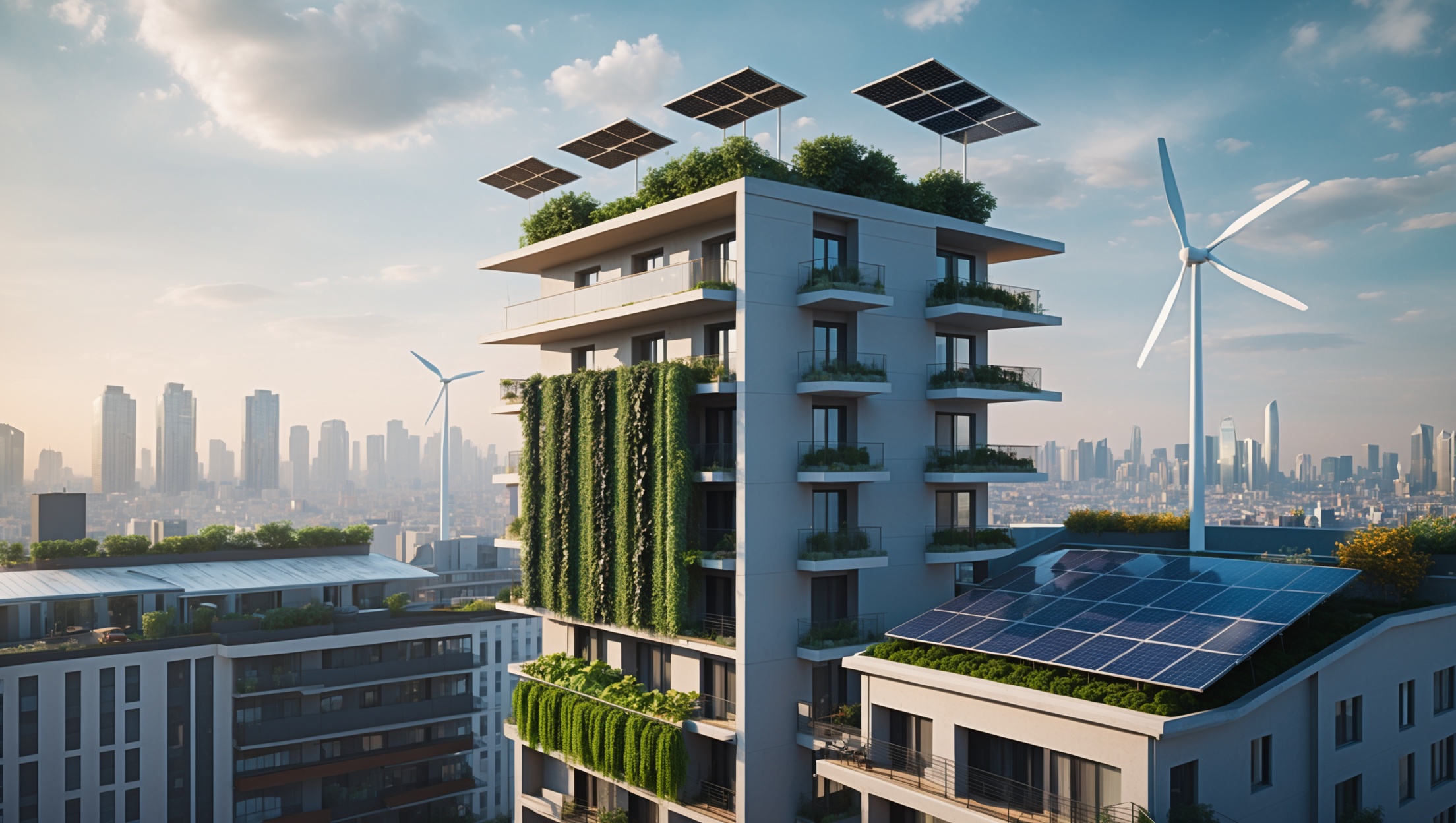
Introduction: Net-Zero Energy in the Urban Jungle
When most people think of net-zero energy homes, sprawling suburban houses or eco-friendly rural retreats likely come to mind. But what about city dwellers living in compact apartments? Can a small urban apartment really achieve net-zero energy consumption with today’s green technologies? The answer is a resounding yes—if you combine the right strategies, embrace creative problem-solving, and make informed choices about your upgrades. In this detailed case study, we’ll follow the journey of a 750-square-foot apartment in a mid-rise city building that went from a typical energy consumer to a model of sustainable, net-zero living. We’ll break down the process, analyze the tech upgrades, review challenges unique to urban settings, and share actionable insights for apartment owners or renters eager to reduce their carbon footprint and utility bills. This is not a hypothetical scenario or a pie-in-the-sky dream: it’s a real-world transformation packed with lessons for anyone ready to bring sustainable living to the heart of the city.
Meet the Apartment: Baseline Energy Use and Constraints
Urban Setting and Building Overview
The apartment is located on the fifth floor of a 10-story building in downtown Toronto. The building was constructed in the late 1990s and features standard double-glazed windows, concrete walls, and central heating/cooling systems. The unit has no access to a private roof, but does have two small balconies (each 45 sq. ft.). Most utilities are individually metered, but heating and cooling are provided centrally.
- Floor area: 750 sq. ft.
- Occupants: 2 adults
- Appliances: Standard (refrigerator, oven, dishwasher, washer/dryer combo)
- Lighting: Mix of CFL and early-generation LEDs
- Initial annual electricity use: ~5,200 kWh
Key Constraints
- No private roof access for solar panels
- Limited space for equipment (inside and out)
- Building management approval required for exterior modifications
- Heating/cooling controlled by the building
Step 1: Energy Audit and Goal Setting
The first step was a professional energy audit to identify waste and realistic opportunities for savings. The audit found the following:
- Outdated appliances were consuming 40% more energy than modern equivalents.
- Lighting accounted for 12% of energy use—higher than average due to inefficient fixtures.
- Phantom loads (devices in standby mode) were responsible for 8% of annual consumption.
- Building-wide HVAC limited potential for personal heating/cooling upgrades, but window sealing was poor, leading to unnecessary heating/cooling loss.
The goal: Achieve net-zero electricity use over a 12-month period, using only solutions feasible within a small urban apartment setting.
Step 2: Reducing Energy Demand
Appliance Upgrades
- Refrigerator: Swapped for Energy Star-rated model, saving 250 kWh/year.
- Dishwasher: Replaced with a compact, energy-efficient unit, saving 100 kWh/year.
- Washer/Dryer: Upgraded to a high-efficiency heat pump combo, reducing use by 300 kWh/year.
Lighting Overhaul
- Replaced all lighting with high-efficiency LEDs (12W or less per fixture).
- Installed smart dimmer switches and motion sensors in bathrooms and closets.
- LED strip lighting added under cabinets for task lighting, reducing need for overhead fixtures.
Phantom Load Elimination
- Smart power strips installed for entertainment center, computer desks, and kitchen appliances.
- Wi-Fi smart plugs used to schedule device shutdowns overnight or when away.
Thermal Envelope Improvements
- Weatherstripped all windows and balcony doors.
- Added insulated blackout curtains for winter efficiency and summer cooling.
- Sealed electrical outlets and minor wall penetrations to reduce drafts.
Results of Demand Reduction
After upgrades, the apartment’s projected annual electricity use dropped to about 3,200 kWh—a 38% reduction. With consumption minimized, attention turned to on-site generation and offsetting remaining use.
Step 3: Generating and Offsetting Power in Tight Spaces
Solar Solutions for Apartments
With no private roof, the residents explored creative alternatives:
- Balcony Solar Panels: Two 400W bifacial solar panels were installed on the south-facing balcony railings (pending building management approval). These panels were mounted at a safe angle and fixed securely to withstand wind loads, with integrated microinverters feeding a dedicated circuit in the apartment.
- Window Solar Chargers: Compact plug-and-play solar panels (100W total) were placed in sunny windows using suction mounts, ideal for charging small electronics and supplementing the main array.
- Community Solar Subscription: To offset what balcony panels couldn’t cover, the residents subscribed to a local community solar farm. This provided monthly credits equivalent to 2,200 kWh/year.
Micro Wind Turbine Experiment
One balcony faced prevailing winds, so a small, vertical-axis micro wind turbine (rated at 200W) was trialed. Results were modest—about 120 kWh/year—but the turbine helped offset nighttime and winter use when solar output was low.
Battery Storage and Load Shifting
- Battery System: A compact, wall-mounted 2.5 kWh lithium battery was installed inside a utility closet (fire-rated enclosure). This allowed the apartment to store excess solar from sunny days and use it during peak demand or grid outages.
- Load Shifting: Major appliances (dishwasher, washer/dryer) were scheduled to run during peak solar generation hours using smart plugs integrated with a home energy management system.
Step 4: Integrating Smart Home Tech
Energy Monitoring
- Whole-Home Monitor: A wireless energy monitor was installed at the main breaker panel, allowing real-time tracking of usage and generation through a mobile app.
- Device-Level Tracking: Smart plugs and sub-meters monitored individual appliances, helping identify unusual spikes or inefficiencies instantly.
Automation and Control
- Thermostatic Radiator Valves (TRVs): Although central heating/cooling was building-controlled, smart TRVs were fitted to radiators, giving some control over room temperature and reducing overheating in winter.
- Climate Sensors: Temperature and humidity sensors optimized curtain operation and window venting (automatic opening during cool nights in summer).
- IFTTT & Smart Home Integration: Automations were set to turn off lights when the apartment was vacant, pre-cool or pre-warm during off-peak hours, and alert residents to abnormal usage patterns.
Step 5: Green Tech for Water and Air
Water Conservation Upgrades
- Low-flow showerheads and faucet aerators reduced water use by 35%.
- In-line greywater filter for the washing machine redirected rinse water to flush toilets (per building code approval), cutting potable water demand by 15%.
Indoor Air Quality Improvements
- Energy recovery ventilator (ERV) with HEPA filter installed in a closet, ducted to the main living area for continuous fresh air without major heat loss.
- Low-VOC paints and sustainable materials used in minor renovations (flooring upgrades, cabinetry refacing).
Step 6: Budget Breakdown and Financials
- Professional Energy Audit: $300
- Appliance Upgrades: $2,200 (after rebates)
- Lighting and Smart Plugs: $420
- Balcony Solar Panels: $1,850 (including installation hardware)
- Window Solar Chargers: $320
- Community Solar Subscription: $600/year (offset by energy bill savings)
- Micro Wind Turbine: $410
- Battery Storage: $1,350
- Smart Home Automation: $550
- Water/Air Upgrades: $1,200
- Misc. (curtains, weatherstripping): $210
Total upfront investment: $8,610 (excluding ongoing solar subscription)
Annual utility savings: $1,450 (electricity and water)
Estimated payback period: 5.8 years
Step 7: Overcoming Urban Challenges
Building Management and Permitting
- Submitted detailed plans and safety documentation for balcony solar and wind turbine installations.
- Worked with HOA to ensure all modifications met fire safety and aesthetic guidelines.
- Obtained permission for minor plumbing changes related to greywater system.
Space Optimization
- Chose all-in-one appliances and wall-mounted solutions to keep floor space clear.
- Used vertical storage in closets to accommodate batteries and ERV equipment.
- Designed solar panel mounts to double as balcony privacy screens and plant supports.
Community Engagement
- Shared progress and outcomes with building residents, inspiring others to adopt LED lighting and smart plugs.
- Helped start a “green committee” to negotiate group discounts for energy audits and appliance upgrades.
Step 8: Results—Did the Apartment Achieve Net-Zero?
After a full 12 months of data, here’s the breakdown:
- Annual electricity use (after upgrades): 3,210 kWh
- On-site solar generation (balcony + window): 1,020 kWh
- Wind turbine generation: 120 kWh
- Community solar offset: 2,200 kWh
- Net electricity use: -130 kWh (exported slightly more than consumed)
The apartment achieved true net-zero energy status for electricity, with a small surplus returned to the grid. Water use and indoor air quality also improved significantly, reducing the environmental footprint well beyond electricity alone.
Lessons Learned and Tips for Urban Apartment Dwellers
- Start with efficiency: Cutting waste is the easiest, most cost-effective step.
- Maximize what you control: Focus on upgrades within your apartment rather than building-wide systems.
- Get creative with solar: Balcony and window panels, plus community solar, can close the gap when roof access is impossible.
- Engage management early: Approvals take time—submit detailed, safety-focused plans for any exterior or plumbing changes.
- Monitor and adjust: Real-time data helps you spot issues and fine-tune usage patterns quickly.
- Share your journey: Educating neighbors and building community support can unlock bigger collective savings and sustainability.
Conclusion: A Blueprint for Urban Net-Zero Living
This case study proves that net-zero energy isn’t just for houses with big yards or generous budgets—it’s fully achievable in a small city apartment using today’s green technologies and a strategic approach. The transformation required a mix of efficiency upgrades, smart space use, creative renewable generation, and a willingness to work with building management. The payback period was reasonable, and the environmental benefits—lower carbon emissions, reduced utility costs, and a healthier living space—were immediate and tangible. Beyond the numbers, the project sparked a ripple effect, inspiring neighbors and building staff to rethink their own energy habits and consider sustainable upgrades. If you’re an urban apartment dweller, you don’t have to wait for your building to go green. Start with what you control, build alliances, and leverage every inch of your space. With persistence and the right tech, you too can live net-zero—even in the heart of the city.
Ready to start your own journey? Begin with an energy audit, prioritize upgrades that fit your space and budget, and don’t underestimate the power of community solar or small-scale renewables. Every kilowatt-hour you save or generate brings you closer to a more sustainable, resilient, and future-ready home. The city is full of challenges—but also opportunities for those willing to innovate for a greener tomorrow.

Could you give more details about how you dealt with heating and cooling, since those are centrally provided and not individually controlled or metered? I live in a similar building and always wondered how much impact I can actually have without direct control over those systems.
In this case study, since heating and cooling were centrally provided and not individually controlled, most of the upgrades focused on improving apartment insulation, sealing windows and doors, and using thermal curtains to reduce heat loss and gain. The residents also installed ceiling fans to help with air circulation and used programmable thermostats for any areas they could adjust. These measures helped maximize energy efficiency and comfort, even without direct control over the central systems.
As someone living in an apartment with similar restrictions—no private roof and limited balcony space—I’m curious how you handled renewable energy generation. Did you use community solar or another shared resource, or were the upgrades all focused on reducing consumption instead of producing energy?
In this case study, renewable energy generation was addressed mainly through participation in a local community solar program, since the apartment lacked private rooftop access and had a small balcony. Most upgrades centered on reducing energy consumption—improving insulation, installing efficient appliances, and using smart controls—but community solar provided a shared renewable energy source to help balance out what the apartment used.