
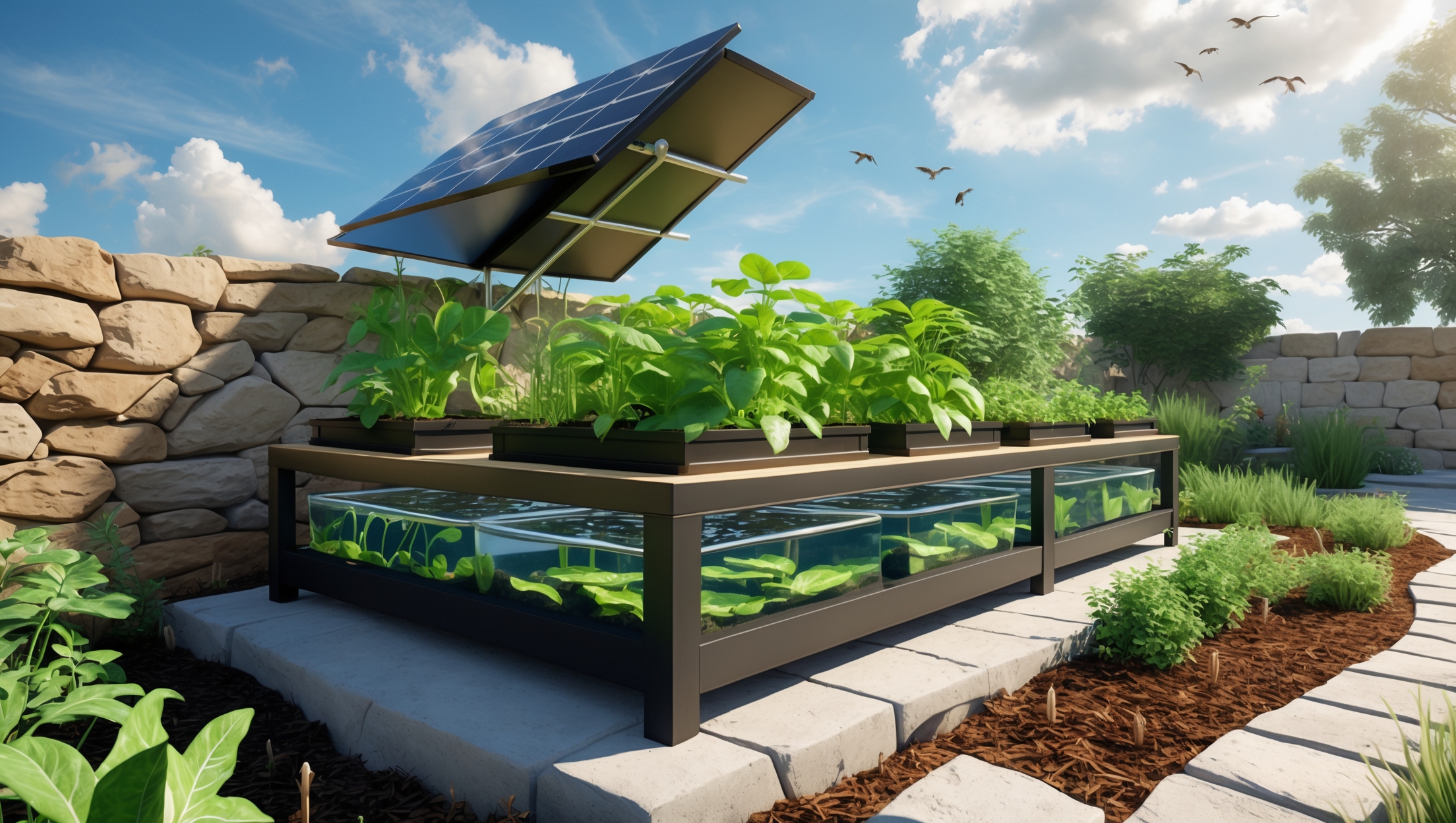
Introduction: The Promise and Challenge of Marketing Solar-Powered Home Aquaponics
Solar-powered home aquaponics systems embody the future of sustainable food production. By pairing aquaculture (raising fish) with hydroponics (growing plants in water) and powering it with renewable solar energy, these systems offer an elegant solution to food security, resource conservation, and energy independence. With growing awareness of sustainability and the desire for fresh, local produce, more homeowners are investing in these innovative setups.
Yet, for those who build, maintain, or sell home-scale solar aquaponics systems, marketing remains a unique challenge. Unlike traditional gardening or standalone solar products, these integrated systems require educating potential customers, demonstrating real-world value, and differentiating from both conventional and green alternatives. Whether you offer installation services, sell components, or produce food from your own solar aquaponics setup, you need strategies that go beyond buzzwords. This guide will equip you with actionable marketing tactics tailored specifically to this niche—helping you attract eco-conscious buyers, build your sustainable brand, and grow your impact in the green economy.
Understanding Your Target Audience
Who Is Interested in Solar-Powered Home Aquaponics?
Effective marketing begins with a clear understanding of your audience. For solar-powered home aquaponics, key segments include:
- Eco-Conscious Homeowners: Individuals prioritizing sustainability, self-sufficiency, and reducing their carbon footprint.
- Urban Gardeners: City dwellers seeking innovative ways to grow food in limited space.
- Tech Enthusiasts: Early adopters interested in smart home technology and renewable energy integration.
- Families and Educators: Those looking to teach children about ecology, biology, and sustainability through hands-on learning.
- Health and Wellness Advocates: People motivated by access to organic, fresh produce and chemical-free fish.
Identifying Pain Points and Aspirations
To craft resonant marketing messages, address your audience’s pain points and aspirations. Common motivators include:
- Desire for food security and control over food sources
- Concerns about energy costs and environmental impact
- Interest in innovative, low-maintenance gardening solutions
- Seeking family-friendly, educational home projects
Conversely, address barriers such as perceived complexity, upfront costs, and skepticism about system reliability or yield.
Building a Compelling Value Proposition
Highlighting Unique Benefits
For solar-powered home aquaponics systems, your marketing should emphasize:
- True Sustainability: Zero fossil fuel usage, closed-loop water cycling, and organic food production.
- Year-Round Productivity: With solar backup, the system runs reliably through seasons and power outages.
- Educational and Family Value: Learning opportunities for children and adults alike, fostering environmental stewardship.
- Ease of Integration: Compatible with urban backyards, rooftops, and suburban homes alike.
- Long-Term Savings: Reduced grocery bills and utility costs over time.
Combating Common Misconceptions
Address doubts directly in your content and advertising:
- “Solar-powered aquaponics is too complicated for beginners.” (Showcase simple, modular systems and offer setup support.)
- “It’s too expensive.” (Provide transparent cost breakdowns and emphasize ROI.)
- “It can’t work in small or shaded spaces.” (Highlight scalable solutions and battery backups.)
Proven Marketing Strategies for Solar-Powered Home Aquaponics
1. Leverage Content Marketing with Educational Value
Most prospects need education before purchase. Create rich, practical content, such as:
- Step-by-Step Videos: Demonstrate how solar integration works, from panel placement to battery selection and fish-plant balance.
- Blog Tutorials: Offer detailed guides on system maintenance, crop selection, and troubleshooting.
- Infographics: Visualize water and energy savings, system components, and productivity results.
Distribute content via your website, YouTube, and social media. Include strong calls to action, such as free consultations or downloadable checklists.
2. Build Trust with Case Studies and Success Stories
Nothing convinces like real-world proof. Feature detailed case studies:
- Profile customers or households with before-and-after data (produce harvested, energy saved, family benefits).
- Include photos of systems in action, output logs, and testimonials.
- Highlight diverse settings: urban balconies, suburban yards, community rooftops.
Encourage satisfied users to share their stories on your site and social channels.
3. Host Live Demonstrations and Workshops
Seeing is believing. Organize:
- Open House Events: Invite local prospects to tour your setup or a customer’s location. Demonstrate system startup, feeding, and solar monitoring.
- Virtual Webinars: For broader reach, stream Q&A sessions, setup walkthroughs, or troubleshooting live streams.
- Community Classes: Partner with schools, garden clubs, or environmental groups to offer educational sessions—positioning you as the go-to expert.
Following each event, provide handouts or exclusive offers to attendees.
4. Tap Into Local and Online Communities
Solar-powered home aquaponics sits at the intersection of several vibrant communities:
- Join local gardening, sustainability, and renewable energy groups—both online (Facebook Groups, Reddit, Discord) and offline.
- Share advice freely, answer questions, and post photos of successful harvests or technical innovations.
- Offer to host community demo days or collaborate on local food security initiatives.
Authenticity and helpfulness spark organic word-of-mouth and referrals.
5. Optimize for Search: Local SEO and Green Niches
Ensure your business or project is discoverable, especially by those searching for solutions in your area:
- Claim and optimize your Google Business Profile. Use keywords like “solar aquaponics installation [city]” or “backyard solar fish/plant systems [region]”.
- Encourage satisfied customers to leave detailed reviews mentioning solar, aquaponics, and sustainability.
- Publish location-specific blog posts and resource pages (e.g., “Best Solar Angles for Aquaponics in Seattle”).
Targeting green energy and urban gardening forums will further increase niche visibility.
6. Strategic Partnerships and Cross-Promotions
Expand your reach by collaborating with:
- Local solar installers (offer packages or referral discounts).
- Garden centers and nurseries (co-branded workshops or displays).
- Eco-friendly home product retailers (bundle deals, joint webinars).
- Nonprofits and schools (educational sponsorships or demonstration systems).
Cross-promotion leverages established trust and accesses new audiences with shared values.
7. Use Social Proof and User-Generated Content
Encourage customers to share:
- Progress photos and harvest results tagged with your brand or hashtag.
- Short reviews or video testimonials.
- Tips for getting started or overcoming common hurdles.
Reshare their posts on your platforms with permission—this builds authenticity and community.
8. Showcase Results with Data and Monitoring Tools
Solar-powered aquaponics is data-rich. Use this to your advantage:
- Display live dashboards (energy generated, water recycled, plants grown, fish harvested) on your website or in your demo area.
- Share monthly output reports in newsletters or blog updates.
- Offer downloadable templates for users to track their own system’s impact.
Quantifiable results reassure buyers and set you apart from vague sustainability claims.
9. Offer Entry-Level Kits and Financing Options
Lower the barrier for first-time buyers:
- Develop simple starter kits with clear instructions and minimal setup requirements.
- Offer payment plans or partner with green financing programs.
- Highlight available local incentives or rebates for solar installations.
Make it easy for prospects to “try before they scale up.” Entry-level success often leads to bigger investments and referrals.
10. Focus on After-Sale Support and Community
Retention and advocacy are as important as acquisition:
- Provide responsive troubleshooting via chat, email, or phone.
- Host exclusive online forums or groups for customers to share advice and upgrades.
- Periodically check in with users to gather feedback and offer free tune-ups or updates.
Happy customers are your most powerful marketers, especially in a technical niche.
Crafting Your Marketing Materials: Practical Tips
Photography and Visuals
- Invest in high-quality, realistic images showing clean, thriving systems under sunlight.
- Highlight close-ups of solar panels, lush plant growth, healthy fish, and integrated monitoring hardware.
- Use before-and-after sequences to illustrate impact.
Messaging Do’s and Don’ts
- Do: Use clear, jargon-free language. Emphasize “easy,” “smart,” and “sustainable.”
- Do: Include practical benefits (“Grow 10 pounds of tomatoes per month using free solar energy!”).
- Don’t: Overpromise or make unsupported claims.
- Don’t: Rely solely on generic green buzzwords—be specific and data-driven.
Calls to Action That Convert
- “Book a free virtual tour of a working solar aquaponics system.”
- “Download our solar sizing calculator for home aquaponics.”
- “Claim your starter kit discount—limited time only!”
Tracking Results and Adjusting Your Strategy
Key Metrics to Monitor
- Website visits and time on educational content pages
- Number of webinar signups or demo requests
- Lead generation from downloads, newsletter signups, or inquiries
- Sales conversion rates and average order size
- Customer retention and referral rates
Use tools like Google Analytics, email marketing dashboards, and CRM software to track these metrics. Adjust campaigns based on which tactics yield the best engagement and conversions.
Refining Your Approach
- Test different messaging angles (e.g., health benefits vs. energy savings) and platforms (Instagram vs. YouTube).
- Solicit direct feedback from customers about what convinced them to buy—or what held them back.
- Iterate on your offers, kits, and support resources to align with customer needs and market trends.
Conclusion: Growing a Greener Future with Smart Marketing
Solar-powered home aquaponics systems are more than a technical achievement—they represent a path toward resilient, regenerative, and energy-independent living. By harnessing the sun’s power to grow fish and plants together, these systems offer tangible benefits for homeowners, communities, and the planet. But their potential will only be realized if more people understand, trust, and invest in this technology.
Effective marketing is the bridge between innovation and adoption. By focusing on education, real-world proof, community engagement, and data-driven messaging, you can inspire curiosity, build trust, and empower more families to make the leap into sustainable living. Remember: the most successful solar aquaponics ventures aren’t just selling systems—they’re building movements. Every demonstration, case study, and satisfied customer adds momentum to a future where clean energy and local food are within everyone’s reach.
Whether you’re an installer, a product developer, or a passionate hobbyist looking to share your success, these marketing strategies will help you connect with your audience, differentiate your offering, and make a meaningful impact. Start with one or two tactics, measure your results, and iterate. The journey to a greener, smarter home—and a better world—starts with a single story, shared and believed.


One thing I’m curious about is how to set myself apart from people selling standalone solar kits or more traditional hydroponics setups. Are there specific marketing messages or demonstrations that have really resonated with eco-conscious homeowners in your experience?
Highlighting the unique closed-loop system and resource efficiency of aquaponics powered by solar can really set you apart. Eco-conscious homeowners respond well to demonstrations that show how fish, plants, and solar all work together with minimal waste. Messaging that emphasizes sustainable food production, water conservation, and energy independence often resonates strongly. Hands-on tours or videos of your system in action can also help potential customers envision these benefits at home.
You mention that marketing solar-powered home aquaponics systems requires differentiating them from both traditional and other green options. Could you share some examples of messaging or demonstrations that have proven effective in making this distinction clear to potential buyers?
Emphasizing the unique combination of solar energy and aquaponics is key. Messaging like ‘Grow your own food with sunshine and fish—no grid required’ or ‘Sustainable gardening powered entirely by the sun’ really stands out. Live demos showing the system running off solar panels and producing vegetables and fish together also help buyers visualize the benefits and set these systems apart from typical gardens or hydroponics.
For homeowners on a limited budget who want to try solar-powered aquaponics, are there any marketing approaches or product packages that appeal specifically to them without compromising on sustainability or quality?
For homeowners with tighter budgets, bundle packages that combine essential aquaponics components with small-scale solar setups can be very appealing. Emphasizing long-term savings, DIY kits, and community group discounts can further attract budget-conscious buyers. Highlighting low-maintenance, durable materials assures buyers they’re not sacrificing sustainability or quality, just optimizing size and cost.
For someone interested in selling food grown from a home aquaponics setup, do you have any suggested marketing tactics that work best with health-conscious buyers? I’m wondering how to highlight the difference compared to produce from regular gardens.
To connect with health-conscious buyers, emphasize your produce’s unique benefits: pesticide-free, sustainably produced using clean solar energy, and fresher than store-bought options. Use clear labeling and signage at local farmers markets or online listings to highlight these points. Sharing photos or short stories about your eco-friendly, nutrient-rich growing process on social media or flyers can help buyers see the difference compared to regular garden produce.
The excerpt mentions differentiating from both conventional gardens and standalone solar products. Are there any specific troubleshooting tips or FAQs you recommend including in marketing materials to address common concerns or misconceptions people might have about home-scale solar aquaponics?
Including a troubleshooting section or FAQs in your marketing materials is a smart idea. Address common concerns such as water quality management, system maintenance, backup power options for cloudy days, and pest control. Clarify misconceptions like whether solar power is sufficient year-round, if the system is complicated to set up, and how much space is needed. Providing straightforward answers to these points will help prospective customers feel more confident.
In your experience, which marketing channel works best for connecting with urban gardeners specifically interested in compact solar aquaponics setups? I’m wondering whether local workshops, targeted social media, or community gardening groups make the most impact for this audience.
For urban gardeners interested in compact solar aquaponics, community gardening groups tend to be the most effective channel. These groups often attract passionate and engaged members who value sustainable, space-saving solutions. Targeted social media campaigns can also be powerful, especially when focused on local urban gardening forums or city-specific groups, but in-person connections through gardening communities usually spark greater trust and interest for this niche.