
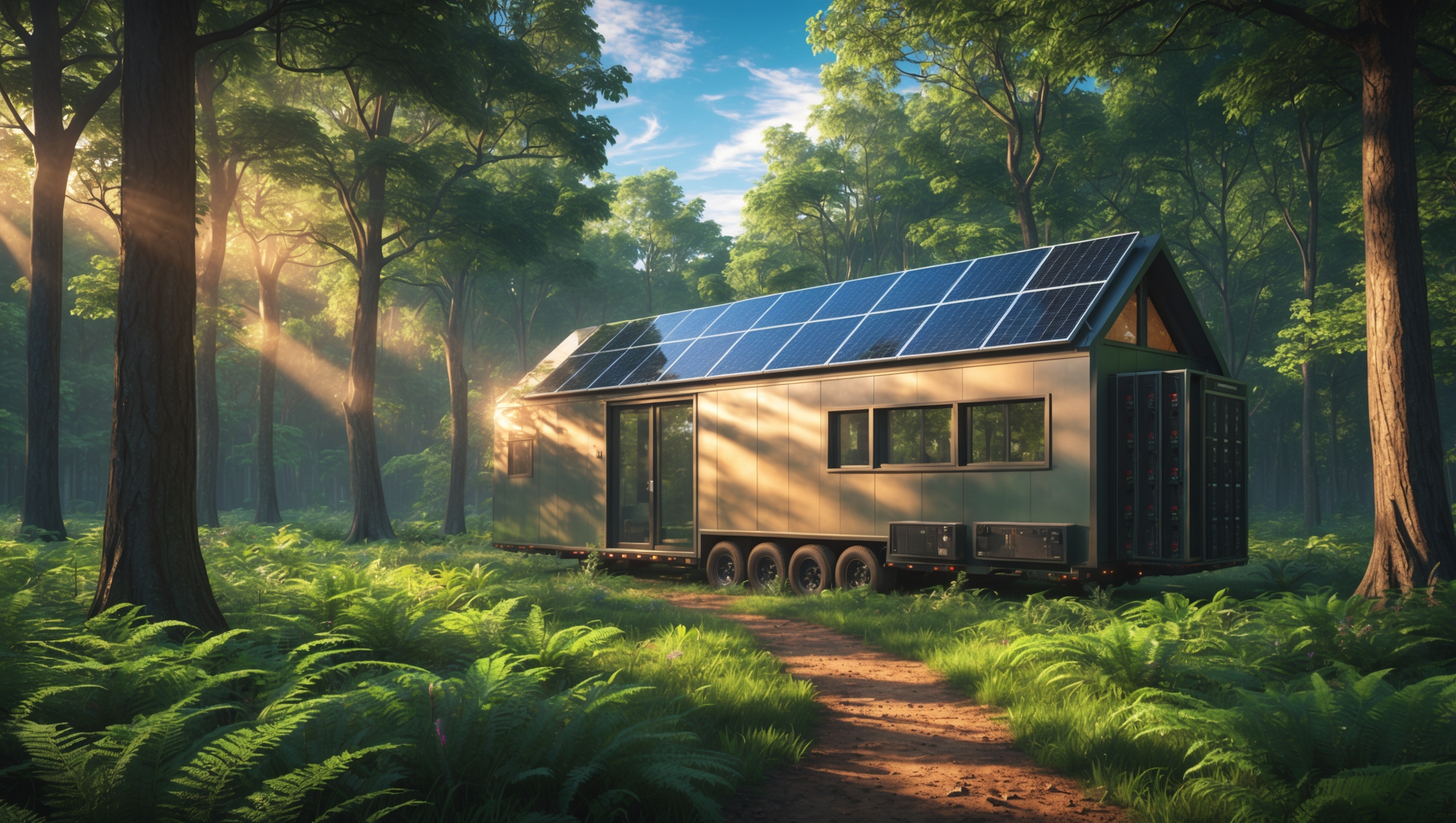
Introduction: Why Proper Sizing Matters for Off-Grid Solar in Small Spaces
Off-grid solar power is a game-changer for cabins and tiny homes, providing reliable, clean energy in remote locations or for those seeking true energy independence. However, sizing an off-grid solar system is a nuanced process, and getting it wrong can lead to frustrating power shortages, wasted money, and even damage to appliances or batteries. Unlike grid-tied homes, where power is always available, an off-grid system must be tailored precisely to your usage and storage needs—there’s no safety net if you underestimate. This post dives deep into the most common mistakes people make when sizing off-grid solar systems for cabins and tiny homes, offering practical, expert advice to help you avoid costly errors and enjoy sustainable living with confidence. Whether you’re building a minimalist retreat, a weekend getaway, or a full-time tiny house, understanding the intricacies of solar sizing will ensure your investment delivers reliable performance, comfort, and peace of mind—even in the heart of nature.
Understanding the Basics: What Does “Sizing” an Off-Grid Solar System Mean?
Sizing an off-grid solar system involves calculating how much energy you need daily, then choosing solar panels, batteries, and other components that can reliably supply that energy throughout the year, including during periods of low sunlight. The process considers:
- Daily energy usage (in kilowatt-hours, kWh)
- Solar insolation (average sunlight hours per day)
- Battery storage capacity
- System losses (inverter inefficiency, wiring, temperature effects)
- Seasonal variations
Getting any of these calculations wrong can result in a system that underperforms, leaving you without power when you need it most.
Main Pitfalls When Sizing Off-Grid Solar for Cabins & Tiny Homes
1. Underestimating Actual Energy Consumption
This is by far the most common and costly mistake. Many new off-grid enthusiasts assume that because their cabin or tiny home is small, their energy needs will be minimal. However, energy use is driven more by appliances, lifestyle, and climate than by square footage. Common pitfalls include:
- Ignoring “phantom loads”: Small electronics and devices on standby can add up to significant daily usage.
- Under-accounting for heating and cooling: Even efficient mini-splits or space heaters can draw substantial power, especially in extreme weather.
- Forgetting seasonal device use: Tools like well pumps, fans, or water heaters may be used more in certain seasons.
- Not including guest or occasional use: Weekend visitors or short-term increased occupancy can spike usage.
Expert tip: Use a spreadsheet or dedicated off-grid calculator to log the wattage and estimated daily hours of every device. Overestimate by 10–20% to provide a buffer for unexpected loads.
2. Overestimating Solar Generation Potential
Solar panel output depends on your geographic location, roof orientation, tilt angle, and local weather. Many people simply take the panel’s rated wattage and multiply by daylight hours, ignoring real-world losses:
- Panel orientation: Solar panels produce less energy if they’re not facing directly south (in the Northern Hemisphere) and at the optimal tilt angle.
- Shading: Trees, hills, or even snow can drastically reduce output.
- Weather and seasonal variation: Short, cloudy winter days can cut production by 50% or more compared to summer.
- System losses: Inverter inefficiency (typically 5–10%), wiring losses, and high temperatures all reduce actual delivered power.
Expert tip: Use solar insolation data for your exact location (from sources like PVWatts or NREL) and assume system losses of at least 20%.
3. Under-Sizing Battery Storage
In off-grid setups, batteries provide power during the night and cloudy days. Skimping on battery capacity is a recipe for frustration:
- Too little storage = power outages: If your batteries can only supply a day’s worth of usage, you’ll be left in the dark after a cloudy spell.
- Excessive deep discharges: Regularly draining batteries below recommended levels shortens their lifespan and can void warranties.
- Wrong battery type: Some use starter batteries (like car batteries) instead of deep-cycle batteries—these are not designed for repeated deep discharges.
Expert tip: Size your battery bank to provide at least 2–3 days of average usage, and select batteries (like lithium iron phosphate or high-quality AGM) rated for deep cycling.
4. Neglecting Surge and Peak Power Demands
Appliances like refrigerators, pumps, and power tools can draw much more power during startup (surge) than during normal operation. Common mistakes include:
- Under-sizing the inverter: If your inverter can’t supply enough surge power, devices won’t start or may be damaged.
- Not factoring in simultaneous loads: Running multiple devices at once can exceed inverter or battery output capacity.
Expert tip: Add up the surge wattages of all devices that might start simultaneously and choose an inverter rated at least 25% higher than this total.
5. Failing to Plan for Expansion
Many tiny homes and cabins start with modest energy needs, but lifestyles change. Maybe you add a freezer, more lighting, or upgrade to a larger water pump. If your system is sized with no margin for growth, you’re stuck. Key missteps:
- Choosing a charge controller or inverter that can’t handle more panels or batteries later
- Running out of physical space for more panels or batteries
Expert tip: Design your system with modularity in mind. Select components with higher capacity than needed and leave room for extra panels and batteries.
6. Overlooking System Losses and Real-World Operating Conditions
Every component in your system—panels, wiring, inverter, batteries—introduces losses. Some common mistakes:
- Using undersized wiring: Thin wires increase resistance, wasting energy as heat.
- Ignoring battery temperature effects: Cold climates can reduce battery efficiency by up to 30%.
- Poor ventilation: Hot batteries and inverters are less efficient and have shorter lifespans.
Expert tip: Use online calculators to choose appropriate wire gauges, and if your cabin is in a cold region, increase battery capacity to account for winter inefficiency. Mount components in well-ventilated, insulated spaces.
Step-by-Step: Properly Sizing Your Off-Grid Solar System
1. Audit Your Energy Use
- List every appliance and device with wattage and estimated daily hours of use.
- Calculate total daily energy usage in watt-hours (Wh) or kilowatt-hours (kWh).
- Add a buffer of 10–20% for safety.
2. Assess Your Solar Resource
- Use a solar insolation map or online tool for your location.
- Adjust for panel orientation, tilt, and shading.
- Calculate average daily solar production per panel (after system losses).
3. Determine Battery Storage Needs
- Multiply your daily energy usage by the number of days of autonomy you want (usually 2–3 days).
- Adjust for battery depth of discharge (DoD). For example, lead-acid batteries shouldn’t be discharged below 50%.
- Select battery chemistry and calculate total amp-hours (Ah) required.
4. Size the Inverter
- Add up the highest possible simultaneous wattage of all devices.
- Factor in starting (surge) loads.
- Choose an inverter rated above your maximum surge requirement.
5. Choose System Components with Room to Grow
- Select a charge controller, inverter, and wiring that can accommodate future expansion.
- Leave physical space for more panels and batteries if needed.
Advanced Considerations for Tiny Homes and Cabins
1. Appliance Selection and Efficiency Upgrades
Your choice of appliances has a huge impact on system size and cost. Prioritize:
- LED lighting
- DC-powered refrigerators and freezers
- Propane or wood stoves for heating and cooking
- Low-wattage water pumps
Consider “off-grid ready” appliances designed for high efficiency.
2. Seasonal Variation and Backup Options
Solar production drops in winter, especially in northern climates. Options to mitigate:
- Oversize your array to handle winter loads.
- Use a backup generator for emergencies or extended cloudy periods.
- Adjust lifestyle seasonally (e.g., less refrigeration or lighting in winter).
3. Monitoring and System Tuning
Install a system monitor to track real-time energy production and usage. This data helps you:
- Identify unexpected loads or inefficiencies
- Adjust usage patterns
- Plan future upgrades rationally
Case Examples: Lessons from Real Cabins and Tiny Homes
Case 1: The Undersized Battery Bank
Jane built a 200-square-foot cabin in the mountains and installed two 100Ah lead-acid batteries—enough for a day’s use in summer. Come winter, after two cloudy days, she ran out of power and her batteries degraded quickly from repeated deep discharges. Solution: Upgrading to a 400Ah lithium battery bank gave her three days of reliable power and longer battery life.
Case 2: The Overlooked Inverter Surge
Mark’s off-grid tiny home had a 1,000W inverter, but his well pump needed 1,200W to start. The pump failed to run until he switched to a 2,000W inverter with sufficient surge capacity. Now, all appliances start smoothly—even when multiple loads are running.
Case 3: The Expansion Dilemma
The Smith family designed their cabin’s solar system for summer weekends, but after moving in full-time, they needed more power for a freezer and work-from-home equipment. Because their original charge controller was undersized, they had to replace it entirely to add more panels—doubling their upgrade costs. Lesson: Plan for growth from the start.
Conclusion: Sizing Right—Your Key to Off-Grid Comfort and Reliability
Sizing an off-grid solar system for a cabin or tiny home is both an art and a science. The allure of energy independence and sustainable living is powerful, but the reality is that a poorly sized system can quickly turn dreams into daily frustration. By carefully calculating your true energy needs, understanding your local solar resource, choosing appropriately sized batteries and inverters, and leaving room for future expansion, you can create a system that delivers reliable, year-round power. Avoid the common pitfalls detailed above—don’t underestimate your usage, overestimate your solar potential, or neglect surge demands. Take the extra time to research, plan, and consult with experts if needed. The result will be a resilient, efficient, and cost-effective solar solution that enhances your off-grid lifestyle, protects your investment, and supports your commitment to sustainable living for years to come. Remember, a well-sized solar system isn’t just about avoiding inconvenience—it’s the foundation of comfort, safety, and true energy freedom in your cabin or tiny home.


In the article, it mentions that system losses like inverter inefficiency and temperature effects play a role in sizing your off-grid setup. How do you accurately estimate these losses when planning your system, especially in areas with big temperature swings?
To estimate system losses accurately, start by checking the efficiency rating of your inverter—most inverters list this as a percentage, often around 90-95%. For temperature losses, look up the temperature coefficient for your solar panels, which tells you how much performance drops per degree above or below 25°C. Then, use local temperature data to estimate average losses during hot and cold periods. Add a margin (typically 15-25%) to your total energy needs to cover these combined losses.
If I’m trying to keep my upfront costs down while avoiding power shortages, which mistake should I be most careful to avoid when sizing my solar setup?
The mistake to be most careful about is underestimating your energy needs. Trying to save money by choosing a smaller system often leads to power shortages, especially during cloudy periods. It’s better to accurately estimate your daily and seasonal usage, then build in a small buffer, even if it means starting with fewer panels but sizing the battery and charge controller for future expansion.
Have you seen issues with specific appliances causing more power draw than expected in tiny homes, leading to underestimated consumption? Any real-world examples would be helpful so I can double check my own plans before buying components.
Absolutely, certain appliances can consume much more power than people expect. For example, refrigerators—especially older or cheaper models—can have high startup surges. Electric kettles, toasters, space heaters, and microwaves also draw significant power. Even small items like hair dryers or power tools can add up quickly if used regularly. Some users have reported underestimating the impact of running multiple devices at once, which can overload the system. It’s always wise to check the wattage labels and factor in how you’ll actually use each appliance.
How do you account for seasonal variations in sunlight when sizing the battery storage for a tiny home? I want to avoid getting caught with not enough power during winter months like the article warns.
To account for seasonal variations, start by researching the lowest average sunlight hours your location receives during winter months. Size your solar array and batteries based on these winter values rather than summer ones. This usually means using larger battery storage to cover several days of low or no sun, ensuring you have enough backup power even during prolonged cloudy periods. Always include a safety margin for unexpected weather.
We’re on a tight budget for our off-grid tiny house. Are there any resources or steps you recommend to prioritize components (like bigger batteries vs. more panels) if we can’t afford a top-of-the-line system right away?
When working with a tight budget, start by accurately estimating your daily energy usage, since oversizing any component can waste money. Prioritize a battery bank that covers your essential needs for cloudy days, as storage is crucial for reliability. Begin with enough solar panels to recharge those batteries, and expand later as funds allow. Some people start with modest panels and add more as needs grow. Also, consider energy-efficient appliances to stretch your system further.
When accounting for seasonal variations in sunlight, how do I make sure my battery storage is sufficient during long stretches of cloudy winter days? Are there recommended safety margins?
To ensure your battery storage is sufficient during cloudy winter periods, estimate your daily energy use and multiply it by the number of days you want backup for—many off-grid users plan for 3 to 5 days of autonomy. To account for inefficiencies and unexpected weather, add a safety margin of 20–30%. This helps prevent full battery depletion and keeps your system reliable during stretches of low sunlight.
When sizing battery storage for an off-grid tiny home, how much should I add to account for seasonal variations and cloudy stretches? The excerpt says that’s important, but I’m not sure how much buffer to include beyond regular daily needs.
When sizing battery storage for an off-grid tiny home, it’s sensible to add a buffer of at least two to three days’ worth of regular energy use to cover seasonal changes and cloudy periods. In areas with long cloudy stretches or harsh winters, some people add four or more days of storage for extra reliability. Reviewing your local weather patterns can help fine-tune how much buffer you should include.
I’m a bit confused about how to accurately estimate our daily energy usage for a weekend cabin that might sometimes be used full-time. Are there any tools or tips you recommend for figuring out real consumption, especially when it varies by season?
To estimate your daily energy usage, start by listing all appliances and electronics you plan to use, noting their wattage and typical hours of use. For variable use like weekends versus full-time, calculate both scenarios. Seasonal changes matter, so consider higher energy needs for heating or cooling. Online calculators can help—search for “off-grid energy calculators”. A plug-in power meter can measure actual appliance use. Tracking usage for a week or two with these tools can give you a realistic average for each season.
Our tiny house has a mix of older and newer appliances. Do you suggest sizing the system for our current mix, or should we factor in plans to upgrade appliances for better efficiency in the future?
It’s a wise idea to plan ahead when sizing your solar system. If you anticipate upgrading to more efficient appliances, consider basing your calculations on those future, lower energy needs. This approach can help you avoid oversizing your system, potentially saving money. However, if upgrades will be gradual or uncertain, build in a small buffer to cover your current and possible future loads.
If I overestimate my solar needs to play it safe, does that usually lead to unnecessary upfront costs, or can some of that extra capacity be useful in the long run for future upgrades?
Overestimating your solar needs does increase your upfront costs, since you’ll be buying more panels, batteries, and possibly a larger inverter than you currently need. However, that extra capacity can be useful if you plan to add more appliances or expand your energy use in the future. It also provides a buffer during cloudy periods or unexpected energy needs. Just be sure the extra cost fits your budget and future plans.
The article mentions inverter inefficiency and temperature effects—how significant are these losses in real-world cabin setups, and are there any brands or models that minimize them?
In real cabin setups, inverter inefficiency can lead to around 5–15% energy loss, depending on the model and how heavily it’s loaded. Temperature effects, especially in very hot or cold climates, can further reduce battery performance by 10–20%. Brands like Victron, Outback, and SMA are known for high-efficiency inverters and good temperature management, helping to minimize these losses. It’s also helpful to install equipment in well-ventilated, insulated areas to further reduce temperature-related issues.
From the article, it sounds like seasonal changes can really impact how much solar power you get. How do people usually handle cloudy weeks or longer stretches of low sunlight in winter without over-spending on too many batteries?
People often use a mix of strategies to handle periods of low sunlight. Many install a backup generator for cloudy weeks, which lets them use fewer batteries overall. Others reduce their energy use during tough stretches or prioritize essential loads. Careful monitoring and planning, like adjusting usage based on weather forecasts, also helps keep battery costs reasonable without sacrificing reliability.
You mention that underestimating actual energy consumption is one of the most common pitfalls. Do you have any recommended methods or tools for accurately tracking how much energy a cabin or tiny home will use before committing to a solar system size?
A practical way to estimate your energy consumption is to list all your appliances and devices, then note their wattage and estimated daily usage hours. Multiply wattage by hours for each item to get daily watt-hours, then sum everything up. You can also use plug-in energy monitors to measure actual usage for appliances. Some people use whole-house energy monitors or smart plugs for a more accurate picture over a week or month before making final decisions.
If I make a mistake and my off-grid system ends up too small, is it possible to expand it later, or would that require a whole new setup? I want to avoid costly errors and future headaches as I plan my cabin’s solar.
You can usually expand an off-grid solar system later on, but it depends on your initial components. If you use an inverter, charge controller, and battery bank that support higher capacity, you can add more panels or batteries as needed. However, if the original system is undersized or incompatible, upgrades might require replacing key parts. Planning for future expansion when you buy your equipment will help you avoid costly changes down the road.
You mentioned system losses like inverter inefficiency and wiring—are there practical tips for minimizing these losses when installing an off-grid system myself as a first-timer?
Absolutely, there are a few practical ways to reduce system losses. Use high-quality, appropriately sized wires to cut down on voltage drop, and keep wire runs as short as possible. Choose an inverter that’s right-sized for your loads and has a high efficiency rating. Secure tight, clean electrical connections to avoid resistance. Regularly inspect for corrosion or loose fittings as well. These steps can make a noticeable difference in your system’s overall performance.
You mentioned that system losses like inverter inefficiency and temperature effects can impact performance. Is there a standard percentage to factor in for these losses when calculating the size of an off-grid system?
When sizing an off-grid solar system, it’s typical to factor in total system losses of about 20–25%. This includes inverter inefficiency, wiring losses, temperature effects, and other components. For example, if you estimate your daily energy needs at 2,000 watt-hours, you should size your solar system to provide around 2,400–2,500 watt-hours to account for these losses.
When it comes to battery storage capacity, how do you balance cost with reliability? Are there specific battery types or sizes you find work better for small cabins on a budget?
Balancing cost and reliability for battery storage often means choosing a battery size just large enough to cover your essential needs during periods of little sunlight, plus a safety margin. For small cabins on a budget, many find that lithium iron phosphate (LiFePO4) batteries offer a good mix of long lifespan and efficiency, though they have a higher upfront cost than lead-acid. If your budget is tight, deep-cycle AGM lead-acid batteries can work, but they require more maintenance and have shorter lifespans.
The article mentions mistakes like underestimating energy consumption. If I realize halfway through the year that my system isn’t meeting my needs, is it usually possible to expand an existing off-grid solar setup, or is that complicated and expensive?
Expanding an off-grid solar system is often possible and quite common as needs change. You can usually add more panels or batteries, but how easy or costly it is depends on your existing equipment. Some inverters and charge controllers can accommodate expansions, while others might need upgrading. It’s a good idea to consult with a solar installer to review your current setup and plan the best way forward.
The excerpt talks about inverter inefficiency and wiring losses. How should I factor those specific losses into my calculations when deciding on panel and battery sizes for my tiny home’s off-grid setup?
To account for inverter inefficiency, divide your estimated daily energy use by the inverter’s efficiency rating (for example, if the inverter is 90% efficient, divide by 0.9). For wiring losses, add about 5-10% extra to your energy needs, depending on your system’s layout. Combining these adjustments will help you choose solar panels and batteries that reliably cover your actual energy requirements.
I’m curious how system sizing might differ for a weekend getaway cabin compared to a full-time tiny home, especially considering seasonal variations. Should the sizing approach be different depending on how often the space is used?
System sizing should definitely be approached differently for a weekend getaway cabin versus a full-time tiny home. For a cabin used only on weekends, you can size the solar system based on shorter, less frequent energy needs, focusing on essential loads. For a full-time tiny home, you’ll need to plan for daily, year-round usage, which often means a larger system and more battery storage, especially to handle seasonal changes like lower winter sunlight. Usage patterns and seasonal variation both play a key role in determining the right size.
The article briefly mentions solar insolation and seasonal variation—how can I figure out if my site gets enough sunlight year-round, especially if I’m in the Pacific Northwest? Are there good tools or methods you’d recommend for this part of the sizing process?
To assess sunlight at your site, especially in the Pacific Northwest where cloudy days are common, start with tools like the PVWatts Calculator or the Global Solar Atlas. These let you input your exact location to estimate monthly and yearly solar potential. Local weather data can also help. For even more accuracy, consider setting up a small solar irradiance meter at your site for a full year to track sunlight levels through all seasons.
I’m working with a pretty tight budget—are there any components in an off-grid system where it’s okay to go smaller, or will cutting corners always cause problems down the line?
When working with a tight budget, you can sometimes opt for a smaller inverter or fewer solar panels to start, as long as you plan for future upgrades. However, it’s important not to undersize your battery bank or use low-quality charge controllers, since these are crucial for system reliability and battery longevity. Cutting too many corners often leads to higher costs and frustration later, so prioritize durability and expandability where possible.
You mentioned system losses, such as inverter inefficiency and wiring. Is there an easy way for beginners to factor those losses in without advanced equipment?
Yes, you can estimate system losses quite simply even without specialized equipment. A common rule of thumb is to add about 25% to your calculated energy needs to cover typical losses from inverters, wiring, and other components. So, if your appliances use 1,000 watt-hours a day, you should plan your system to supply 1,250 watt-hours. This approach helps ensure your system stays reliable without complex measurements.
If I’m on a tight budget, is it better to go slightly bigger on the solar panels or the battery bank to avoid power shortages? Which component usually gives you more flexibility if your usage goes up unexpectedly?
If you’re working with a tight budget, slightly oversizing your solar panels usually provides more flexibility. More panel capacity lets you recharge batteries faster and handle unexpected usage spikes, especially in cloudy weather. Batteries are important but tend to be the more expensive upgrade. If future usage might increase, expanding your solar array is often easier and more cost-effective than replacing or adding batteries.
How far in advance should I start the sizing and planning process if I want my off-grid system ready in time for moving into a newly built cabin? Are there seasonal factors that could delay installation or affect component availability?
It’s best to start the sizing and planning process at least 3 to 6 months before your move-in date. This allows time for site assessment, system design, and ordering components, as some parts can have long lead times. Seasonal factors like winter weather, heavy rains, or muddy access roads can delay installation, and demand for solar equipment often increases in spring and summer, which can affect availability. Planning ahead helps avoid these setbacks.
What are some budget-friendly ways to double-check your actual power consumption before committing to a solar system size, especially for someone who’s planning their first off-grid tiny home build and doesn’t want to overspend?
One budget-friendly approach is to use a plug-in energy monitor, like a Kill A Watt meter, to measure the consumption of individual appliances over a few days. You can also keep a simple log of device usage and watt ratings, then add up the total daily and peak loads. For a more complete picture, try running your planned appliances through a power strip with a built-in energy display. This hands-on tracking gives you real numbers to size your system more accurately and avoid overestimating.
If you realize after installation that your system is underperforming, what troubleshooting steps would you suggest before deciding to upgrade major components like panels or batteries?
Before upgrading major components, first check for simple issues: make sure all wiring connections are tight and clean, and look for any shading on your panels that could reduce output. Clean the panels if there is dirt or debris. Examine the charge controller and inverter for any warning lights or error codes. Also, confirm your batteries are holding charge and not deeply discharged. Sometimes, small fixes can solve underperformance without a costly upgrade.
I’m interested in setting up solar for a weekend cabin, and I’m wondering how to accurately estimate daily energy usage if my visits are irregular and seasonal. Are there any tips on adjusting the calculations to account for occasional occupancy?
To estimate energy usage for occasional visits, start by listing all the devices you’ll use and their wattages, then estimate the hours each will be on during a typical day at the cabin. Multiply wattage by hours for each device, and add up the totals. Since your visits are seasonal, consider basing calculations on your highest-usage days. It also helps to add a small buffer for unexpected needs, and remember to adjust for shorter daylight hours in winter if you’ll visit then.
I’m on a tight budget and want to avoid wasting money. What’s the most cost-effective way to balance system losses, inverter inefficiency, and other factors when sizing a solar setup for a small off-grid cabin?
To maximize cost-effectiveness, start by accurately estimating your daily energy needs, then add a small buffer (10-20%) for losses. Choose an inverter that’s closely matched to your actual usage, as oversized inverters can be inefficient and costly. Opt for high-quality wiring and minimize cable lengths to reduce losses. Consider energy-efficient appliances and LED lighting to keep overall demand low, which lets you size your solar and battery system smaller and save money.
I noticed the article mentions system losses such as inverter inefficiency and wiring issues. What would be a realistic percentage to add for these losses when planning a small off-grid setup for a cabin?
When planning a small off-grid solar setup, it’s realistic to account for total system losses of around 20 to 25 percent. This figure includes inverter inefficiency, wiring losses, charge controller losses, and other minor inefficiencies. If you want to be extra cautious for a cabin, using 25 percent as your loss estimate will help ensure your system is sized to reliably meet your needs.
Could you explain more about system losses when planning a solar setup for a tiny home? I’m worried about making mistakes with inverter inefficiency or wiring, and I’m not clear on how much extra capacity I should account for.
System losses refer to the energy lost between your solar panels and the usable electricity in your home. Key sources are inverter inefficiency (often 5–15% loss), voltage drops from wiring, and losses from charge controllers and batteries. To cover these, it’s common to add 20–25% extra capacity to your calculated daily energy use. For example, if your total need is 2,000 watt-hours per day, plan for a system that generates around 2,400–2,500 watt-hours to ensure reliable power.
For cabins that are only used on weekends or for short trips, how should I approach the sizing process differently versus a full-time tiny home setup?
For weekend or short-trip cabins, you can size your solar system based on the lower average energy use, since you’ll only need to cover a few days at a time. Focus on estimating your typical weekend power consumption, and consider using a smaller battery bank than you would for full-time living. Just be sure to factor in charging the batteries fully during your absence, and allow for occasional longer stays or extra guests if that’s likely.
The article mentions system losses, like inverter inefficiency and wiring. Could you give a ballpark figure or percentage to use when estimating losses during the sizing process for a small off-grid setup?
When estimating losses for a small off-grid solar setup, it’s typical to use a combined loss factor of about 20–25%. This covers inverter inefficiency (usually 5–10%), wiring losses (around 2–5%), charge controller inefficiency, and other minor system losses. Using 25% gives you a safe margin to ensure your system will meet your energy needs even after accounting for these losses.
Is there a reliable rule of thumb for how much battery storage I should have as backup in case there’s a string of cloudy days? I don’t want to overspend, but definitely want to avoid running out of power.
A common rule of thumb is to size your battery bank to cover at least 2 to 3 days of your average energy use without any solar input. This usually provides a good balance between cost and reliability, especially for cabins or tiny homes. You can calculate your daily usage in watt-hours and multiply by the number of backup days you want, then size your batteries accordingly.
If my budget is tight, is it better to invest more up front in extra battery storage or higher-quality solar panels to avoid ending up with unreliable power? How do I prioritize when I can’t afford to go big on everything?
When budget is a concern, it usually makes sense to prioritize high-quality solar panels, as they tend to last longer and perform more reliably over time. Battery storage is important, but you can start with a smaller bank and expand as needed later. Focus first on efficiency—minimizing your power usage—and invest in quality components that are hardest to upgrade later, like panels and charge controllers.
The article mentions seasonal variations and average sunlight hours, but I’m in a region with pretty extreme winters. How do I realistically size my battery storage and panels to avoid running out of power during long stretches of cloudy days?
In areas with extreme winters and frequent cloudy days, it’s best to size your battery storage to cover at least three to five days of usage without sun, sometimes called ‘days of autonomy.’ For panels, use winter sunlight averages (the lowest numbers) when calculating how much energy you’ll generate. You may also want to oversize your array slightly and consider adding a backup generator for extended cloudy periods to ensure you don’t run out of power.
You mentioned taking seasonal variations into account during solar sizing. How do you typically adjust for months with much lower sunlight, especially in northern climates where winter days are very short?
To handle months with much lower sunlight, especially in northern climates, you can size your solar system based on the worst-case scenario—usually the darkest winter months. This often means using average daily sunlight hours for December or January. You might also increase battery storage to cover longer stretches of cloudy weather or consider a backup generator to ensure reliability when solar production drops.
You mentioned system losses like inverter inefficiency and temperature effects. Are there any easy rules of thumb for how much extra capacity to add to account for these losses in an off-grid setup for a cabin?
A common rule of thumb is to add about 25% extra solar panel capacity to cover typical system losses, including inverter inefficiency, wiring losses, and temperature effects. For batteries, consider sizing up by 15–20% over your calculated needs. These percentages help ensure your system delivers reliable power even with real-world inefficiencies.
In the article, you mention system losses like inverter inefficiency and temperature effects. How much of an impact do those losses typically have when sizing a system for a small cabin, and is there a standard buffer percentage that should be added to account for them?
System losses like inverter inefficiency and temperature effects can reduce your effective solar output by 15% to 25% in most small cabin systems. It’s common practice to add a buffer of around 20% to your total energy needs when sizing your system. This buffer helps ensure you have enough energy to cover these losses and maintain reliable power, even on less-than-ideal days.
You mention underestimating daily energy usage is a common mistake when sizing off-grid solar for cabins. Do you have any tips or checklists to help accurately estimate energy consumption, especially for weekend or seasonal use?
To better estimate your energy use for a cabin, make a list of every device you plan to use (lights, fridge, fans, chargers, etc.), note their wattage, and estimate how many hours each runs per day during your stay. Multiply watts by hours for each, then add them up for total daily consumption. For weekend or seasonal use, track your actual usage for a few trips and adjust your estimates as needed. This approach helps avoid underestimating your needs.
The article mentions that miscalculating daily energy usage is a common pitfall. How detailed should I get when tracking my electricity consumption for a tiny home? Should I use an energy monitor, or are rough estimates based on appliance wattage usually enough?
For a tiny home, getting detailed with your electricity tracking really pays off. An energy monitor gives you the most accurate picture, especially if your usage varies day to day. Rough estimates using appliance wattage can work, but they often miss standby usage and small devices that add up. For the best results, use an energy monitor for at least a week to capture your real daily needs before sizing your solar system.
The article mentions accounting for seasonal variations in sunlight. If I’m in the Northeast where winters are cloudy and daylight is limited, how much extra battery storage should I plan for to avoid running out of power?
In the Northeast, winter conditions can significantly reduce solar generation, often requiring up to 2–3 times more battery storage than in summer months. For off-grid living, many experts recommend planning for at least 3 to 5 days of energy storage to cover cloudy periods. That means you should calculate your typical daily energy usage and multiply it by 3–5 to size your battery bank for winter reliability.
When trying to calculate daily energy usage, do you recommend using an energy monitor on all appliances, or are there online tools that are reliable for getting a close estimate for cabins and tiny homes?
Using an energy monitor on your appliances will give you the most accurate measurements of actual usage, but it can be time-consuming. Online tools and calculators are useful for getting a quick estimate, especially if you know the wattage and average hours of use for each device. For cabins and tiny homes, starting with an online calculator and then spot-checking with an energy monitor for high-usage or uncertain appliances is a good balanced approach.
What’s the best way to estimate seasonal solar variation if I don’t have historical data for my specific location? Are there online tools or rules of thumb you recommend for predicting winter versus summer output in off-grid setups?
If you don’t have site-specific historical data, you can use online solar calculators like PVWatts or Global Solar Atlas, which estimate seasonal variation based on location. Generally, a common rule of thumb is to expect 50–70% less solar output in winter compared to summer, depending on your latitude. Always size your system based on the lowest monthly average to ensure reliable winter performance.
You mention system losses like inverter inefficiency and temperature effects. Is there a general rule-of-thumb percentage I should add to my calculations for these losses, or do I need to look up each component’s specs individually?
A common rule of thumb is to add about 20–25% to your total energy needs to account for system losses like inverter inefficiency, temperature effects, wiring, and battery losses. This estimate works well for most small systems. However, if you want the most accurate sizing, checking the specific efficiency ratings for your chosen components will give you a clearer picture.
The article mentions system losses from things like inverter inefficiency and wiring. Could you give some guidance on how much to allow for these losses when doing the calculations?
When sizing an off-grid solar system, it’s common to allow for around 20–25% total system losses. This includes inverter inefficiency, which is typically 5–10%, wiring losses of about 2–5%, and other factors like temperature effects and battery inefficiency. So, after calculating your total energy needs, increase that number by 20–25% to account for these losses.
How do you accurately estimate daily energy usage if your needs might change throughout the year, for example, using the cabin only on weekends in winter versus full-time in summer?
To estimate your daily energy usage with changing seasonal needs, make two separate usage lists: one for weekend stays in winter and another for full-time use in summer. Calculate the watt-hours required for each scenario by listing all devices and their usage time. Design your solar system for the higher load—usually summer full-time use—but also ensure winter needs are covered, considering shorter sunlight hours. Tracking actual usage over time helps refine your estimates.
If we’ve underestimated our daily energy usage after moving in, is it possible to expand the battery storage or solar panels easily, or does this require a major system overhaul?
If you find that your initial solar setup isn’t meeting your actual energy needs, it’s often possible to expand either your battery storage or solar panel array. Many systems are designed to be scalable, so you can add more panels or batteries, but the ease depends on your inverter and charge controller capacity. In some cases, you may need to upgrade these components, but a complete overhaul is rarely necessary.
If I’ve already purchased some solar panels and batteries but now suspect I underestimated my usage, what steps can I take to troubleshoot and address power shortages without replacing the whole system?
You can start by monitoring your actual energy usage closely to identify when shortages occur. Try reducing your consumption during peak times or switching to more energy-efficient appliances. Adding more solar panels or battery capacity is an option, but if that’s not feasible right now, consider using a generator as backup during high-demand periods. Also, check your system for any wiring or connection issues that might contribute to power loss.
When calculating daily kWh usage for a tiny home, do you have any tips for accurately predicting seasonal variations, especially in areas with very short winter days? I am concerned about under-sizing my system for year-round living.
To account for seasonal variations, start by gathering usage data for each appliance and consider how your habits might change in winter (like more lighting or heating). Look up average peak sun hours for your location during the shortest winter months. Use the lowest monthly value to size your system, so you won’t run short when days are shortest. Adding a safety margin of 20-30% extra capacity can also help ensure year-round reliability.
For tiny homes on a tight budget, is there a way to prioritize which appliances to run on solar versus others that might need a backup power source? How do you recommend making those tradeoffs?
When budgeting for a tiny home’s solar system, it’s smart to prioritize essentials like lighting, refrigeration, and device charging for solar power. High-energy appliances such as electric heaters or ovens typically require a lot of power and might be better run on a backup source like propane or a generator. Make a list of your appliances, estimate their daily energy needs, and start by meeting the most critical ones first. This helps you maximize your budget while ensuring reliability.
You mention system losses like inverter inefficiency and wiring—how significant are those in real-world cabin setups, and is there a rule of thumb for how much to oversize your system to cover those losses?
System losses in off-grid cabins, including inverter inefficiency and wiring, typically account for around 15–25% of total energy use. Inverters can lose 5–15%, while wiring and other components add more losses. A common rule of thumb is to oversize your solar system by 20–25% to ensure you meet your energy needs even after accounting for these losses.
The article mentions system losses like inverter inefficiency and wiring. Is there a ballpark percentage you usually add to your calculations to cover these losses, or does it depend a lot on specific components?
A general rule of thumb is to add about 20–25% to your energy needs to account for system losses such as inverter inefficiency, wiring, and temperature effects. This percentage works well for most typical off-grid setups, but if you know you’re using highly efficient components or have unusually long wiring runs, you might want to adjust this estimate up or down accordingly.
You mentioned system losses like inverter inefficiency and temperature effects. For a tiny home that will be in the mountains with colder temperatures, are there specific brands or technology types you recommend to minimize these losses?
For colder mountain climates, you’ll want to focus on solar panels that perform well in low temperatures and inverters with high efficiency ratings. Monocrystalline panels typically handle cold better than polycrystalline ones, and brands like LG, SunPower, and REC are often praised for their efficiency. For inverters, look for models from SMA, Victron, or Schneider. These are reliable and have high conversion efficiencies, which will help minimize system losses in your tiny home.
When calculating battery storage for a tiny home, how do you recommend balancing initial budget constraints with the risk of running out of power? Is it better to start small and expand later, or invest in larger capacity from the start?
When budget is tight, it’s reasonable to start with a modest battery bank that covers your essential needs, leaving room in your setup for future expansion. Prioritize critical loads first and track your usage to learn your actual needs over time. Modular battery systems make it easier to add capacity later, helping you avoid overspending initially while still protecting against power shortages.
When calculating daily energy usage for an off-grid cabin, do you recommend using appliance ratings or actually measuring real-time usage with a power meter? I’m worried that guessing might lead me to underestimate my actual needs, as mentioned in the article.
Using a power meter to measure real-time usage is the most accurate way to calculate your daily energy needs. Appliance ratings only provide estimates based on maximum draw and may not reflect typical usage patterns. By measuring actual consumption, you’ll avoid underestimating your energy requirements and can size your solar system more reliably, just as recommended in the article.
The article mentions system losses like inverter inefficiency and wiring issues. Is there a common percentage people should add to their energy calculations to account for these losses, or does it depend on the equipment used?
A common rule of thumb is to add about 20–25 percent to your calculated energy needs to cover typical system losses, including inverter inefficiency, wiring losses, and other factors. However, the exact percentage can vary depending on the efficiency of your specific equipment. If you have high-quality, efficient components, your losses may be lower. Reviewing manufacturer specs for your inverter and cables can help you make a more precise estimate.
How do you recommend balancing budget constraints with the need for reliable power? We want to avoid overspending upfront, but don’t want the frustration of running short on electricity for basic appliances.
It’s smart to prioritize your essential appliances and calculate their daily energy use first. Start with a system that comfortably covers those basic needs, and consider scalable options so you can add more panels or batteries later if needed. Using energy-efficient appliances and monitoring your usage closely helps stretch your budget without sacrificing reliability.
I’m curious about how to accurately estimate daily energy usage for a tiny home since appliance use can vary. Are there recommended methods or tools for tracking usage before committing to a final solar system size?
To get an accurate estimate of your daily energy usage, try using a plug-in energy meter to track each appliance for several days, noting how many hours each is used. You can then total the watt-hours for a realistic daily average. Some people also keep a detailed log or use smart plugs with built-in monitoring. Doing this for about a week will give you a reliable baseline before sizing your solar system.
When figuring out daily energy usage for a weekend cabin that isn’t used year-round, do I calculate based on peak days, average usage for the year, or something else to make sure the system performs reliably?
For a weekend cabin that’s used only part of the year, it’s best to size your solar system based on your expected peak daily usage during your stays, rather than averaging it over the year. This ensures your system can handle your actual needs when you’re present, even if the cabin sits unused most of the time.
When the article talks about system losses like inverter inefficiency and temperature effects, are there ways to minimize those losses, or are they just something you have to factor in when designing the system?
You can certainly take steps to minimize system losses, though some degree of loss is always present. For inverter inefficiency, choose a high-quality inverter with a high efficiency rating. To reduce temperature-related losses, use panels with a low temperature coefficient and install them with good airflow to stay cooler. While it’s important to factor expected losses into your design, these actions can help make your system more efficient overall.
Could you give examples of common system losses that people often overlook when sizing their solar setup? I’m wondering if things like temperature or wiring issues can really have that much impact on performance, especially in smaller systems.
Absolutely, factors like temperature and wiring can significantly affect the performance of smaller solar systems. Commonly overlooked losses include voltage drop from long or undersized wires, inverter inefficiency, battery losses during charging and discharging, and reduced panel output on hot days. Even minor shading or dirty panels can noticeably lower output in small setups. Factoring in these losses during system design helps ensure your system meets your real energy needs.
You mention that getting the battery size wrong can cause damage to appliances or batteries themselves. Can you give some examples of what kind of damage might happen if the system is undersized or oversized?
If your battery bank is too small (undersized), it may get deeply discharged often, which shortens battery lifespan and can cause batteries to fail prematurely. It also risks voltage drops that can damage sensitive electronics or cause appliances to malfunction. On the other hand, an oversized battery bank may not charge fully, leading to sulfation in lead-acid batteries and reduced efficiency. In both cases, system reliability and safety can be compromised.
For a part-time cabin that’s only used on weekends, how should I approach battery storage sizing? Is it possible to go smaller if the batteries can recharge all week before the next visit, or does that create long-term issues?
Since your cabin is only used on weekends, you can generally size your battery bank smaller than for full-time use, as you’ll have several days to recharge between visits. This approach works well as long as your solar array can fully recharge the batteries before the next stay. Just make sure your battery type can handle deeper discharges and slower charging without affecting lifespan, especially if you use lead-acid batteries, which prefer regular, full recharges.
I noticed you mentioned inverter inefficiency as a factor in proper sizing. Is there a general guideline for how much extra capacity you should plan for to account for these system losses?
Inverter inefficiencies typically mean you’ll lose about 5% to 15% of energy during conversion, depending on the model and load. As a general guideline, it’s safe to add 10–15% extra capacity to your system calculations to cover these losses. Always check your specific inverter’s efficiency rating, as some high-quality inverters can be more efficient and require less of a buffer.
The article mentions factoring in system losses like inverter inefficiency and temperature effects. Are there standard percentages for these losses that beginners should use as a rule of thumb, or do you need to calculate them in detail for each specific system?
For most beginners, using standard rule-of-thumb percentages is a good starting point. Typically, you can estimate inverter losses around 5-10% and temperature-related losses at about 10-15%. These values cover most situations, but for especially precise planning or unusual conditions, more detailed calculations are better. For early estimates, though, these percentages work well.
You mentioned system losses like inverter inefficiency and wiring—how do you account for those in your calculations? Are there standard percentages I should be adding to my totals to make sure I’m not undersizing my system?
To account for system losses, it’s common to add extra capacity to your calculations. Typically, inverter inefficiency is about 5–10%, and wiring and other losses add another 3–5%. Many installers use a total system loss factor of 15% to be safe. So, after estimating your energy needs, divide that number by 0.85 to compensate for these losses and avoid undersizing your off-grid system.
You mention that underestimating daily energy consumption is a huge pitfall. For a family with two kids spending weekends at a cabin, what’s a good way to make an accurate estimate, especially when usage can change each trip?
To get a realistic estimate, track exactly what devices you’ll use during your visits and how long you run each one—phones, lights, fridge, or anything else. Multiply each item’s wattage by hours of use per weekend. Record this for a few trips to spot patterns or variations in your usage. Adjust your estimate to include occasional heavier use (like if you host guests), and consider building in a 10–20% buffer to cover unexpected needs.
After installing a system and noticing it underperforms during certain months, what troubleshooting steps would you recommend to identify whether the issue is with inaccurate solar insolation estimates, battery sizing, or other factors highlighted in your article?
To pinpoint the cause of underperformance, start by checking your system’s data logs for patterns—see if low output lines up with cloudy weather, which could mean your solar insolation estimates were too high. Next, monitor battery voltage and state of charge; frequent deep discharges may indicate undersized batteries. Also, inspect your panels for shading or dirt buildup, and confirm connections and components are all functioning as intended.
When sizing a solar system for a seasonal cabin in a northern state, how much extra battery capacity would you recommend to account for winter’s shorter daylight hours and increased system losses?
For a seasonal cabin in a northern state, it’s wise to add at least 30-50% extra battery capacity to your base calculation for winter use. This helps cover shorter daylight hours, cloudy weather, and increased losses from cold temperatures. You might also consider sizing your system for several days of autonomy, such as 3-5 days, to avoid running out of power during stretches of poor sunlight.
You mention system losses like inverter inefficiency and temperature effects. How significant are these losses for a typical off-grid setup, and should I aim to oversize my system to compensate for them?
System losses can be quite significant in off-grid setups—often totaling 20% or more of your calculated energy needs. Inverter inefficiency, battery losses, wiring resistance, and temperature effects all reduce the usable energy you get from your panels. It’s definitely wise to oversize your system to account for these losses. Most installers recommend adding a 20-30% buffer to your estimated daily usage to ensure reliability.
I’m planning to install an off-grid system for my tiny house, but I’m worried about underestimating my energy consumption. Is there a simple way to track and calculate appliance usage before committing to a system size, especially for things like refrigerators or space heaters?
A practical approach is to use a plug-in energy meter for individual appliances like refrigerators or space heaters. Plug the device into the meter for a few days to see real usage in kilowatt-hours (kWh). Record these values and add up the estimated daily usage for all devices. This method gives you a much clearer picture than just relying on manufacturer ratings or estimates.
If we slightly underestimate our daily energy usage, is it easy to upgrade part of the system later, or would we need to replace a lot of the existing components?
You can usually upgrade an off-grid solar system if your energy needs increase. Expanding battery storage or adding more solar panels is often straightforward, as long as your inverter and charge controller can handle the additional capacity. If those components are undersized for future growth, you might need to replace them, so it’s wise to choose parts with some extra headroom from the start.
When calculating for system losses like inverter inefficiency and wiring, is there a standard percentage to add, or do you need to measure each component separately? I’m doing this as a first-timer and don’t want to overlook important details.
For first-timers, it’s typical to use a general system loss factor of about 20–25 percent to cover inverter inefficiency, wiring losses, and other small inefficiencies. This helps simplify calculations without missing major issues. If you want more accuracy, you can check the specifications for each component and calculate losses separately, but a 20–25 percent buffer works well for most off-grid cabin setups.
The article mentions accounting for seasonal variations and low sunlight periods. How do you recommend adjusting your system size if you live somewhere with long, cloudy winters? Is it always better to oversize, or are there smarter ways to compensate?
If you live in an area with long, cloudy winters, it’s wise to base your solar system sizing on the months with the lowest sunlight. While oversizing your system can help, it can get expensive. You could also add extra battery storage, use a backup generator for rare stretches of bad weather, or reduce your loads in winter to compensate. Combining these approaches often gives the best balance of reliability and cost.
If we’re on a tight budget, what are some tips to prioritize upgrades—should we invest more in better batteries or more solar panels to avoid running out of power in the winter?
If you’re on a tight budget, it’s usually more important to have enough battery storage for winter, since the days are shorter and cloudy weather is common. Prioritize reliable batteries that can store enough energy for several days. If you consistently run out of stored power, then consider adding more solar panels as your next upgrade. Start by estimating your winter energy use to guide your choices.
The article mentions that getting the sizing wrong can even damage appliances or batteries. Could you share some examples of what kind of problems might happen if the system is too small or too big for my usage?
If your solar system is too small, you could experience frequent power outages, deep discharging of batteries (which shortens their lifespan), and even voltage drops that damage sensitive electronics. On the other hand, an oversized system means you might spend more on panels and batteries than necessary, and batteries may not cycle properly, leading to sulfation or reduced performance over time. Proper sizing helps avoid these issues and keeps your system reliable and efficient.
If someone underestimates their energy needs and their off-grid system ends up being too small, is it usually possible to add more panels or batteries later, or are there limits to expansion?
It’s often possible to expand an off-grid solar system by adding more panels or batteries, but there are some limits. The original inverter, charge controller, and wiring must be able to handle the extra capacity. If they can’t, these components might need upgrading. Planning for future expansion when designing the system makes upgrades much easier and more cost-effective.
For someone who only plans to use their tiny house on weekends, would the sizing process be different compared to sizing for full-time living, or do the same pitfalls still apply regardless of occupancy patterns?
The sizing process will be a bit different for weekend use since your total energy consumption will likely be lower. However, many of the same pitfalls still apply, such as underestimating your appliance usage or weather variability. It’s crucial to accurately estimate your typical weekend loads and consider battery storage, especially if you want power through cloudy periods or unexpected guests.
The article discusses the importance of factoring in system losses like inverter inefficiency and wiring. Could you elaborate on how to estimate these losses realistically, and are there calculators or rule-of-thumb percentages that are generally reliable for tiny homes?
To estimate system losses, it’s common to use rule-of-thumb percentages if you don’t have detailed specs. For inverter losses, a 5–10% loss is typical. Wiring losses are often estimated at 2–5%. Charge controllers and other components can add another 2–5%. Adding these, you might expect total system losses of about 15–20%. Several online solar calculators allow you to input these values to get a more realistic system size for tiny homes.
In your experience, how much should I budget for extra battery storage to handle unexpected stretches of cloudy weather? I want to avoid running out of power in my tiny home, but I also don’t want to overspend on batteries I may not need.
A practical approach is to size your battery bank for at least 2–3 days of autonomy, meaning enough stored energy to meet your needs without solar input for that period. To budget, estimate your daily energy use and multiply by the number of backup days, then price batteries accordingly. Consider leaving a little margin if your area often experiences longer cloudy periods, but beyond 3 days, costs can rise sharply without much extra benefit.
Could you provide more tips on estimating daily energy consumption for someone who isn’t living in their tiny home full-time yet? It’s hard to predict my actual needs before moving in.
Estimating daily energy use before moving in can be tricky, but you can start by making a detailed list of every device you’ll use, their wattage, and how many hours you expect to use them each day. Consider seasonal changes, as heating or cooling needs may differ. If possible, spend a weekend in your tiny home and track actual usage with a plug-in power meter. Building in a 20–30% buffer in your estimates also helps account for unexpected needs.
I’m concerned about accurately estimating my daily energy usage, especially since appliance usage can vary. Do you recommend any tools or strategies for tracking usage in the planning phase to avoid the pitfall of underestimating?
To get a clear picture of your daily energy usage, try using a plug-in power meter to measure each appliance over a typical day or week. You can also keep a usage log, noting how long each device runs. Spreadsheet calculators and energy monitoring apps can help sum everything up. This hands-on tracking greatly improves the accuracy of your estimates and helps you avoid under-sizing your system.
If you’re working with a limited budget, which part of the off-grid system is it most important not to undersize: the panels, the batteries, or the inverter? I want to avoid power shortages but keep costs as low as possible.
If you need to prioritize one component, avoid undersizing the battery bank. Batteries are crucial for storing energy to use when the sun isn’t shining, helping prevent power shortages. While panels and inverters are also important, you can manage with fewer panels or a smaller inverter, but a too-small battery bank will quickly leave you without power during cloudy days or at night.
For someone trying to keep costs down, where does it make the most sense to compromise: slightly smaller battery bank or fewer solar panels? Or does that just end up costing more in the long run due to the pitfalls you mentioned?
If you’re trying to save on initial costs, it’s generally safer to have a slightly smaller battery bank rather than fewer solar panels. Undersizing your solar array often leads to insufficient charging, which can shorten battery life and end up costing more over time. A modest battery bank, matched to your usage, paired with enough panels to keep it well-charged, is usually the better compromise for long-term reliability and savings.
The article mentions system losses due to inverter inefficiency and temperature effects. Are there brands or types of inverters and batteries that help minimize these losses for small off-grid homes?
Yes, some inverter brands are known for higher efficiency, which can help reduce energy losses. Look for pure sine wave inverters with efficiency ratings above 90%. Brands like Victron and Outback are often recommended. For batteries, lithium iron phosphate (LiFePO4) types perform better in temperature extremes and have lower internal losses compared to lead-acid. Choosing quality equipment and sizing it correctly will help keep system losses to a minimum.
I’m curious about the part where system losses like inverter inefficiency and wiring are mentioned. Is there a typical percentage you recommend adding to account for these losses when calculating the total system size for a small cabin?
For small cabins, it’s common to account for overall system losses by adding about 20–25% to your daily energy use estimate. This covers typical inverter inefficiency, charge controller losses, and wiring losses. So if your cabin uses 1,000 watt-hours per day, size your system for around 1,200–1,250 watt-hours to ensure reliable operation.
You mention that seasonal variations are important for sizing an off-grid system. How do you account for big differences in sunlight between summer and winter, especially if you only use the cabin during part of the year?
To handle seasonal sunlight changes, estimate your energy needs during the time you’ll actually use the cabin. If you only stay in summer, size your system for summer sunlight levels, which are higher. If you use the cabin in winter, calculate based on winter sunlight, which means a larger system or more battery storage. Always check local solar production data for each season to get accurate estimates.
How much extra should you budget, percentage-wise, for unexpected system losses like wiring inefficiency or temperature effects? I’m trying to avoid overspending but don’t want to end up short on power either.
It’s wise to account for unexpected losses when planning your system. A typical recommendation is to budget an extra 15–25% above your calculated energy needs to cover inefficiencies like wiring losses, inverter losses, and temperature effects. This helps ensure you have a buffer without overspending on unnecessary capacity.
Is there an affordable way to test or monitor actual energy consumption for a few weeks before investing in a full off-grid solar setup? I want to avoid wasting money by buying the wrong size system, as mentioned in the article.
Absolutely, you can use a plug-in energy meter to track the consumption of individual appliances, or a whole-house energy monitor that connects to your main panel. These devices are generally affordable and provide real-time data on your usage. Monitoring for a few weeks will help you get an accurate idea of your actual needs, which makes sizing your future solar system much easier and more cost-effective.
If someone already built their cabin solar setup and is experiencing frequent power shortages, what are the first troubleshooting steps you’d suggest to identify whether the issue is with panel capacity, battery sizing, or just underestimating usage?
To start troubleshooting, first track your daily power usage for at least a few days. Then, compare this with how much energy your panels generate and how much your batteries can store. Check if the batteries are fully charging each day and if they’re being depleted too quickly. This will help you pinpoint whether the power shortage is due to limited panel capacity, inadequate battery sizing, or simply higher-than-expected usage.
In the article you mention that underestimating energy consumption is a big issue. Do you have a straightforward way for families to accurately track their daily power use if we don’t have experience with kilowatt-hours and technical calculations?
One simple method is to list every device you use, note its power rating (usually found on the label in watts), and estimate how many hours each item runs daily. Multiply the wattage by the hours used to get watt-hours for each device, then add them up for your daily total. There are also inexpensive plug-in electricity meters you can use to directly measure the consumption of individual appliances, which can make things much easier.
If seasonal variations are significant at my location, do I need to consider a hybrid approach, like combining solar with a backup generator, or can proper sizing alone usually cover winter months?
If your area experiences major seasonal variations—especially cloudy winters or short daylight hours—solar sizing alone often isn’t enough for reliable power through winter. Many off-grid homeowners use a backup generator alongside solar to cover extended periods of low sunlight. You could oversize your system, but that can get expensive and still may not guarantee power during long stretches of bad weather. A hybrid approach is generally the most practical and dependable solution.
When estimating daily energy usage for a tiny home that is only occupied on weekends, should the solar system be sized for the highest-use days, or is it practical to use an average? How does intermittent use impact battery sizing?
When your tiny home is only used on weekends, it’s best to size your solar system based on your highest-use days, not the weekly average. This ensures you have enough power during your stays. For batteries, consider both your peak weekend needs and the fact that you have several days to recharge between visits, which can allow for a slightly smaller battery bank, provided your system gets adequate sunlight during the week.
The article mentions that system losses like inverter inefficiency and wiring should be considered when sizing an off-grid solar setup. Do you have any tips or rules of thumb for estimating these losses accurately, especially if someone is doing a DIY installation for a cabin?
When sizing your off-grid solar system, a common rule of thumb is to account for about 20–25% total system losses to cover inverter inefficiency, wiring losses, and other minor factors. For DIY installations, you can estimate inverter losses at around 10% and wiring losses at 2–5%, depending on wire length and gauge. Always round up in your calculations to ensure your system can handle actual usage and unexpected inefficiencies.
When you’re figuring out your daily energy usage for a tiny home, do you have tips for accurately estimating the power draw of things like water pumps or occasional-use appliances? I always worry about underestimating the small stuff that adds up.
Absolutely, those smaller or occasional-use appliances can sneak up on your energy budget. The best approach is to list every electrical item, including pumps and less-used gadgets, and check their watt ratings (usually on a label or in the manual). Estimate how many hours per day each will run, even if it’s just a few minutes. For things used sporadically, average out their use over a week. Adding a 10-20% safety margin to your totals helps account for surprises and makes your system more reliable.
If I want to upgrade my off-grid solar system later as my family grows or our energy needs change, is there a best way to size the initial setup to make expansion easier?
To make future expansion easier, consider initially installing components that can handle larger loads, such as an inverter and charge controller with higher capacity than you currently need. Also, leave extra space on your mounting racks and in your battery bank area. This way, you can add more panels or batteries later without replacing the major components or rewiring the entire system.
You mention system losses like inverter inefficiency and wiring—how do I estimate these realistically when planning my own off-grid setup? Are there standard percentages to use, or do I need special tools to measure those losses in advance?
You can use standard estimates for system losses when planning your off-grid setup. Common practice is to assume about 10-15% losses for inverter inefficiency and 2-5% for wiring losses, depending on your system size and cable lengths. You don’t need special tools for initial planning—these percentages are generally accepted unless you have unique system requirements. For more precise calculations, you can refine values later based on your exact components and setup.
The article talks about taking seasonal sunlight variations into account. For someone in the northern US, how much extra battery storage or panel capacity should I add to compensate for shorter winter days?
In the northern US, winter days can provide as little as half the solar energy compared to summer. To stay powered through the darkest months, it’s common to increase your solar panel capacity and battery storage by 50–100% compared to summer needs. Calculate your daily winter energy use, then size your system to meet that need over several cloudy days without full sun. This extra capacity helps prevent running out of power during prolonged gloomy spells.
For those on a tight budget building a part-time weekend getaway, is it better to initially oversize the battery bank or the solar array? I’m trying to decide where to prioritize investment for future reliability.
For a part-time cabin with a limited budget, it’s usually wiser to prioritize a slightly larger solar array over an oversized battery bank. A bigger array will recharge your batteries faster and more reliably, especially after overcast days or heavier-than-expected use. You can always add more batteries later as your needs grow, but having enough charging capacity from the start helps protect battery health and system performance.
I’m curious how you recommend accurately estimating daily energy usage, especially since many of us don’t have detailed usage data for cabins yet. Are there common appliances or hidden loads people tend to forget that end up causing underpowered systems?
A practical way to estimate daily energy use is to list every appliance or device you plan to use, note its power rating (watts), and multiply by the hours you’ll use it per day. Many people forget about things like phone/laptop chargers, routers, water pumps, and lighting in outbuildings. Also, standby loads from devices left plugged in can add up. It helps to overestimate a little to build in a safety margin.
The article mentions system losses like inverter inefficiency and wiring as key factors. Can you share any tips or common benchmarks for estimating these losses when planning an off-grid system for a small home?
When planning for system losses in an off-grid setup, a good rule of thumb is to estimate about 10–15% total losses. Inverter inefficiency typically accounts for around 5–10%, while wiring losses usually add another 2–5%. Aim to keep wiring runs as short and thick as possible to minimize voltage drop, and always check inverter specs for efficiency ratings to refine your calculations.
You mentioned system losses like inverter inefficiency and temperature effects. Are there any practical tips for minimizing those losses when designing a solar setup for a tiny home?
Absolutely, you can take several steps to minimize system losses. Choose a high-efficiency inverter and keep cable runs as short and thick as possible to reduce resistance losses. Position your solar panels for optimal airflow to help keep them cool, as high temperatures can reduce their output. Regularly clean the panels to prevent dirt buildup, which can also lower efficiency.
You mention that underestimating energy consumption is a big pitfall. If I’m still in the planning phase and not sure exactly how much I’ll use, is it safer to oversize my system or are there any downsides to going too big?
Oversizing your solar system can offer peace of mind and flexibility for future energy needs, but it does increase upfront costs and may require a larger battery bank and charge controller. If your usage is uncertain, consider listing all appliances and estimating their daily use, then add a buffer (10–20%) for unforeseen needs. Going too big isn’t usually harmful, but finding a reasonable balance based on your budget and expected usage is ideal.
Can you elaborate on how to accurately calculate inverter inefficiencies and temperature effects when figuring out total system losses for a tiny home setup?
To account for inverter inefficiencies, check your inverter’s efficiency rating—usually between 85% and 95%. Divide your total AC load by this percentage (as a decimal) to see how much DC power you’ll need. For temperature effects, solar panels lose efficiency as they get hotter. Look for the temperature coefficient on your panel spec sheet and estimate your peak operating temperature. For each degree above 25°C, multiply the coefficient by the temperature difference to find the power loss, and adjust your expected output accordingly.
The article mentions system losses like inverter inefficiency and temperature effects when sizing an off-grid system. Can you provide some typical percentages or examples of how much these losses might impact the total energy calculation in a real-world cabin setup?
Certainly! In a typical off-grid cabin setup, inverter inefficiency usually results in a loss of about 5–15% of the energy, depending on the quality and load. Temperature effects can reduce solar panel output by around 10–15% during hot weather. When sizing your system, it’s common to add a safety margin of 25–30% to your calculated energy needs to account for these and other minor losses like wiring and dust.
You mentioned solar insolation and seasonal variations as important factors—do you recommend any specific tools or calculators to help account for local sunlight fluctuations throughout the year when sizing the panels?
To accurately account for local sunlight fluctuations, you can use tools like NREL’s PVWatts Calculator or the Global Solar Atlas. These tools let you enter your location and see monthly and annual solar insolation, helping you size your panels for seasonal variations. They’re user-friendly and widely used by both DIYers and professionals when planning off-grid solar systems.
You mention that sizing mistakes can damage appliances or batteries. If someone realizes they’ve underestimated their energy needs after installation, what’s the safest way to upgrade or expand their off-grid system without causing harm?
If you find you’ve underestimated your energy needs, the safest approach is to expand your system gradually and in stages. Start by adding more solar panels and batteries with compatible voltage and chemistry. Upgrade your charge controller and inverter if needed, making sure they’re rated for the higher capacity. Always turn off and disconnect the system before making changes, and double-check wiring and connections. If you’re unsure, consulting an experienced installer is the best way to avoid damage and ensure safety.
In the article, you talk about inverter inefficiency and system losses. If I’m trying to keep costs down, is it better to invest more in high-quality wiring and components up front or to just oversize the solar array to compensate for those losses?
Investing in higher-quality wiring and components up front can reduce system losses and improve reliability, which often pays off in the long run by lowering maintenance and replacement costs. While oversizing your solar array can compensate for some inefficiencies, it may end up costing more overall and doesn’t address issues like voltage drop or poor inverter performance. Balancing both—choosing decent components and sizing your array appropriately—usually offers the best value.
The article talks about battery storage capacity, but doesn’t get into different battery types. Could you share practical pros and cons of using lithium-ion versus lead-acid batteries for small off-grid cabin setups, especially when it comes to lifespan and reliability?
Lithium-ion batteries generally last much longer than lead-acid—often 10 years or more compared to about 3–5 years for lead-acid, depending on use. Lithium-ion batteries are also lighter, require little maintenance, and handle deep discharges better, making them more reliable for off-grid use. Lead-acid batteries, while less expensive upfront, are heavier, need regular maintenance, and can be damaged if discharged too deeply, so they may need replacing more often.
The article talks about system losses like inverter inefficiency and wiring. Are there any practical steps a beginner can take to minimize these losses, or are they just unavoidable parts of an off-grid system?
While some system losses are inevitable, beginners can definitely take steps to reduce them. Choosing a high-efficiency inverter, using short and properly sized wires, and keeping all electrical connections clean and tight will help minimize losses. Positioning your solar components close together also reduces wiring losses. Regular maintenance checks are important to ensure everything is running efficiently.
The article mentions how an off-grid system must be precisely tailored since there’s no safety net. If I notice my batteries running low more often than expected, what should be my first troubleshooting step before adding more panels or storage?
If your batteries are running low more often than you anticipated, first review your actual power usage to see if it matches your original estimates. Unexpected appliances, seasonal changes, or leaving devices on longer than planned can all increase demand. Identifying and reducing unnecessary loads is often the most effective first step before considering system upgrades.
The article mentions system losses and inverter inefficiency. How do I factor those into my sizing calculations, especially if I’m using budget equipment rather than top-of-the-line? Are there general percentage estimates for these losses?
To account for system losses and inverter inefficiency, it’s common to add extra capacity to your calculations. For budget equipment, system losses (including wiring, batteries, and charge controllers) can total about 20–25%. Inverter efficiency for basic models is often 85–90%. Multiply your energy needs by about 1.25 to 1.3 to cover typical losses, and divide by your inverter’s efficiency rating to ensure you size your system appropriately.
You mention system losses from things like inverter inefficiency and temperature effects. Is there a simple way for someone new to solar to estimate how much extra capacity to add for these losses, especially on a tight budget?
A straightforward way to account for system losses is to add about 25% to your calculated energy needs. This extra capacity helps cover common losses from inverter inefficiency, wiring, temperature effects, and battery charging. For example, if your daily usage is 2,000 watt-hours, plan your system for around 2,500 watt-hours to stay reliable without overspending.
The article mentioned inverter inefficiency and wiring losses. For someone on a tight budget, is it better to invest more in solar panels or higher-quality inverters to avoid performance issues in an off-grid cabin?
When working with a tight budget, it’s usually more cost-effective to invest in extra solar panels rather than a top-tier inverter. Extra panel capacity helps offset losses from inverter inefficiency and wiring, ensuring you still get enough usable power. However, do choose a reliable inverter that meets your needs—even if it’s not the most expensive—since a very cheap inverter could lead to breakdowns or poor performance.
In the section about battery storage capacity, do you have any guidance on how much backup is reasonable to plan for? For instance, should I size batteries for a couple of cloudy days, or is that overkill for a small off-grid cabin?
For a small off-grid cabin, most people plan for 1 to 3 days of battery backup, depending on how critical uninterrupted power is to you. Sizing batteries for at least two days without solar input is a good balance between cost and reliability, especially if you expect stretches of cloudy weather. If your cabin use is mainly recreational and you can tolerate occasional downtime, one day’s worth may be enough.
Can you clarify what ‘system losses’ typically look like for a small off-grid setup, and are there cost-effective ways to minimize these losses beyond just picking efficient panels or inverters?
System losses in small off-grid solar setups usually range from 15% to 25%. These losses come from wiring resistance, shading, battery inefficiency, and energy conversion in controllers and inverters. Beyond choosing efficient equipment, you can reduce losses by keeping wiring short and using thicker cables, ensuring good ventilation for batteries, and regularly cleaning solar panels. Keeping the system well-maintained and properly sized for your needs also helps minimize unnecessary losses.
After estimating my power needs and solar potential, is it better to slightly oversize my system to be safe, or is that just a waste of money if I’m on a tight budget?
Slightly oversizing your off-grid solar system can provide a valuable buffer for cloudy days, unexpected usage, and system inefficiencies. However, if your budget is tight, focus on meeting your essential needs first. You can design your system with easy expansion in mind, so you can add more panels or batteries later if needed, without overspending upfront.
You mentioned inverter inefficiency and temperature effects as system losses to consider. Are there general percentages or formulas you recommend using to factor those into the sizing calculations, or does it depend on the specific equipment I buy?
Inverter inefficiency and temperature effects can vary by equipment, but for rough calculations, you can use general estimates. Inverter inefficiency is often around 5–10%, so you might multiply your total energy demand by 1.1 to account for this. For temperature effects on solar panels, derate panel output by about 10–15% for hot climates. It’s best to check your equipment’s datasheets for more precise values, but these rules of thumb are a good starting point.
I noticed you mentioned accounting for system losses like inverter inefficiency and temperature effects. How do you recommend calculating or estimating these losses realistically when planning the total system size?
To estimate system losses realistically, it’s common to use a combined loss factor—typically between 20% and 30%—to account for inverter inefficiency, temperature losses, wiring, and other factors. You can multiply your total energy consumption by 1.25 (for 25% losses) to size your system. For more accuracy, check your inverter’s efficiency rating (often 90–95%) and use online solar calculators that let you adjust for local temperature and wiring specifics.
The article mentions that system losses like inverter inefficiency and wiring need to be considered. Are there specific calculations or rules of thumb to accurately estimate these losses during the planning phase?
Yes, there are common rules of thumb for estimating these losses. Inverter efficiency is typically around 90-95%, so you can assume a 5-10% loss there. For wiring and other system losses, it’s common to add another 2-5%. Many installers suggest multiplying your estimated energy needs by 1.15 to 1.25 to cover total system losses during planning. For a more precise estimate, check specific inverter and component specs.
The article mentions system losses and inefficiencies like wiring and temperature effects—how do you actually estimate or factor those in when planning the size of a system? Are there any ballpark figures for these losses?
To estimate system losses, most people add a buffer to their calculations, typically using a total loss factor of 20–30%. This covers wiring losses (about 2–3%), inverter losses (5–10%), battery inefficiencies (5–15%), and temperature effects. When sizing, multiply your energy needs by 1.2 or 1.3 to account for these losses so your system is sized appropriately.
When calculating system losses like inverter inefficiency and wiring, what percentage should I plan for in a typical off-grid setup for a small cabin? Is there a standard buffer to add to my calculations?
For a typical off-grid setup in a small cabin, it’s common to plan for about 20–25% total system losses. This figure covers inefficiencies from inverters, wiring, charge controllers, and batteries. When sizing your system, add this buffer to your estimated energy usage to ensure your solar array and battery bank are sufficient for your needs.
You mentioned that system losses, like inverter inefficiency and temperature effects, can really impact solar sizing. Can you clarify how to estimate these losses realistically for a small off-grid cabin, especially if I want to avoid overspending on equipment?
To estimate system losses for a small off-grid cabin, you can use typical percentages: assume inverter efficiency at around 90-95%, account for battery losses at about 10-15%, and add 5-10% for wiring and connections. Temperature losses depend on your climate, but a 5-10% reduction in panel output is common in hot conditions. Add these up to get total losses, then size your system to cover your actual energy needs plus this loss percentage. This helps avoid oversizing while still ensuring reliability.
One thing I’m not sure about after reading this is how to balance upfront costs versus long-term reliability. If my budget only allows for a minimal system at first, are there ways to upgrade in stages without risking damage to the batteries or appliances?
You can definitely start with a minimal solar setup and upgrade later, as long as you plan for it from the beginning. Choose components like charge controllers and inverters that can handle future expansion. Make sure your battery bank isn’t pushed too hard, as frequent deep discharges can shorten battery life. Modular systems and good planning will let you add more panels or batteries over time without causing damage.
You mention accounting for system losses like inverter inefficiency and temperature effects when sizing solar setups. How can someone new to this estimate those losses correctly, and are there rule-of-thumb percentages for small off-grid systems?
For small off-grid solar systems, it’s common to estimate total system losses at around 20–25%. This covers inverter inefficiency (usually 5–15%), wiring losses, temperature effects, and other minor losses. If you’re new to this, starting with a 25% loss factor is a safe rule of thumb. As you gain experience, you can refine these estimates based on your specific equipment and local conditions.
Could you elaborate more on battery storage capacity? I’m wondering how to balance initial cost with enough backup for several days when the sun doesn’t shine—are there affordable battery options you’d recommend for weekend cabins?
Balancing cost and battery storage for weekend cabins often means finding a sweet spot between budget and backup needs. Start by estimating your daily energy usage, then multiply by the number of days you want to be covered during cloudy weather. Lead-acid batteries, like AGM or deep-cycle flooded types, can be more affordable than lithium options and still offer reliable short-term backup. Just remember to factor in their shorter lifespan and maintenance needs compared to lithium batteries. For occasional use, lead-acid could be a practical, cost-effective solution.
Is there a straightforward method or rule of thumb for figuring out how much extra battery storage I should add to prevent running out of power, just in case my calculations aren’t perfect?
A common rule of thumb is to add enough battery storage for at least one to two extra days beyond your calculated daily usage. This is often called ‘days of autonomy.’ For example, if you estimate you use 3 kWh per day, consider having enough batteries to supply 6 kWh for two days without sun. This buffer helps cover cloudy weather or unexpected energy use.
The article mentions considering seasonal variations when sizing a solar setup. How should I adjust my calculations if my cabin gets way less sunlight in winter than summer? Is it better to oversize panels or add more battery storage?
If your cabin receives significantly less sunlight in winter, it’s generally more effective to oversize your solar panels rather than just adding more battery storage. More panels will help compensate for the shorter, cloudier days by maximizing energy capture. Batteries are important for storing extra energy, but without enough winter solar input, they may not recharge fully. Ideally, combine a slight increase in both panels and battery capacity for the best year-round reliability.
I see inverter inefficiency and temperature effects are important factors. For a tight budget, are there specific components or features you recommend prioritizing when trying to avoid wasted money on an off-grid solar system?
When working with a tight budget, prioritize a quality charge controller (preferably MPPT for efficiency), and choose an inverter that matches your actual power needs—oversized inverters waste money and energy. Focus on good battery insulation or placement to reduce temperature-related losses. Investing in reliable batteries sized closely to your usage is more cost-effective than oversizing panels or fancy monitoring features.
For cabins located in areas with frequent cloudy days, what adjustments should be made to the basic sizing calculations to prevent power shortages during extended periods of low sunlight?
For cabins in regions with frequent cloudy days, it’s important to increase both your solar panel capacity and battery storage during the sizing process. Estimate your daily energy needs, then size your system for the lowest expected sunlight levels, not the average. Adding extra battery storage (enough for several days of autonomy) ensures you have power during stretches of poor weather.
You mention that underestimating actual energy consumption is the most common mistake. Could you share some practical tips for accurately calculating daily energy use, especially for families with changing routines or kids who use more electronics?
To estimate your daily energy use more accurately, list every device and appliance, note their wattage, and estimate hours of use per day. For families with variable routines, track real usage for a week or two and average it out. Pay special attention to devices kids use, like gaming consoles or laptops, as their consumption can add up. Consider adding a buffer—about 20% extra—to your calculated total to cover unexpected spikes, guests, or seasonal habits.
The article mentions system losses like inverter inefficiency and wiring. Is there a rule of thumb for estimating these losses when calculating the total size for panels and batteries, or does it really depend on the specific components I choose?
A general rule of thumb is to account for about 20–25% total system losses when sizing your off-grid solar system. This covers inverter inefficiency, wiring losses, charge controller losses, and other minor factors. However, the actual losses can vary depending on the components you select—higher quality inverters and thicker wires, for example, can reduce these losses. If you know the specs of your components, it’s best to calculate losses more precisely.
The article mentions system losses like inverter inefficiency and temperature effects. How can someone account for these factors when sizing their battery storage, and are there typical percentages to add as a buffer?
To account for system losses such as inverter inefficiency and temperature effects, it’s common to add a buffer to your battery storage calculations. Typically, inverter inefficiency is around 10-15%, so you can multiply your energy needs by 1.1 or 1.15. For temperature effects and other system losses, add another 10-20%. In total, sizing your battery at 125-135% of your calculated daily usage is a good rule of thumb to ensure reliability.
The article mentions system losses and seasonal variations. If we’re in a northern state with long winters, should we size the solar system for the worst-case scenario or is there a safe buffer you suggest?
In northern states with long winters and less sunlight, it’s wise to size your solar system for the worst-case scenario—typically the darkest winter months. Many experts recommend adding at least a 25–30% buffer to your calculated winter energy needs to account for system losses and unexpected usage. This approach helps ensure your power supply remains reliable year-round.
Can you give some examples of how inverter inefficiency or wiring losses actually impact a small off-grid setup? I’m trying to decide if I can use more affordable components or if that would end up costing me in performance or battery health.
Inverter inefficiency means some power is lost as heat when converting DC from your batteries to AC for your appliances—often 10% or more with cheaper models. For wiring, undersized or low-quality cables can cause voltage drops, wasting energy before it even reaches your devices. Over time, these losses add up, reducing the usable power from your system and forcing your batteries to work harder, which can shorten their lifespan. Investing in efficient inverters and proper wiring helps maximize your system’s performance and protects your batteries.
I noticed you mentioned system losses like inverter inefficiency and wiring. Are there reliable ways to estimate these losses up front so I can avoid oversizing or undersizing my system for a tiny home?
You can estimate system losses by using standard values: inverter losses typically range from 5-10%, wiring losses are often around 2-3%, and charge controller losses are about 1-2%. Adding these up, it’s common to assume total system losses of 15-20%. For more accuracy, check the efficiency ratings on your specific equipment and use an off-grid solar calculator to input these figures. This approach helps you size your system more precisely.
The article mentions accounting for system losses like inverter inefficiency and temperature effects when sizing a solar setup. Are there any practical tips or rules of thumb you use to estimate these losses for a small off-grid system?
For small off-grid systems, a common rule of thumb is to assume about 20–25% total system losses to cover inverter inefficiency, wiring, temperature, and other factors. Specifically, you can estimate inverter losses around 5–10%, temperature losses at 5–10%, and wiring losses at 2–5%. Adding an overall loss factor—multiply your daily energy needs by 1.25—helps ensure your system is sized generously enough.
My biggest concern is not overspending on a system that’s bigger than I need. Are there warning signs or calculations that help spot when an off-grid system is oversized for a tiny home?
To avoid oversizing, start by carefully calculating your daily energy use—list every appliance, their wattage, and estimated hours of use. If your solar system’s daily output consistently exceeds this need by a large margin, it’s likely oversized. A good warning sign is if your batteries stay fully charged most of the time or if the inverter size is much greater than your highest expected load. Right-sizing ensures you don’t spend more than necessary.
You mentioned system losses like inverter inefficiency and temperature effects. Are there typical percentages we should use for these losses when calculating the total size, or does it depend a lot on the equipment?
Typical loss percentages can be used as a starting point, but they do vary depending on your specific equipment and conditions. For inverter inefficiency, it’s common to assume a 5–10% loss. Temperature losses might range from 5–15%, depending on your local climate and how the panels are mounted. If you have manufacturer specs, use those, but if not, the general values above are reasonable for initial estimates.
In the article, you mention that underestimating energy consumption is the most common mistake. For a part-time cabin that’s only used on weekends, should I calculate daily usage based only on those days, or still plan for a worst-case scenario?
When sizing your solar system for a weekend-only cabin, it’s best to calculate daily usage based on your actual usage during those days. However, do include a buffer for unexpected guests, longer stays, or extra appliance use. Planning for the highest likely usage within your typical weekends ensures you aren’t caught short, but you don’t need to size for full-time use if that’s not your situation.
I’m just starting out and not sure how to accurately calculate my daily kWh usage, especially since appliances can vary so much. Do you have any tips or resources to help first-timers estimate their consumption realistically?
Estimating your daily kWh usage can feel tricky at first, but try breaking it down appliance by appliance. List every device you’ll use, check the wattage (usually found on a label or in the manual), and estimate how many hours per day you’ll use each. Multiply the wattage by hours used, then divide by 1,000 to get kWh per device. Add these up for your total daily usage. Keeping a log for a week or two while monitoring your habits can also give you a realistic baseline.
You mentioned that system losses like inverter inefficiency and wiring can affect performance. How do you account for these losses in your calculations, and is there a standard percentage I should add when sizing batteries and panels?
To account for system losses, it’s common to apply a loss factor when calculating your total energy needs. Typically, you can assume about 20-25% total losses to cover inverter inefficiency, wiring, charge controller losses, and battery inefficiency. Multiply your estimated daily energy use by 1.25 to size your batteries and panels more accurately. This helps ensure your system meets your real-world power needs.
Could you explain a bit more about how system losses work, especially with inverter inefficiency and temperature effects? I’m trying to figure out what percentage of extra capacity I should add when sizing everything out for a tiny home.
System losses account for the energy lost as electricity moves through your setup, including wiring, batteries, and especially the inverter, which typically operates at 85–95% efficiency. Temperature also affects solar panel output—high heat can reduce efficiency by 10% or more, depending on your location. To cover these losses, most people add 20–30% extra capacity when sizing their system for a tiny home.
How much extra budget should I set aside for unforeseen issues like inverter inefficiency or wiring losses? It sounds like underestimating these losses is a common error, so I want to make sure I don’t get caught off guard.
It’s wise to add a buffer to your budget for issues like inverter inefficiency and wiring losses. A good rule of thumb is to set aside an extra 10–20% of your total system cost for these and other unforeseen expenses. This should cover unexpected losses, minor upgrades, and adjustments during installation, helping you avoid surprises and stay on track.
The article talks about accounting for seasonal variations in sunlight. Are there specific resources or methods you recommend for estimating solar insolation throughout the year in remote locations where data might be scarce?
When detailed local data isn’t available, one reliable method is to use satellite-based solar insolation maps, which cover most regions globally. Tools like PVWatts or the Global Solar Atlas allow you to input coordinates and get monthly or daily averages. For very remote areas, it can also help to consult regional weather stations or local knowledge and add a margin of safety to your estimates to account for year-to-year variation.
The article mentions solar insolation and seasonal variations, but I’m not sure how to account for those changes in a region with very different winter and summer sunlight. Should I size my system based on the lowest sunlight months, or is there a recommended compromise?
When sizing your off-grid solar system, it’s best to base your calculations on the months with the lowest sunlight—typically winter. This ensures your system meets energy needs year-round, even during cloudy or short winter days. If that’s not practical due to cost, some people opt for a compromise and use a backup generator or reduce usage in winter. Always consider your essential loads during the least sunny months to avoid running short.
I noticed you mentioned system losses like inverter inefficiency and wiring issues. Are there industry standards or calculators you recommend for factoring these losses into the initial sizing?
Yes, there are industry guidelines and tools to help factor in system losses. The National Renewable Energy Laboratory (NREL) suggests adding a general loss factor—often around 20–25%—to account for inverter inefficiency, wiring, shading, and temperature effects. Many solar sizing calculators, including those from reputable solar equipment manufacturers, let you input custom loss percentages. Always check your chosen calculator for these settings to get a more accurate system size.