

Introduction
Sustainable living goes far beyond energy-efficient appliances or recycling glass jars—it’s about designing systems at home that fundamentally reduce resource use and environmental impact. One of the most effective, yet often overlooked, ways to do this is by reusing household greywater (from sinks, showers, and laundry) for landscape irrigation. When paired with solar technology, a greywater irrigation system can cut water bills, conserve fresh water, and power itself using clean energy. In this in-depth case study, we’ll follow the journey of a suburban family who transformed their standard lawn into a thriving, drought-resilient landscape using a DIY solar-powered greywater irrigation system. We’ll cover every step: research and planning, choosing components, cost breakdown, installation, maintenance, compliance, and results. This article is packed with actionable details for anyone interested in replicating or adapting this approach—no prior expertise required! Whether you’re a sustainability enthusiast or a homeowner seeking practical ways to reduce your ecological footprint, this real-world example will demystify the process and highlight both challenges and rewards of living green.
Project Overview: From Idea to Implementation
The Home and Its Challenges
The Smith family lives in a single-story, 1,800-square-foot home in a typical U.S. suburb. Like many, they faced high summer water bills due to lawn irrigation and were concerned about drought restrictions. Their goal: cut potable water use for landscaping by at least 50% without sacrificing curb appeal or plant health.
System Goals and Constraints
- Reuse greywater from laundry and showers for irrigation
- Power pumps and filtration with rooftop solar panels
- Comply with local greywater regulations
- Minimal impact on daily routines
- DIY installation with a budget under $5,000
Research and Planning
Assessing Greywater Sources
The Smiths began by mapping household water use. Kitchen sink and toilet water (“blackwater”) were excluded. Laundry and shower water offered the best volume and lowest contamination risk. Average daily greywater output: about 45 gallons (170 liters).
Landscape Assessment
Their backyard—1,200 square feet—was mostly turf. They planned to replace half with drought-tolerant native plants and use drip irrigation for efficient watering.
Solar Feasibility Study
They assessed their south-facing roof: unshaded, with enough space for a 1 kW solar array, more than enough to power a small pump, controller, and filtration system (estimated daily energy use: 0.6 kWh).
Designing the System
Greywater Collection and Diversion
- Laundry: Installed a 3-way diverter valve for manual switching between sewer and garden use.
- Showers: Added an under-floor catchment tank (50 gallons) fed by gravity.
Filtration and Storage
- Basic lint and hair filters on greywater inlets
- Settling tank for particulates
- Small biofilter (gravel and plants) for further purification
- Covered storage tank (max 24-hour retention to avoid odors)
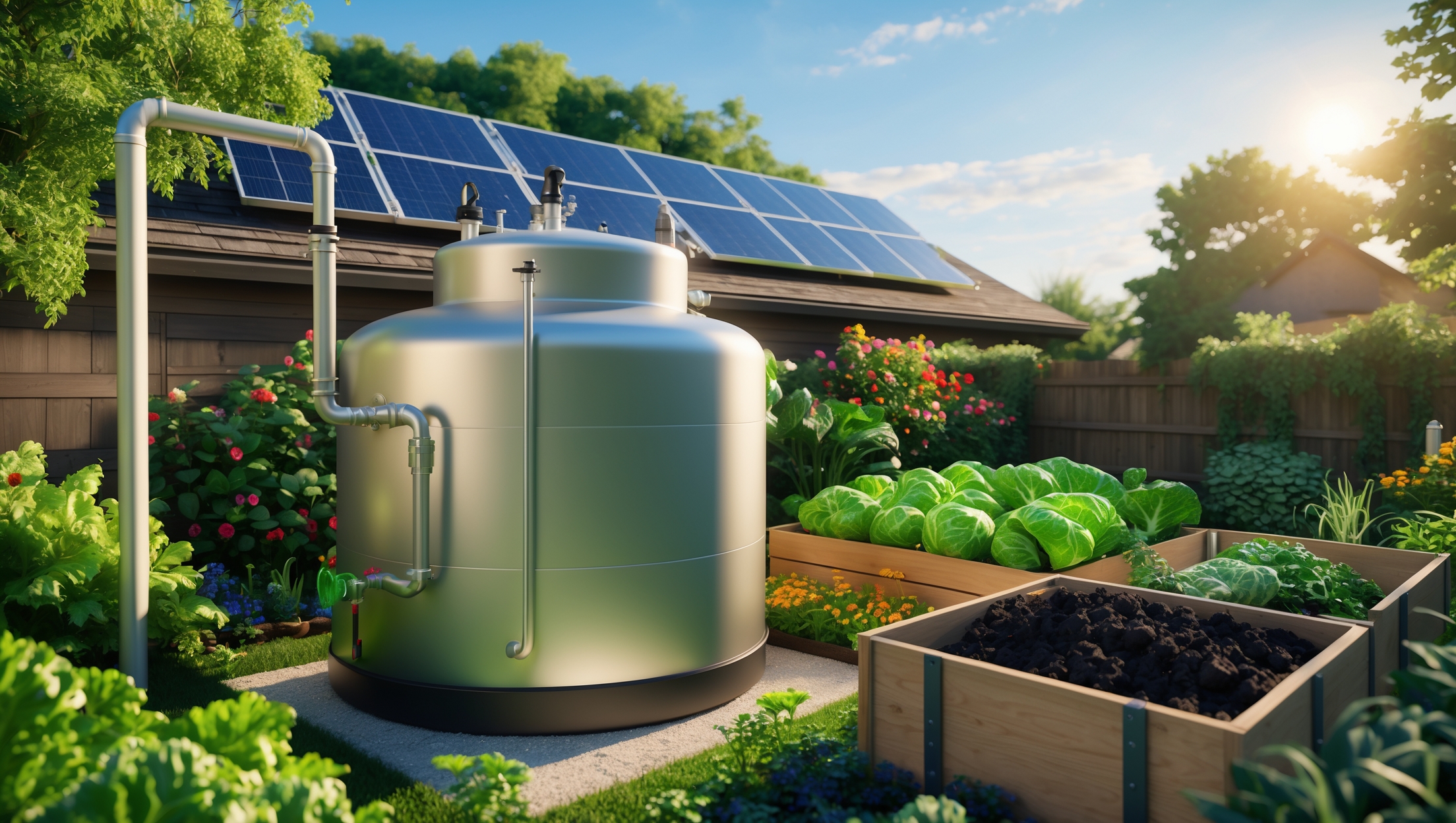
Solar Power System
- Four 250W monocrystalline panels
- 1.2 kWh lithium iron phosphate battery (for night/cloudy backup)
- MPPT charge controller
- DC submersible pump (24V, 60W)
- Basic inverter for AC accessories
Irrigation Layout
Drip lines were run to all new planting beds, controlled by a timer synced with the pump’s solar controller. Overflow from the tank was routed safely to the sewer to prevent pooling.
Budget and Cost Breakdown
| Component | Cost (USD) |
|---|---|
| Solar Panels (4 x 250W) | $800 |
| Battery & Controller | $650 |
| Submersible Pump & Accessories | $220 |
| Greywater Diverters & Plumbing | $380 |
| Filtration System | $210 |
| Drip Irrigation Materials | $310 |
| Storage Tanks | $320 |
| Misc. Hardware (timers, wiring, etc.) | $170 |
| Native Plants & Mulch | $400 |
| Total | $3,460 |
The Smiths performed all labor themselves, except for a licensed plumber who handled shower drain modifications ($450, included above). No professional solar installer was needed due to the small, off-grid system.
Permits, Compliance, and Safety
Local Regulations
Greywater reuse is legal in their state for single-family homes, but only for subsurface irrigation. Above-ground spraying is prohibited. No potable connections allowed. The system had to be inspected for backflow prevention and safe tank venting.
Permitting Process
- Submitted plumbing plans for greywater diversion
- Quick site inspection by county environmental health department
- Signed affidavit agreeing to use only biodegradable, non-toxic soaps and detergents
Safety Measures
- All greywater pipes color-coded and labeled
- No edible crops irrigated (only ornamental and native plants)
- Covered tanks to prevent animal/insect entry
- GFCI protection on all electrical circuits
Installation: Step-by-Step Process
1. Planning and Marking
With a simple landscape plan, irrigation lines and tank locations were marked. Drip lines were pre-assembled and tested with tap water.
2. Plumbing Modifications
- Installed diverter valves on laundry and shower drains
- Ran new PVC from laundry and shower to settling tank outdoors
- Plumber inspected and pressure-tested for leaks
3. Filtration & Storage Setup
- Settling tank placed on a concrete pad near the house
- Biofilter constructed with layers of gravel, sand, and aquatic plants in a barrel
- Storage tank connected downstream of filters
- Overflow routed to existing sewer cleanout
4. Solar Power Installation
- Solar panels mounted on roof with tilt brackets
- Wired to charge controller and battery bank in garage
- DC pump installed in storage tank, connected to drip system
- Timer programmed for morning irrigation cycle
5. Landscape Redesign
- Removed turf in select areas
- Laid drip lines and buried to 4” depth
- Planted native species and mulched to retain soil moisture
Performance and Results
Water Savings
Over the first year, potable water use for irrigation dropped by 63%. Annual savings: approximately 16,800 gallons (63,600 liters). Summer water bills fell by $28–$35 per month.
Energy Use
The solar system provided 100% of the system’s energy needs. Even during overcast periods, battery backup sufficed for daily irrigation cycles. The system required less than 250 kWh annually—entirely covered by solar.
Plant Health and Landscape Appearance
- Native plants thrived on consistent, slow-release watering
- No odors or issues with greywater (due to proper filtration and tank management)
- Neighbors complimented the lush, low-maintenance look
Maintenance Requirements
- Monthly: Clean lint/hair filters, inspect biofilter
- Twice yearly: Check pump and electrical connections
- Seasonal: Prune plants, flush drip lines
Total maintenance time: about 2–3 hours per month.
Lessons Learned and Challenges
- Switching to biodegradable soaps and detergents was essential—standard products can harm plants.
- Greywater output fluctuated with family routine—system worked best with flexible irrigation schedule.
- Professional help for plumbing cross-connections was well worth the cost for safety and compliance.
- Properly sizing the solar and battery system ensured seamless operation, even during cloudy stretches.
Eco and Financial Impact
After installation, the Smiths saw a payback period of just under 5 years based on water and energy savings alone—not counting the environmental benefits. Their home’s landscape became more resilient to drought, and their reliance on municipal water dropped significantly. The project also increased property value by showcasing a forward-thinking, sustainable upgrade.
Conclusion
This suburban case study proves that DIY sustainable upgrades—like a solar-powered greywater irrigation system—are both feasible and impactful, even with a modest budget. The Smiths’ experience highlights a few key takeaways for anyone considering a similar project:
- Thorough research and planning are crucial for success. Don’t skip the initial survey of your water sources, landscape needs, and solar potential.
- Local compliance and permitting may seem daunting, but are manageable with clear communication and proper documentation.
- DIY doesn’t mean you have to go it alone—professional support for plumbing or electrical tasks can prevent headaches and ensure safety.
- Ongoing maintenance is minimal if the system is well-designed, but sticking to a monthly checklist prevents issues down the line.
By embracing a practical, systems-based approach, the Smiths not only reduced their household’s environmental impact, but also inspired their community to consider green upgrades. Their story is a testament to what’s possible when innovation, determination, and sustainability meet at home. If you’re motivated to take your own steps toward sustainable living, consider starting with a small pilot like this—real change often begins right in your own backyard.


Can you provide more detail on the planning phase—about how long did it take the Smiths from initial research to having the fully operational greywater irrigation system up and running?
The planning phase for the Smiths took about three months from start to finish. This included their initial research on greywater systems and local regulations, selecting the right components, designing the setup, and securing any necessary permits. Once planning was complete, it took an additional two weeks to install and test the system before it was fully operational.
What sort of maintenance does the system require, particularly for the filtration and pumps? I’d like to know if this adds a lot of work to regular household routines.
The system described in the article needs some regular but manageable maintenance. For filtration, it’s important to clean or replace filters every few weeks to prevent clogs. Pumps should be checked monthly for blockages or leaks and kept free of debris. These tasks are not very time-consuming and can be integrated into normal home upkeep, so they shouldn’t add a significant amount of work to your routine.
How did you make sure your DIY greywater system stays within local regulations? Were there any specific codes or permits you ran into trouble with for reusing laundry or shower water in your suburb?
We checked our local building codes and health department guidelines before starting the project. Some states or towns have strict rules about greywater use, especially from laundry or showers. In our suburb, we had to submit a plan for approval and ensure the system diverted water underground—not above-ground irrigation. There were also rules about keeping greywater away from edible plants. A permit was needed, but we didn’t run into major issues because we followed the requirements closely.
I’m interested in how the total installation cost turned out compared to their original $5,000 budget. Were there any unexpected expenses or ways they managed to save money along the way?
The homeowners ended up spending about $4,800 on the DIY solar-powered greywater system, which was just under their $5,000 budget. They did encounter some unexpected expenses, like extra piping and fittings when rerouting the laundry drain, but saved money by sourcing reclaimed materials and doing all the labor themselves. Careful planning and shopping around for deals on solar components also helped them stay within budget.
Once the system was fully installed, how long did it take before the Smiths noticed significant reductions in their water bills and improved drought resilience in their landscape?
After the system was fully installed, the Smiths began noticing significant reductions in their water bills within two months. Improvements in drought resilience, such as healthier plants and reduced need for supplemental watering, became evident after one full growing season. The combination of recycled greywater and solar power made a noticeable difference both financially and in the garden’s overall health.