
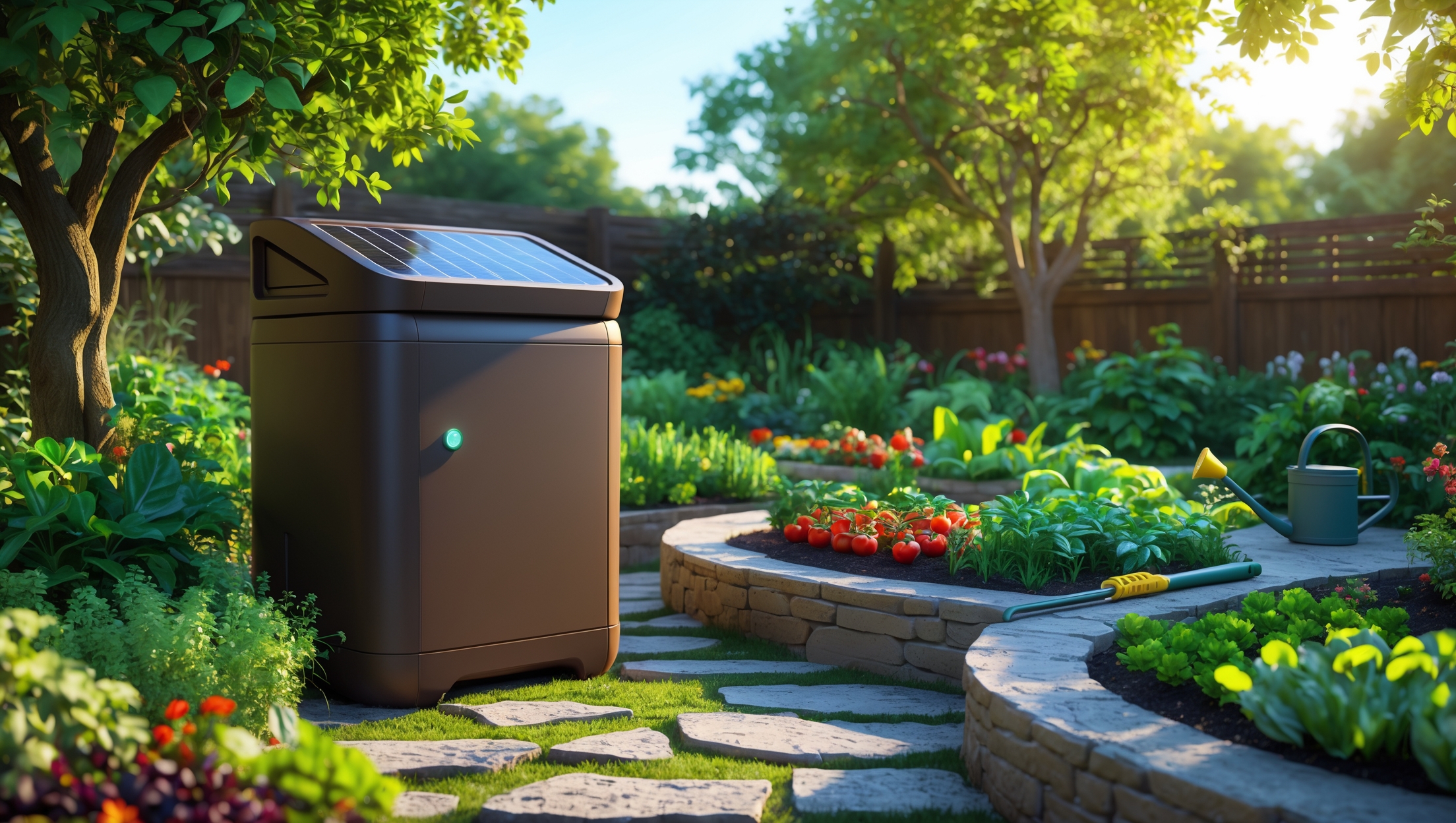
Introduction: Why Solar-Powered Composting is the Future of Sustainable Waste Management
Composting has long been a cornerstone of sustainable living, turning organic waste into nutrient-rich soil amendments for gardens and landscapes. Traditional home composting, while effective, often faces challenges like slow decomposition, unpleasant odors, and pest attraction—especially in cooler climates or shaded urban spaces. Enter the solar-powered composting system: an innovation that integrates renewable energy to optimize the composting process, accelerating decomposition, reducing smells, and enabling year-round operation. By harnessing solar power, homeowners can automate aeration, heating, and moisture management, significantly improving efficiency and ease of use. This comprehensive guide will walk you through the entire process of setting up a solar-powered composting system at home—from choosing the right components and electrical integration to daily operation and long-term maintenance. Whether you’re new to composting or seeking to upgrade your existing setup, read on to unlock the full potential of sustainable, energy-efficient organic waste management.
Understanding Solar-Powered Composting Systems
What is a Solar-Powered Composting System?
A solar-powered composting system combines a standard compost bin or tumbler with renewable energy technology—typically photovoltaic solar panels, battery storage, and electronic controls. Solar energy powers fans for aeration, heating elements for temperature regulation, and sometimes sensors for monitoring moisture or temperature. These enhancements address common composting pain points, making the process faster, cleaner, and more reliable.
Key Benefits
- Accelerated Decomposition: Solar-powered heating maintains optimal microbial activity, even in colder months.
- Odor and Pest Control: Automated aeration reduces anaerobic pockets and discourages pests.
- Energy Independence: Off-grid operation with minimal ongoing costs.
- User-Friendly: Less manual turning, easier monitoring, and reduced effort.
Planning Your Solar-Powered Composting Setup
Site Selection and Orientation
Choose a location that receives ample sunlight—ideally south-facing (in the Northern Hemisphere) or north-facing (in the Southern Hemisphere) to maximize solar panel output. Avoid placing the system under trees or in heavily shaded areas. Accessibility is also important; choose a spot that is easy to reach for adding waste and collecting finished compost.
System Size and Capacity
Evaluate your household’s organic waste output. For a typical family of four, a 100-200 liter (25-50 gallon) composter is adequate. Larger households or avid gardeners may want a bigger system or multiple bins. Remember, a larger mass retains heat better but requires more aeration and energy.
Compliance and Local Regulations
Most residential composting systems don’t require permits, but check with your municipality for regulations regarding compost bins, especially for solar panels or electrical connections. Some homeowner associations have specific rules about outdoor equipment or visible solar installations.
Equipment and Materials: What You’ll Need
- Composting Bin or Tumbler: Choose an insulated model for better thermal retention. Tumblers make turning easier; bins offer more capacity.
- Solar Panel: A 50-100 watt PV panel is sufficient for most home systems. Choose a weatherproof, high-efficiency panel.
- Charge Controller: Protects the battery from overcharging and regulates power flow.
- Battery: A deep-cycle 12V battery stores solar energy for nighttime or cloudy periods. Lithium iron phosphate (LiFePO4) is a safe, long-lasting option.
- Aeration Fan: A small, 12V DC inline fan to move air through the compost pile; select a model rated for continuous outdoor use.
- Heating Element (Optional): Low-wattage DC heating mats or cables can maintain optimal temperatures in cold climates.
- Temperature and Moisture Sensors (Optional): For advanced setups, sensors can automate fan or heater operation.
- Wiring & Mounting Hardware: UV-resistant cable, waterproof connectors, mounting brackets for panel and electronics.
Step-by-Step Setup Tutorial
1. Assembling the Composting Bin
Set up your composting bin or tumbler according to the manufacturer’s instructions. Choose a flat, well-drained area. For bins, ensure there is airflow at the base and sides—drill additional holes if necessary. For tumblers, check that the turning mechanism operates smoothly.
2. Installing the Solar Panel
- Mount the panel on a south-facing wall, roof, or dedicated pole, angled to match your latitude for year-round performance.
- Secure all brackets and ensure the panel is oriented to avoid shading from trees or structures, especially during winter.
- Use UV-resistant cable to connect the panel to the charge controller, running wiring through protective conduit if exposed.
3. Connecting the Charge Controller and Battery
- Mount the charge controller in a waterproof enclosure, close to the battery and composting system.
- Connect the solar panel leads to the input terminals on the charge controller.
- Attach the battery to the controller’s battery terminals, following polarity markings carefully.
- Check system voltage and ensure the charge controller’s indicator lights function properly.
4. Setting Up the Aeration Fan
- Install the DC inline fan in a vent at the base or side of the compost bin. Use flexible ducting if needed to direct airflow through the pile.
- Wire the fan to the charge controller’s load output, or use a separate timer or relay for scheduled operation.
- Secure all connections with waterproof heat-shrink tubing or connectors.
5. (Optional) Adding Heating and Sensors
- Lay heating mats or cables under or around the compost pile, ensuring even distribution and no direct contact with compost material.
- Wire the heating element to the load side of the charge controller, adding a thermostat or smart relay to prevent overheating.
- Install temperature and moisture sensors to monitor compost conditions. Link them to an automation controller if desired.
6. Initial System Test
- On a sunny day, check that the solar panel charges the battery and that the fan operates as intended.
- Test the heating element (if installed) and confirm temperature regulation.
- Verify that all wiring is secure, all enclosures are weatherproof, and there are no exposed connections.
Operational Tips for Maximum Efficiency
Balancing Carbon and Nitrogen
Maintain the ideal composting ratio—roughly 2:1 brown (carbon-rich) to green (nitrogen-rich) materials. Browns include dried leaves, cardboard, and wood chips; greens include kitchen scraps, coffee grounds, and grass clippings. This balance supports healthy microbial activity and reduces odor.
Moisture Management
Compost should feel like a wrung-out sponge. Too much moisture leads to anaerobic conditions and smells; too little slows decomposition. If your system includes a moisture sensor, automate fan or heater operation based on readings. Otherwise, check weekly and add water or dry browns as needed.
Temperature Monitoring
Active composting occurs between 55-65°C (130-150°F). Solar-powered heating ensures you can maintain this range even in cool weather. If temperatures regularly fall below 45°C (113°F), increase aeration or insulation, or adjust the heating schedule.
Aeration Schedule
- For most home systems, running the fan for 10-20 minutes every 2-3 hours is sufficient.
- In hot weather, increase frequency to prevent overheating.
- In winter, coordinate fan and heater cycles to maintain steady temperatures.
Troubleshooting and Common Issues
Odors and Anaerobic Conditions
If you notice rotten or sour smells, increase fan runtime and add more dry carbon materials. Check for compacted layers that block airflow and fluff the pile if needed.
Low Decomposition Rates
Slow breakdown often signals poor aeration, low moisture, or cold temperatures. Use your system’s sensors or manual checks to identify the cause, then adjust fan speed, heating, or add water as necessary.
Solar Power Shortfalls
- Monitor battery voltage; if it drops below 12V regularly, consider adding a larger panel or battery.
- Keep solar panels clean and free of debris or snow.
- Trim vegetation that may shade panels over the growing season.
Maintenance Best Practices
Monthly System Checks
- Inspect all wiring for wear or animal damage.
- Clean solar panels with water and a soft cloth to remove dust or pollen.
- Check battery terminals for corrosion and ensure enclosures remain watertight.
- Test sensors and verify fan and heater operation.
Compost Bin Upkeep
- Turn or aerate the pile manually every 2-4 weeks (even with powered aeration) to break up clumps.
- Harvest finished compost from the bottom or side door every 3-6 months.
- Clean out the bin annually to remove residue and prevent compaction.
Battery and Electronics Care
Batteries typically last 3-7 years. Check charge levels monthly and replace batteries at the first sign of capacity loss. Store batteries in insulated, weatherproof boxes if winter temperatures drop below freezing.
Integrating Your System with Other Green Technologies
Rainwater Harvesting
Pair your compost system with a rainwater collection barrel to provide moisture for the pile, further reducing your environmental footprint.
Solar Monitoring Apps
Some charge controllers support Bluetooth or Wi-Fi connectivity, allowing you to monitor solar and battery performance from your smartphone. This is particularly useful for troubleshooting and optimizing system operation remotely.
Smart Home Integration
Advanced users can connect compost system controls to home automation platforms (such as Home Assistant or SmartThings) for automated scheduling based on weather forecasts or energy production.
Cost Breakdown and Budgeting Considerations
- Compost Bin/Tumbler: $100–$300
- Solar Panel (50-100W): $70–$150
- Charge Controller: $20–$50
- Battery (12V, 50-100Ah): $80–$200
- Aeration Fan: $25–$60
- Heating Element (Optional): $30–$70
- Sensors and Automation (Optional): $40–$120
- Wiring & Hardware: $30–$60
Expect to invest $325–$700 for a fully featured system, with annual maintenance costs under $30 (primarily battery savings and occasional part replacement). DIY assembly can save on labor, but factor in your time and skill level for custom builds.
Conclusion: Empowering Sustainable Living with Solar Composting
Setting up a solar-powered home composting system is a forward-thinking investment in sustainable living, merging organic waste management with renewable energy for maximum environmental impact. By following this guide, you’re not only streamlining the composting process—accelerating decomposition, controlling odors, and minimizing manual labor—but also taking a significant step toward energy independence and circular resource use. With thoughtful planning, the right materials, and regular maintenance, your solar composting system can operate efficiently for years, dramatically reducing landfill contributions while enriching your garden. As renewable technologies become more accessible and affordable, integrating them into everyday routines like composting is a powerful way to model eco-conscious living, inspire your community, and contribute to a more resilient future. Whether you’re a sustainability enthusiast, an urban gardener, or someone seeking to make a real difference at home, solar-powered composting stands out as a practical, impactful solution. Start today and watch your organic waste—and your garden—thrive in harmony with the sun.

I’m concerned about pests in my area, so I’m curious whether the automated aeration system alone is enough to deter them, or should additional deterrents still be used with solar-powered compost bins?
The automated aeration system helps reduce pest attraction by keeping compost oxygenated and less smelly, but it might not fully prevent pests, especially in areas with high pest activity. It’s a good idea to use additional deterrents like secure, tight-fitting lids, pest-proof mesh, and making sure you only add appropriate food scraps. Combining these measures with the aeration system should give you the best pest control results.
I live in New England where winters can get pretty cold and cloudy. How effective is a solar-powered composting system in colder climates with less sunlight, and are there specific adjustments you’d recommend for those conditions?
Solar-powered composting can still work in colder, cloudier regions like New England, but you’ll need to make some adjustments. Insulate your compost bin well to retain heat, and consider sizing up your solar panel or adding a battery to store extra power for cloudy days. Turning the pile more frequently and using high-carbon materials can also help keep the process active even in winter.
If something goes wrong with the electronic controls or solar components over time, is it usually a DIY repair or would I likely need to hire a professional? I’m reasonably handy but have limited experience with solar electric systems.
Since you’re handy but have limited solar experience, some minor issues like loose wires, dirty solar panels, or tripped breakers can often be handled yourself with basic troubleshooting. However, if problems involve the charge controller, inverter, or persistent wiring issues, it’s safer and more effective to consult a professional. This ensures your system stays safe and works efficiently.
How complicated is the electrical integration for a solar-powered composting setup if I don’t have much experience with wiring? Are there any easy-to-install kits recommended for beginners?
The electrical integration for a solar-powered composting system can be straightforward, especially with beginner-friendly kits available. Many kits come with pre-wired components and clear instructions, so you mostly connect labeled parts rather than do any complex wiring. Look for all-in-one solar composting kits or solar panel starter kits designed for small appliances—these are typically plug-and-play. If you’re unsure, choosing a kit with customer support or installation videos can help make the process even easier.
The article mentions automated aeration and heating for better decomposition, but I’m curious about how difficult the electrical integration is for someone without much DIY experience. Are there plug-and-play kits available, or would I need to hire an electrician?
There are actually some plug-and-play composting kits available that handle aeration and heating, making setup much easier for beginners with little DIY experience. Many of these systems are designed for simple installation and just require plugging components together. However, if you’re building a fully custom setup or integrating it with a solar power system, you may need some basic wiring knowledge. In that case, consulting an electrician is a good idea to ensure safety and optimal performance.
You mention that solar energy can be used to power moisture and temperature sensors in the compost system. How complicated is it to install and calibrate those sensors if I have little to no experience with electronics?
Installing basic moisture and temperature sensors powered by solar energy is quite manageable, even for beginners. Many kits are designed for easy setup with simple instructions and plug-and-play connections. Calibration usually involves following step-by-step guides provided by the manufacturer, which often means pressing a button or adjusting a dial. If you choose a user-friendly kit, you shouldn’t need prior electronics experience to get everything running smoothly.
What troubleshooting steps do you recommend if the automated aeration or heating suddenly stops working—does that usually indicate an issue with the solar power supply, or could it be a problem with the electronic controls?
If the automated aeration or heating stops working, start by checking the solar power supply—make sure the panels are clean, the battery is charged, and all connections are intact. If the power supply looks fine, inspect the electronic controls for loose wires, blown fuses, or reset switches. Issues can arise from either area, so checking both will help pinpoint the cause.
The article mentions sensors for monitoring moisture and temperature. What kind of sensors are best for home compost setups, and do you have any recommendations for affordable options?
For home compost setups, digital soil moisture sensors and simple temperature probes are both effective and affordable. Look for a stainless steel compost thermometer, which is durable and easy to read. For moisture, inexpensive capacitive soil moisture sensors work well and are widely available. If you want a combined solution, some wireless sensors can monitor both temperature and moisture and sync with a smartphone app, offering convenience for regular tracking.
How much hands-on time does a solar-powered composting system usually require compared to a regular backyard compost bin? I am trying to figure out if the automation really cuts down on weekly maintenance, since things are always busy at home.
A solar-powered composting system typically requires less hands-on time than a regular backyard compost bin. The automation helps maintain optimal temperature and aeration without daily intervention, so you might only need to check on things or add material once a week. In contrast, traditional bins often need frequent turning and monitoring. Overall, the solar system can cut weekly maintenance in half or more, making it much easier for busy schedules.
If I already have a traditional compost bin and want to upgrade, what are the key steps and components I should prioritize first when transitioning to a solar-powered system?
When transitioning from a traditional compost bin to a solar-powered system, start by choosing a solar panel kit that matches the power needs of your composting equipment, like aerators or heating elements. Next, install a battery for energy storage, ensuring continuous operation even on cloudy days. Prioritize weatherproof wiring and controls. Finally, adapt your bin by adding ventilation and insulation as needed to work efficiently with your new powered components.
I’m interested in automating my composting process, but I live in a densely shaded area. Does the article offer any advice for maximizing solar panel efficiency or supplementing power during less sunny periods?
The article does mention ways to maximize solar panel efficiency, such as placing panels in the sunniest available spot and keeping them clean. For shaded areas or less sunny times, it suggests supplementing with battery storage or connecting to a backup power source. You might also consider using a smaller, energy-efficient composting system to reduce power needs.
You mentioned sensors that monitor moisture and temperature—are those essential for a home system, or can you get by with just the solar-powered heating and aeration?
Sensors for moisture and temperature are helpful but not strictly essential for a basic home composting setup. With just solar-powered heating and regular aeration, you can still manage compost effectively by checking conditions manually—feel the compost for dampness and monitor for excessive heat or cold. However, sensors add convenience and consistency, especially if you want to automate or optimize the process.
The article mentions solar-powered heating to maintain microbial activity in colder months. How well does this work in regions with frequent overcast weather where solar energy collection might be limited?
Solar-powered heating can be less effective in regions with frequent overcast weather, as solar panels generate less energy without direct sunlight. In these conditions, you might need a backup system, such as insulating your compost bin more heavily or using supplemental electric heating when necessary. Regularly monitoring compost temperature can also help you adjust your approach if microbial activity drops during colder, cloudy periods.
What happens if there’s a long period of cloudy or rainy weather? Will the composting system still function properly, or is there a backup option to keep the aeration and heating working when there’s not enough solar power?
During extended cloudy or rainy weather, the solar-powered components, like aeration fans or heating systems, may not work at full capacity due to reduced solar energy. The composting process itself usually continues, but it might slow down. To keep things running smoothly, you could add a backup power source, such as a battery storage system or a small generator, to supply electricity when sunlight is limited.
You talked about using solar energy for year-round composting, even in cold climates. How well do these systems perform during cloudy winters, and do you need a backup power source for consistent operation?
Solar-powered composting systems can still function during cloudy winters, but their efficiency may decrease because less sunlight reaches the panels. In particularly cloudy or extended winter periods, the system might not generate enough power for consistent operation. Many users add a backup battery or a small generator to keep things running smoothly during low-sunlight days. This ensures the composting process continues uninterrupted, regardless of the weather.
After getting the system set up, are there daily or weekly tasks I should expect to keep everything running efficiently, or does the automation pretty much handle everything without much intervention?
Once your solar-powered home composting system is set up, most of the process is automated, especially temperature regulation and aeration if your system includes those features. However, you should still plan for a few simple weekly tasks: add new compost materials, monitor moisture levels to keep the pile damp but not soggy, and give the compost a quick turn if your system doesn’t do this automatically. These small checks will help keep everything running smoothly.
For homeowners on a budget, what would be the most cost-effective way to start with solar-powered composting? Is it possible to retrofit an existing tumbler or bin with a basic solar kit, or would starting from scratch be easier?
If you already have a compost tumbler or bin, retrofitting it with a simple solar kit can be a very budget-friendly option. You can add a small solar panel and a low-wattage fan to boost airflow and composting speed. Kits for basic solar ventilation are affordable and relatively easy to install. Starting from scratch could cost more, so modifying your existing setup is usually the most cost-effective choice.
I’m juggling work, parenting, and household chores, so I’m curious—does a solar-powered compost system really make the daily operation and maintenance much easier, or are there still hands-on tasks I should expect compared to traditional composting?
A solar-powered compost system can simplify some tasks, like aeration or temperature control, since these can be automated with solar-powered fans or sensors. However, you’ll still need to add food scraps, occasionally turn or check the compost, and monitor moisture levels. While maintenance is reduced compared to traditional methods, some hands-on involvement is still necessary to keep the system running smoothly.
Once the system is up and running, how much daily maintenance does it actually require? Are there any common troubleshooting issues with the solar components that I should watch out for as a first-time user?
Once your solar-powered composting system is running, daily maintenance is quite minimal. Typically, you’ll just need to check moisture levels, occasionally turn the compost, and add new material as needed. For the solar components, beginners sometimes encounter issues like dirty solar panels reducing efficiency, loose wiring, or depleted batteries. Regularly cleaning the panels and doing a quick visual check of connections can help prevent most problems.
You mention off-grid operation with minimal ongoing costs, but could you provide a ballpark estimate for the initial setup expenses for a typical home system, including the solar panels, battery, and necessary controls?
For a typical home composting setup powered by solar, you can expect initial costs to range from $800 to $1,500. This estimate covers a small solar panel kit ($200–$400), a deep-cycle battery ($100–$300), charge controller and basic wiring ($100), and a sturdy compost bin ($200–$500). Prices vary by size, quality, and local market, but this ballpark should help you plan your investment.
The article mentions using sensors to monitor moisture and temperature. How difficult is it to install these sensors and connect them to the solar-powered controls for someone with limited DIY electrical experience?
Installing basic moisture and temperature sensors is generally manageable, even with limited DIY electrical experience. Many kits are designed for beginners and come with clear instructions. You’ll usually just need to connect the sensors to a small controller (like an Arduino), which can be solar-powered. Basic wiring and mounting are required, but no advanced skills. If you’re comfortable using a screwdriver and following diagrams, you should be able to set it up. For extra reassurance, look for kits with plug-and-play components.
I’m curious about the estimated upfront cost for setting up a solar-powered composting system compared to traditional compost bins. Are there options for keeping the budget manageable, especially for beginners?
The upfront cost for a solar-powered composting system is generally higher than a traditional compost bin. Expect to spend $200–$600 for solar panels, batteries, and upgraded composters, while regular bins can cost $50–$150. To keep costs down, you can start with a basic compost bin and add small solar components gradually, or use DIY solar kits. Repurposing materials and starting on a smaller scale are also good budget-friendly strategies.
For homeowners on a tight budget looking to upgrade their traditional compost bins, what are the most cost-effective components to start with if they can’t afford the full solar-powered system all at once?
If you’re upgrading on a budget, consider starting with basic solar-powered ventilation fans to improve airflow in your existing compost bin. These are often affordable and can speed up decomposition. You might also add a small solar panel to power the fan. Upgrading to a moisture sensor or thermometer later can further enhance your system without a large upfront investment.
What happens to the composting process if there are several cloudy days in a row or if the solar panels get covered in snow? Do these systems have a backup option for less sunny climates?
If solar panels don’t get enough sunlight due to cloudy weather or snow cover, the system may not generate enough power for components like fans or temperature control. Some setups include battery storage to handle short periods without sun, while others might be connected to the grid or have manual backup options. For areas with frequent low sunlight, it’s best to choose a system designed with these alternatives in mind.
The article mentions electronic controls and sensors. Are these included in most off-the-shelf kits or would I need to purchase them separately? I’m trying to get a sense of the total budget I should plan for.
Most off-the-shelf home composting kits focus mainly on the basic composting bin and solar power components, and do not usually include electronic controls or sensors. If you want things like temperature or moisture sensors and automated controls, you’ll likely need to buy them separately. When planning your budget, factor in some extra cost for these add-ons if you want advanced monitoring and automation features.
How much should I expect to spend on the components for a basic solar-powered composting setup, including the solar panel, battery, and controls? Are there budget-friendly kits or DIY options you’d recommend?
For a basic solar-powered composting setup, expect to spend around $250 to $500. This covers a small solar panel, charge controller, a 12V battery, and basic wiring. There are budget-friendly DIY kits online, or you can piece together components from hardware stores and solar suppliers. If you’re handy, assembling your own system can save money and let you customize it to your needs.
What would you suggest for someone living in a climate with limited sun exposure—are there alternative ways to ensure continuous operation, or will additional battery storage suffice for the solar-powered components?
In areas with limited sun, you have a couple of options. Adding more battery storage can help keep your composting system running during cloudy spells, but it may not always be enough during extended low-sun periods. You might also consider connecting your system to the grid as a backup or using a hybrid setup with wind power if that’s feasible in your location. This way, your composting system stays reliable year-round.
I saw that sensors can monitor moisture and temperature in these systems. If something goes wrong, like the compost getting too dry or too cold, do these setups alert you automatically, or do you have to check manually?
Most basic home composting setups with sensors require manual checking, meaning you need to look at the sensor displays or app to see current moisture and temperature levels. However, some advanced systems can be set up to send automatic alerts to your phone or email if readings go outside your chosen range. For most DIY solar-powered systems, you’ll likely need to check manually unless you add smart monitoring features.
How complex is the electrical integration part for someone who isn’t very handy? I’m pretty good with basic DIY projects, but I’ve never connected solar panels to anything before. Is this something I’d need to hire an electrician for, or are there plug-and-play systems available?
If you’re comfortable with basic DIY projects, many solar kits for small composting systems are designed to be user-friendly, with plug-and-play components and clear instructions. These typically don’t require advanced electrical knowledge. However, for larger setups or if you’re unsure at any step, consulting an electrician is the safest choice. Most beginners find entry-level kits manageable without professional help.
How much maintenance do the electronic components in a solar-powered composting system usually require, such as cleaning panels or checking connections, compared to standard compost bins?
Electronic components in a solar-powered composting system need some regular attention. Solar panels should be cleaned every few months or after heavy dust or pollen buildup to maintain efficiency. You should also check electrical connections for corrosion or loose wires a few times a year. In contrast, standard compost bins only need occasional turning and monitoring of compost conditions, with no electronics to maintain. The solar setup adds a bit more upkeep, but nothing too demanding.
The article mentions automated aeration and heating being powered by solar panels. Can you clarify which components are essential for beginners, and which upgrades are optional if I just want to get started without a huge upfront investment?
For beginners, the essential components are a compost bin, basic aeration (which can be manual, like turning the compost with a tool), and solar panels if you want to power any equipment. Automated aeration systems and heating elements are optional upgrades. If you prefer a simple setup, focus on the bin and manual aeration first; you can always add more automation later as your needs grow.
What maintenance tasks are involved with the electronic controls and battery storage components over time? Are there any common issues or troubleshooting tips mentioned in your guide for those of us who are new to solar setups?
The guide explains that for the electronic controls and battery storage, you’ll need to regularly check connections for corrosion, ensure the battery is charged and not exposed to extreme weather, and clean any dust from control panels. It points out that common issues include loose wires or reduced battery capacity over time. If controls stop responding, resetting the system or checking fuse connections is recommended as a first troubleshooting step.
I’d love to hear about the initial costs involved in setting up a solar-powered compost system as described. What would be a realistic budget for someone starting from scratch, including solar components, controls, and the compost bin itself?
A realistic starting budget for a solar-powered home composting system would be around $400 to $1,000. This includes the compost bin ($100–$300), a small solar panel kit with battery and charge controller ($200–$500), and automation controls or fans ($50–$200). Costs vary depending on system size and your location, but this range should cover most basic setups for beginners.
Could you share more details on how the electronic sensors are integrated into the compost bin? I’m especially interested in any practical tips for setting up moisture or temperature monitoring and how they connect to the solar battery.
Electronic sensors for moisture and temperature are typically placed inside the compost pile, with their probes or wires shielded from direct contact with decomposing material. For solar integration, use low-voltage sensors compatible with a small solar-charged battery. Connect sensor leads to a battery-powered Arduino or similar microcontroller, which can log data or send alerts. Ensure all electronics are secured in weatherproof enclosures, and use efficient wiring to minimize energy drain. Regularly check connections for corrosion due to humidity.
If something goes wrong—like the fan stops working or the temperature sensors fail—are repairs something a DIYer can handle, or would I need to call in an expert? I want to make sure it isn’t too complicated for a typical homeowner.
Most issues like a non-working fan or faulty temperature sensors are fairly straightforward for a handy DIYer to troubleshoot. Replacing fans or sensors usually involves basic wiring or swapping out parts, which you can often do with standard household tools. However, if you encounter electrical issues beyond simple part replacements or feel unsure, it’s safer to consult an expert. The system is designed to be user-friendly for typical homeowners, but don’t hesitate to seek help if something seems complex.
If my yard only gets partial sun during the day, will the automated aeration and heating still work reliably, or are there backup options you recommend? I’d love for this to operate year-round, but our home isn’t in full sun.
Partial sun can still support your system, but the automated aeration and heating may run less efficiently on cloudy days or during winter. To ensure reliable year-round operation, consider adding a backup power source like a small battery bank, or connect the system to your home’s electricity as a secondary option. This way, your composting setup stays consistent even with limited sunlight.
If I already have a regular compost bin, is it possible to retrofit it with solar panels and those electronic controls, or do I have to buy a whole new system to get the benefits described in the guide?
You don’t need to buy a whole new system. Many regular compost bins can be upgraded by adding solar panels and electronic controls, like temperature or moisture sensors. Make sure your current bin has enough space and ventilation to accommodate these components. With some basic tools and adjustments, you can enjoy the benefits outlined in the guide without starting from scratch.
In the section on automated aeration, do you recommend a specific type of fan or ventilation system for a backyard setup in a suburban neighborhood? I want to avoid noise complaints and ensure it’s effective.
For a suburban backyard composting setup, a small, weatherproof inline duct fan with a brushless motor is a good choice. These fans are typically quiet—look for models rated under 40 decibels—and efficient. Pair it with a timer or solar-powered controller for optimal airflow and minimal disturbance to neighbors.
What sort of maintenance does a solar-powered composting system require that might be different from traditional composting bins, especially when it comes to keeping moisture and temperature sensors working reliably?
A solar-powered composting system generally needs a bit more attention to its electronic components compared to traditional bins. You’ll need to periodically check and clean the moisture and temperature sensors to prevent compost buildup from interfering with their readings. It’s also important to inspect the solar panel for dust or debris, ensuring it stays clean for optimal energy generation. Additionally, check wiring connections to make sure everything is secure and weather-protected.
Could you elaborate on what kind of maintenance is involved with the solar panels and electronic components in a solar-powered composting system over time? I am concerned about potential upkeep or replacement costs for homeowners.
Solar panels typically require minimal maintenance—mainly periodic cleaning to keep them free of dust and debris, and occasional checks for damage or loose connections. For electronic components like charge controllers, batteries, and timers, regular inspections to ensure proper operation are helpful. Batteries may need replacement every 3–7 years, depending on type and usage. Overall, upkeep costs are usually low, but budgeting for battery replacement and occasional repairs is wise for long-term reliability.
This guide talks about integrating electronic monitoring for the compost, like moisture and temperature sensors. If those sensors detect a problem, how difficult is it to troubleshoot and make adjustments on the system?
Troubleshooting issues flagged by moisture or temperature sensors is usually straightforward. If a sensor detects a problem, you’ll typically just need to check the compost pile for things like dryness, excess moisture, or improper heat. Adjusting is often as simple as adding water, turning the pile for better aeration, or adjusting material balance. The sensors give you clear direction, so you can respond quickly and efficiently.
I’m interested in automating aeration and moisture management as described. Do you recommend any specific types of sensors or controllers for someone just getting started, or is it better to start with a simpler setup and upgrade later?
For beginners, it’s often best to start with a simple setup—try a basic compost thermometer and manual moisture checks so you get a feel for how compost behaves. If you want to automate, look for basic soil moisture sensors and temperature probes compatible with affordable microcontrollers like Arduino or Raspberry Pi. They’re widely supported, and there are plenty of tutorials for setup. You can always upgrade to more advanced systems as you gain experience.
I run a small cafe and we produce a decent amount of kitchen scraps every day. In terms of scale, would a solar-powered composting system like the one described in your guide handle a higher daily waste input, or is it mainly suited for standard household amounts?
The solar-powered composting system detailed in the guide is primarily designed for typical household waste amounts. However, you can scale up the system by increasing bin capacity and the size of the solar setup. For a small cafe producing more scraps daily, consider using multiple compost bins or a larger unit to ensure efficient processing and avoid overloading the system.
Could you talk more about how well the solar-powered composting system performs in areas that don’t get a lot of direct sunlight, like shaded yards or cities with long winters? Are there backup options or minimum sunlight requirements?
The solar-powered composting system works best with consistent sunlight, but it can still function in areas with limited sun, though at a slower pace. In heavily shaded yards or regions with long winters, consider using a battery backup or integrating a supplemental power source, like a plug-in adapter, to keep the system running. Generally, 4-6 hours of sunlight daily is ideal, but with less, you may need to rely more on backup power to maintain effective composting.
How reliable is the automated aeration and heating in extreme winter conditions? I’m in the northern US and wonder if supplemental backup power is ever needed to keep the composting process running smoothly.
Automated aeration and heating systems for solar-powered composting can perform well in moderate cold, but extreme winter conditions in the northern US may challenge their reliability. Short daylight hours and heavy snow can reduce solar output, making supplemental backup power—like a battery or grid connection—advisable to keep the system running smoothly and maintain compost activity during prolonged cold spells. Monitoring your system’s temperature regularly will help you decide when extra support is needed.
I see that solar panels can automate aeration and heating, but how does the battery storage work for days with limited sun? Is there a recommended battery type or capacity for consistent composting performance?
Battery storage ensures your composting system keeps running on cloudy days or at night by storing excess solar energy generated during sunny periods. Deep-cycle batteries, like lithium-ion or AGM (Absorbent Glass Mat) types, are commonly recommended for their durability and ability to handle frequent charging and discharging. As for capacity, a 12V battery with 100–200 amp-hours is usually sufficient for small to medium setups, but it’s best to size your battery based on your system’s daily energy needs and average days without sunlight in your area.
After installing the system, what sort of routine maintenance do you recommend for the solar panels and battery storage to keep everything running smoothly year-round?
To keep your solar panels efficient, check and clean them every 1-2 months to remove dust, leaves, or bird droppings. Inspect for any damage or loose wiring. For battery storage, monitor charge levels, keep terminals clean, and ensure good ventilation to prevent overheating. Every six months, check for corrosion and test system performance to catch any issues early.
When setting up the solar components for composting at home, what kind of upfront costs should someone expect for the basic photovoltaic panels, battery, and controls? Are there any more affordable DIY alternatives that still get similar results?
For a basic solar setup to power a home composting system, you can expect upfront costs of around $200–$500 for a small photovoltaic panel, deep cycle battery, and charge controller. If you’re looking for cheaper DIY options, you might repurpose old solar panels or batteries from other projects, or use a solar power bank for low-energy needs. These alternatives can lower costs, but be sure they match your system’s power requirements.
Can you explain more about how the solar panel setup works with the battery storage for year-round composting? I’m wondering if the system still works on cloudy days or in winter when there’s less sunlight.
The solar panel charges a battery during sunny periods, storing energy for when sunlight is limited. Even on cloudy days or in winter, the battery provides power to keep your composting system running. While you’ll get less solar energy in those conditions, a properly sized battery and possibly a slightly larger solar panel help ensure the system works year-round by covering days with low sunlight.
If my composting area is in a shaded spot, are there any best practices for optimizing solar panel placement or is a solar-powered system less practical in this situation?
When your composting area is shaded, you can still use a solar-powered system by installing the solar panels in a spot that receives the most sunlight, such as a nearby roof or a sunny section of your yard. Run wiring from the panels to your composting setup. This approach ensures adequate energy collection even if the compost area itself isn’t sunny.
When it comes to daily operation, how much maintenance does the electronic side of the system require compared to traditional composting? I’m new to both composting and working with solar equipment, so I’d love any tips for beginners.
The electronic side of a solar-powered composting system usually needs minimal daily maintenance. You’ll want to check that the solar panels are clean and clear of debris, and make sure the battery connections are secure. Compared to traditional composting, the main difference is just keeping an eye on the electronic components. For beginners, it’s helpful to inspect everything weekly, keep your manual handy, and don’t hesitate to ask questions if something seems off.
How does a solar-powered composting bin perform during long stretches of cloudy weather, especially in the winter? Does the system need backup power or will the battery storage usually be enough to keep the aeration and heating running?
During extended cloudy periods, especially in winter, solar-powered composting bins can face challenges. The battery storage is designed to provide backup, but its capacity and the system’s energy demands will determine if it’s sufficient. For consistently overcast days, you might need a larger battery bank or consider a supplemental power source like grid electricity to ensure aeration and heating keep running smoothly.
The guide mentions automated moisture and temperature management using sensors. Could you explain what types of sensors work best for compost monitoring and how complicated they are to set up for someone with very little experience in electronics?
For compost monitoring, the most commonly used sensors are soil moisture sensors and digital temperature sensors like the DS18B20. There are ready-made kits that work with simple displays or connect to apps, which means you won’t need advanced electronics skills. These kits typically just require you to insert the probes into your compost pile and follow basic instructions for setup, making them very beginner-friendly.
I’m curious about safety—are there any special precautions I should take with electric components like heating elements or sensors around pets and small children when installing a solar composting system?
Absolutely, safety is important when installing electric components for a solar composting system, especially with pets and children around. Make sure all wiring and connections are properly sealed and housed in weatherproof, tamper-resistant enclosures. Position heating elements and sensors out of reach or behind barriers. Always use components rated for outdoor use and double-check for proper grounding to avoid any electrical hazards.
Could you explain how the electronic controls in a solar-powered composting system actually work? I’m especially curious about the sensors that monitor moisture and temperature—are they necessary for a basic setup or just optional upgrades?
The electronic controls use sensors to monitor the moisture and temperature inside the compost bin. These sensors send data to a controller, which can trigger fans or adjust settings to keep composting conditions ideal. For a basic solar-powered composting setup, these sensors aren’t strictly necessary; you can monitor conditions manually. However, they do make maintenance easier and help optimize the process, so they’re often considered useful upgrades rather than essentials.
If I’ve already got a traditional compost bin, what steps would I need to take to convert it into a solar-powered system? Do I need to buy a completely new bin or can components be retrofitted onto my existing setup?
You don’t need to buy a completely new compost bin. You can retrofit solar-powered components onto your existing setup. Start by adding a small solar panel connected to a low-voltage fan or compost aerator to improve airflow and speed up decomposition. Make sure the fan or aerator is weatherproof and suitable for outdoor use. Mount the solar panel in a sunny spot nearby and run wiring to your bin, ensuring everything is securely attached.
Could you provide more detail on how the automated aeration works? For example, is it constantly running off the solar panel, or does it use sensors to only activate when needed to save energy?
The automated aeration system in the guide is designed to be energy-efficient. It does not run constantly; instead, it uses moisture and temperature sensors to monitor the compost conditions. The aerator only activates when the sensors detect that oxygen levels are low or the pile is getting too hot, which helps conserve solar energy and keeps the composting process optimal.
For colder climates, how effective is the solar-powered heating component at maintaining optimal microbial activity during prolonged stretches of cloudy weather?
In colder climates with extended cloudy periods, the solar-powered heating component may struggle to consistently maintain optimal temperatures for microbial activity. Heat retention will largely depend on the insulation of your compost bin and the efficiency of your solar setup. Adding extra insulation or using thermal mass (like water containers) can help store heat, but during long stretches without sun, microbial activity will likely slow down until conditions improve.
If something goes wrong, like the solar-powered heating or fan stops working in the middle of winter, are there manual backup options to keep the composting process going until repairs can be made?
If your solar-powered heating or fan system stops working in winter, you can keep the composting process going with some manual backup options. For heating, consider insulating the compost bin with straw bales or blankets to retain warmth. For aeration, manually turn the compost more frequently using a pitchfork or compost turner to keep air circulating. These steps can help maintain compost activity until your solar system is repaired.
With kids and pets around, are there any safety considerations when adding electronic controls and heating elements to a backyard compost bin? I’m interested in making sure everything is safe and reliable year-round.
When adding electronic controls and heating elements to your compost bin, it’s important to use weatherproof, outdoor-rated enclosures and to keep all wiring out of reach of children and pets. Ensure heating elements are safely shielded and cannot be touched directly. Consider using ground-fault circuit interrupters (GFCIs) for added electrical safety, and regularly check for wear and tear on all components to maintain year-round reliability.
If the automated controls or sensors powered by the solar panels malfunction, what kind of troubleshooting steps can a homeowner take before calling a professional? Are there common issues with solar-powered composters that beginners should watch out for?
If the automated controls or sensors malfunction, start by checking the solar panel connections and making sure they’re clean and facing the sun. Also, confirm the batteries are charged and wires aren’t loose or damaged. Sometimes resetting the controller or cleaning sensor contacts can help. Common issues include poor sunlight exposure, sensor misalignment, or dirt buildup on panels or sensors, so regular maintenance can prevent many problems.
How does the upfront cost of setting up a solar-powered composting system compare to traditional methods, especially when factoring in solar panels, batteries, and any electronic controls? Is it reasonable to expect a return on investment over time through reduced waste or improved compost quality?
The upfront cost for a solar-powered composting system is generally higher than traditional composting. Expenses come from solar panels, batteries, and electronic components. However, over time, you may see savings through reduced electricity bills if you would otherwise use powered composting tools, and possibly better compost quality with precise control. While financial return depends on your usage and local costs, many homeowners view the investment as worthwhile for environmental benefits and convenience as well as potential long-term cost reduction.
Sometimes our compost attracts pests despite our best efforts. You mentioned automated aeration and pest control—are there any tips or troubleshooting steps if we still see critters around the solar-powered setup?
If pests are still showing up, try burying food scraps deeper in your compost and avoid adding meat or dairy, which can attract critters. Make sure the bin is well-sealed, with small mesh-covered vents for airflow. Check for gaps or cracks where pests might get in. If you’re using automated aeration, ensure it doesn’t create large openings. Regularly turning the pile can help discourage nesting. Sometimes adding a layer of browns like shredded leaves on top also helps keep pests away.
Do you have any estimates on the overall operating costs versus savings for a typical residential solar-powered composting setup over its first year? I’m trying to budget for both the initial investment and any ongoing expenses.
For a typical residential solar-powered composting setup, the initial investment often ranges from $600 to $1,500, covering solar panels, a small battery, and a composting unit. Ongoing annual costs are usually minimal, maybe $20–$50 for maintenance and replacement parts. In terms of savings, you could reduce waste disposal fees by $50–$150 per year and, if you garden, save on fertilizer costs. Over the first year, most homeowners find that ongoing expenses are low, but the upfront cost is the largest part of your budget.
Could you clarify what kind of daily operation is needed for a solar-powered composting system? I’d like to know how much time staff would need to spend monitoring or maintaining the setup compared to traditional composting bins.
A solar-powered composting system usually requires less hands-on effort than traditional bins. Daily operation might involve checking the solar panel and battery status, ensuring the ventilation and mixing components are functioning, and a quick inspection of moisture and temperature levels. This typically takes 5–10 minutes per day, mainly for monitoring. Traditional bins may need more frequent manual turning and moisture adjustments, which can take longer. Overall, staff time is reduced, with most effort focused on periodic deeper cleaning or maintenance rather than daily intervention.
For someone completely new to both composting and solar panels, what would you recommend as a beginner-friendly setup in terms of components and cost? Are there any off-the-shelf packages you suggest starting with?
For beginners, a simple compost tumbler (for easy turning and pest control) combined with a small solar panel kit is a great start. Look for solar kits that include a panel, battery, and LED light or small fan, which can help aerate your compost. Many garden centers offer compost tumblers for $80–$150, and basic solar panel kits for under $200. Some retailers offer complete solar compost bin packages, but assembling your own is usually more affordable and customizable.
What are some common problems that might come up with the electronic controls or solar-powered heating elements, and how easy are these issues to fix for someone without an electrical background?
Some common problems with electronic controls or solar-powered heating elements include wiring issues, faulty connections, or malfunctioning sensors. Sometimes, the system might not heat properly if the solar panel isn’t getting enough sunlight or if there’s a blown fuse. For someone without an electrical background, basic troubleshooting like checking connections or cleaning solar panels is usually manageable, but fixing wiring or replacing components may require help from a professional to ensure safety and proper operation.
Have you experienced any issues with pests despite the automated aeration and improved odor control? I’m wondering if raccoons or rodents might still try to get into a solar-powered compost bin, especially in suburban neighborhoods.
Even with automated aeration and better odor control, determined pests like raccoons or rodents can sometimes still be attracted to compost bins, especially in suburban areas. It’s important to use secure, animal-resistant lids and ensure no food scraps are exposed. Regularly checking for gaps or damage in the bin and keeping the area tidy will help minimize pest issues.
How much ongoing maintenance is required for the solar components, like cleaning panels or replacing batteries, compared to just managing a traditional compost bin?
The solar components do require a bit more ongoing maintenance than a traditional compost bin. You’ll typically need to clean the solar panels every few months to keep them efficient, and batteries may need replacing every few years depending on usage. In contrast, a traditional compost bin mainly needs regular turning and monitoring moisture levels. The extra upkeep for solar parts is generally minimal but important for reliable operation.
Do you have tips for integrating a solar-powered composting system into a small backyard without much direct sunlight? I’m trying to figure out if I need more efficient panels or if there are creative placement options I should consider.
If your backyard doesn’t get much direct sunlight, you might consider using high-efficiency solar panels that work better in lower light conditions. Try placing panels on a shed roof, fence, or even a pole in the sunniest spot you can find, even if it’s small. Portable panels can also be moved seasonally to catch the most light. Reflective surfaces nearby can help bounce extra sunlight onto your panels, too.
For those on a tighter budget, are there any DIY options or more affordable kits to set up basic solar-powered aeration, or is investing in a full system necessary to really see improvements in decomposition and odor control?
You don’t need to invest in a full system to notice improvements. For budget-conscious setups, you can use small solar panels with inexpensive aquarium air pumps to create basic aeration for your compost bin. Many hardware stores or online retailers offer DIY kits or individual components you can assemble yourself. Even simple setups help speed up decomposition and reduce odors, though more advanced systems may be more efficient and require less maintenance.
Do you have any information on the upfront cost difference between setting up a basic compost bin versus a fully solar-powered system with all the recommended features?
A basic compost bin can cost anywhere between $50 and $150, depending on size and material. In contrast, a fully solar-powered composting system, including solar panels, a compost tumbler, ventilation fans, and monitoring sensors, typically ranges from $600 to $1,500 or more. The added cost comes from the solar setup and advanced features, but these can improve efficiency and reduce manual maintenance.
The article mentions electronic sensors for monitoring moisture and temperature. Are these sensors easy to install and calibrate for someone without much technical experience, or would I need to hire a professional?
Most electronic moisture and temperature sensors designed for home composting are user-friendly and reasonably straightforward to install. They typically include clear instructions, and many are just a matter of inserting probes and connecting to a simple display or app. Calibration is often automatic or involves following a few basic steps. If you’re comfortable with basic DIY tasks, you likely won’t need a professional. However, if you feel unsure, some local garden centers or electronics shops may offer guidance.
I noticed you mentioned automated aeration and heating for the compost bin. Are there recommended brands or specific types of fans and heaters that work best with solar setups, especially for someone new to wiring electrical components?
For solar-powered compost bins, look for low-voltage DC fans and heaters designed for off-grid or RV use, as these usually work well with solar setups. Brands like VIVOSUN and AC Infinity make efficient DC fans, while small 12V heating pads or seedling mats are good for gentle heat. Both are beginner-friendly and often come with straightforward wiring instructions. Always ensure your solar panel and battery can handle the total wattage.
What kind of maintenance is necessary to keep the electronic controls and battery storage running smoothly in a solar-powered composting system, especially during winter?
To keep your electronic controls and battery storage in good shape, regularly check connections for corrosion or loose wires, clean dust or debris from components, and monitor battery charge levels. In winter, ensure the solar panels stay clear of snow and ice, and consider insulating the battery to prevent it from getting too cold, as low temperatures can reduce performance. Performing these checks every few weeks will help your system run reliably year-round.
You mentioned automating moisture management with solar-powered systems. Could you explain what kind of sensors or controls are needed for that, and if they’re complicated to install for someone without electrical experience?
To automate moisture management in your compost system, you typically need a soil moisture sensor, a small water pump, and a solar-powered controller. Many kits are designed for beginners and require only basic wiring—no advanced electrical skills. Look for plug-and-play kits or those with clear instructions, as they can be set up with just a screwdriver and some patience.
For someone who’s already composting with a regular bin, what would be the most important upgrade to make it solar-powered? Is there a particular component that makes the biggest efficiency difference, or do you really need the full set-up with sensors, heating, and airflow?
If you’re already composting, the biggest upgrade for a solar-powered system is adding a solar-powered ventilation or aeration system. This boosts airflow, which helps compost break down faster and reduces odors. While sensors and heating are nice additions, they aren’t essential for most home composters. Start with solar-driven airflow, and you can always add more features later if you want extra control.
I love the idea of automating moisture and heat management, but I’m worried about initial costs. Are there budget-friendly options for the main components, or is it generally a big upfront investment compared to buying an ordinary compost tumbler?
Automating a compost system with solar power can have a higher upfront cost than a traditional tumbler, but there are ways to keep it budget-friendly. You can start with basic solar panels and affordable moisture/temperature sensors, many of which are available at reasonable prices online. DIY kits or repurposed materials can help lower costs even more. Over time, savings on energy and better compost quality can help offset the initial investment.
What would be the estimated upfront cost for setting up a complete solar-powered composting system, including the panels, battery, and controls? I’m wondering how it compares budget-wise to just using a standard tumbler.
A complete solar-powered composting setup can cost between $700 and $1,500 upfront. This includes a solar panel kit ($300–$800), battery and charge controller ($200–$500), and an electric composting tumbler ($200–$400). In contrast, a standard manual tumbler usually costs $100–$300. The solar-powered option is more expensive initially but offers added convenience and energy efficiency.
Can you explain a bit more about how the solar-powered heating works in colder months? I live in a region with long winters and want to make sure the system can keep composting year-round.
Solar-powered heating uses solar panels to generate electricity, which then powers heating elements or fans in your compost bin. In colder months, the system relies on stored solar energy or batteries to keep the compost warm, preventing it from freezing. For regions with long winters, it’s important to insulate your bin well, use a battery system sized for longer stretches without sun, and possibly add a backup power source to ensure continuous composting.
I’m a bit new to composting—when you say the solar panels power things like fans and heaters, do I need to connect all those at once, or can I start with just one of those features and add more later as I get comfortable with the setup?
You don’t need to connect all the components at once. It’s perfectly fine to start with just one feature, like a fan, and add others such as heaters later on as you get more comfortable. Many people begin with a simple setup and expand as they learn what works best for their composting needs.
Could you clarify a bit more on the moisture management part of a solar-powered composting system? I’m curious what kind of sensors or controls are usually used and how they actually help keep the compost balanced.
Moisture management in a solar-powered composting system often uses soil moisture sensors or humidity sensors placed within the compost bin. These sensors monitor the moisture level and send real-time data to a small controller or microcontroller, such as an Arduino or Raspberry Pi. If the compost gets too dry, the system can trigger a water pump or sprayer; if it’s too wet, a fan or ventilation system can be activated. This automation helps keep moisture within the optimal range, ensuring efficient decomposition.
After setting up the solar panels and electronic controls, how much ongoing maintenance is typically required to keep everything running smoothly year-round?
Once your solar panels and electronic controls are installed, maintenance is pretty minimal. You’ll want to clean the panels every few months to remove dust and debris, and check for loose connections or damage after storms. Inspect the electronic controls quarterly to ensure they’re functioning and free from moisture. Overall, plan for a quick checkup every 2–3 months, plus annual inspections for optimal performance.
Can you explain a bit more about how the automated moisture management works in these solar-powered composting systems? I’m wondering if adding this function is complicated for someone new to electronics.
The automated moisture management typically uses a moisture sensor inserted into the compost pile, which measures how wet or dry the material is. If moisture drops below a set level, the system triggers a water pump or misting device—powered by the solar setup—to add water. For beginners, ready-made kits are available, so you don’t have to build circuits from scratch. Basic wiring and following instructions are usually enough, making it manageable even if you’re new to electronics.
I’m really interested in pest control, especially since we’ve had issues with raccoons in the past. Do the solar-powered enhancements really reduce pest problems, and are there any additional steps we should consider to keep animals out of our compost bin?
Solar-powered enhancements, like motion-activated lights or fans, can help deter some pests by making the area less attractive to raccoons and other animals. However, for best results, use animal-proof compost bins with secure lids, add fine mesh or hardware cloth around openings, and avoid putting meat or dairy scraps in your compost. Combining these steps with solar-powered deterrents should greatly reduce pest issues.
You mention that solar-powered systems can accelerate decomposition and reduce odors. In practice, how quickly does a typical setup show these improvements compared to traditional composting methods?
A solar-powered composting system often starts to show noticeable improvements within 2 to 4 weeks compared to traditional composting. The added heat speeds up microbial activity, so decomposition happens faster, and odors are minimized as the system maintains higher, more consistent temperatures. Exact results depend on factors like the materials used, local climate, and how well the system is maintained, but most users observe these benefits fairly soon after setup.
Could you share a bit more detail on how the automatic aeration system works in practice? I’m curious about any recommended fan types or settings to keep odors in check without drying out the compost too much.
The automatic aeration system typically uses a low-wattage, solar-powered fan to circulate air through the compost bin. Inline duct fans or small computer fans work well, as they’re energy efficient and gentle. Set the fan on a timer to run for short intervals—15 to 30 minutes a few times a day is usually enough. This keeps oxygen flowing to control odors but prevents over-drying your compost. Adjust frequency based on moisture levels and smell.
What kind of maintenance do the solar panel and battery components require over time, especially if the system is running year-round? I’m worried about long-term reliability, since I might not always be around to check on everything.
The solar panel mainly needs occasional cleaning to remove dust or debris, which helps maintain efficiency. Annually, you should also inspect for loose wires or physical damage. For batteries, check terminals for corrosion and monitor charge levels to avoid deep discharging, which can shorten their lifespan. Most modern systems are low-maintenance, but if you’ll be away for long periods, consider investing in a system with remote monitoring so you can track performance and catch issues early.
After reading about the benefits of solar-powered heating for compost, I’m wondering how long it usually takes to see finished compost using this method compared to standard cold composting. Is it realistic to expect usable compost before winter if I start in the spring?
With solar-powered heating, composting speeds up significantly compared to cold composting. You can often achieve finished compost in about 2 to 3 months, depending on your materials and how well you manage moisture and aeration. If you start in the spring and follow the steps in the guide, it’s realistic to have usable compost before winter arrives.
Could you elaborate on how the solar-powered heating elements are integrated into a compost bin or tumbler? I am wondering whether the installation is feasible for someone with basic DIY skills, or if special expertise is required.
Solar-powered heating elements are typically installed by placing flexible heating mats or cables inside or around the compost bin or tumbler, connected to a small solar panel mounted nearby. Most kits are designed for DIY installation, requiring basic tools and some comfort with simple wiring. Clear instructions are usually included, so if you have basic DIY skills, you should be able to handle the setup without special expertise.
I’m interested in how the solar panels should be sized for year-round operation, especially in areas that have less sunlight during winter. Are there guidelines for choosing the right wattage or battery capacity to keep the composting process going when days are short?
To size your solar panels and batteries for year-round composting, first determine the daily energy needs of your composting system—usually based on the power draw of any fans, heaters, or sensors. Add up their total watt-hours per day, then adjust for winter by considering the lowest number of peak sunlight hours your area receives (often 2–4 hours in winter). Choose panels that can generate enough power during those shortest days. For battery capacity, aim for at least 2–3 days of backup to handle cloudy periods. Manufacturers often provide sizing charts, or a local solar installer can help with precise calculations tailored to your climate.
How much does it typically cost to set up a basic solar-powered composting system for a small household? I’m wondering about the upfront expenses for things like photovoltaic panels, batteries, and the electronic controls mentioned.
For a small household, setting up a basic solar-powered composting system usually costs between $500 and $1,200 upfront. This estimate includes a small photovoltaic panel (around $200–$400), a deep-cycle battery ($100–$250), a charge controller ($30–$60), and simple electronic controls or timers ($50–$150). Prices can vary depending on your local suppliers and the size of your composting setup.
I have a small backyard and live in a shaded area—will the solar panels still gather enough energy to power the aeration and heating features effectively, or will I need to make adjustments?
In a shaded backyard, solar panels may not receive enough sunlight to fully power the aeration and heating components of your composting system. You might consider placing the panels in the sunniest spot available, using higher-efficiency panels, or supplementing solar with a small battery backup or grid connection to ensure consistent operation on cloudy days.
How quickly can you expect to see results compared to a regular compost pile? If I start the solar-powered system this season, could I have usable compost by the fall?
With a solar-powered composting system, you can typically see faster results than with a traditional compost pile. The added warmth from solar energy speeds up microbial activity, so if you start in the spring, it’s quite possible to have usable compost by the fall—often in about 3 to 5 months, depending on factors like materials used and maintenance.
You mention fans and sensors powered by solar panels. Could you give more detail on the size or wattage of solar panels needed for a typical backyard setup, and how long the battery storage usually lasts between charges?
For a typical backyard composting setup with fans and sensors, a 20 to 50-watt solar panel is usually sufficient. The exact size depends on how many devices you run and for how long each day. A 12V battery with 10–20 amp-hours of capacity can generally keep your system running overnight or through a cloudy day, ensuring the fans and sensors remain operational between charges.
I’m really interested in the part about solar-powered heating for composting during colder months. Can you explain what kind of heating elements work best and how much extra energy they typically use compared to just running a fan for aeration?
For solar-powered heating in composting, electric heating cables or heating pads are commonly used because they can be easily controlled and safely buried within the compost pile. These elements typically use much more energy than a fan—while a small aeration fan might use 15-40 watts, a heating cable or pad can draw 50-200 watts depending on size and insulation. It’s important to size your solar system to handle this extra load, especially in colder months.
What troubleshooting steps would you suggest if a solar-powered compost bin starts to develop odors or slows down in decomposition, even though the fans and heating seem to be working?
If your compost bin develops odors or decomposition slows down despite working fans and heating, check the moisture level—it should be like a damp sponge, not too wet or dry. Make sure you’re balancing greens (like food scraps) and browns (like dry leaves). Turn or mix the compost regularly for aeration. Also, chop up larger food scraps to help them break down faster and avoid adding oily or dairy items that can cause odors.
For someone living in a region with lots of cloudy days in winter, how reliable is the solar-powered heating for keeping the compost active year-round? Do you recommend a backup power source, or does the battery storage usually suffice?
In regions with extended cloudy periods, solar-powered heating for composting can face challenges during the winter months. While a good battery storage system often provides enough backup for short spells of low sunlight, longer stretches may require additional support. For maximum reliability, especially in consistently overcast areas, having a backup power source—like a small plug-in heater or portable generator—can help keep your compost active throughout the year.
How much upfront investment should I expect if I want to set up a basic solar-powered composting system at home? I’m wondering about the cost difference compared to traditional composters, including solar panels, batteries, and any electronic controls.
For a basic solar-powered composting setup, expect to spend $300 to $800 upfront. This covers a small solar panel ($100–$250), a battery ($50–$150), electronic controls or ventilation ($50–$200), and the compost bin itself ($100–$200). In comparison, a standard non-solar composter usually costs $50 to $200. The solar-powered system costs more at first, but offers added convenience and efficiency for aeration or heating.
I’m trying to figure out the cost-effectiveness of setting up a solar-powered compost system compared to just doing regular composting. Any idea what the typical upfront and maintenance costs would be, and how soon you might start seeing savings?
A solar-powered composting system usually has higher upfront costs due to the purchase and installation of solar panels, which can range from a few hundred to over a thousand dollars depending on system size. Regular composting is much cheaper—mostly just bins or piles. Maintenance costs for solar systems are low, mainly occasional cleaning or inverter replacement. Savings depend on electricity rates and how much power you offset, but it may take several years to break even. Regular composting is more cost-effective unless you specifically want to minimize energy use or automate the process.
For someone on a limited budget, are there any tips for prioritizing which solar-powered upgrades (like aeration vs. heating) will have the most noticeable impact on composting results?
If your budget is tight, prioritizing solar-powered aeration over heating usually brings the most noticeable improvement. Aeration helps speed up decomposition and reduces odors by ensuring the compost gets enough oxygen. Effective aeration is often enough unless you live in a very cold climate, in which case solar heating can help keep the process going during winter. Start with aeration, and consider heating as a future upgrade if needed.
I’m new to composting and the article mentions solar-powered heating for faster decomposition, especially in colder months. How complicated is it to add a heating element to a basic tumbler if I already have a small solar panel?
Adding a solar-powered heating element to a basic tumbler isn’t overly complicated, especially if you already have a solar panel. You’ll need a low-voltage heating mat or cable, a temperature controller, and some basic wiring skills. The main steps are mounting the heating element around or inside the tumbler, connecting it to your solar panel (possibly through a battery for consistent power), and using the controller to avoid overheating. With some DIY experience, this is a manageable project.
If something goes wrong, like if the solar panel stops working or the battery dies, can the composting process still work on its own, or does the system rely completely on the solar-powered features once it’s set up?
The composting process itself relies on natural decomposition and will continue even if the solar panel or battery stops working. The solar-powered features, such as fans or sensors, help improve efficiency and control, but they aren’t strictly necessary for compost to break down. If the system loses power, you’ll just need to monitor and manually adjust moisture and aeration as needed.
If I already have a standard compost tumbler, is there a recommended way to retrofit it with solar-powered aeration and heating, or would it be better to buy a new system altogether?
You can retrofit your existing compost tumbler by adding a small solar panel kit to power a low-voltage fan for aeration and a heating mat or cable made for composting. This approach is often more budget-friendly and sustainable than buying a whole new system. Just make sure your tumbler has enough ventilation for airflow and that any heating element is weatherproof and safe for outdoor use.
The article mentions automated aeration and moisture management. Can you provide more details on the types of electronic controls or sensors that are best suited for monitoring compost conditions in a residential setup?
For residential compost systems, you can use digital temperature probes, humidity sensors, and moisture meters to monitor compost conditions. Arduino or Raspberry Pi boards can automate these readings and control small fans for aeration. Look for waterproof sensors designed for soil or compost use to ensure durability. Some kits also come with WiFi or Bluetooth connectivity for easy monitoring through your phone.
Could you share any tips for integrating moisture or temperature sensors with an existing compost bin, or do you recommend buying a full kit that’s already set up for solar-powered controls?
If you already have a compost bin, adding standalone moisture or temperature sensors is very doable. Look for outdoor-rated wireless sensors that can transmit data to your phone. Many can be powered by small solar panels you mount nearby. If you’d rather not tinker, a full solar-powered compost monitoring kit offers easy setup and integration, but it can be pricier. Choose based on your comfort with DIY projects and budget.
Have you encountered any common problems with solar-powered composting systems, such as humidity affecting the electronic components or batteries losing efficiency over time, and how can these issues be addressed in the setup phase?
Yes, two common issues are excess humidity damaging electronic components and batteries losing efficiency with time. To address humidity, ensure all electronics are housed in weatherproof enclosures and use silicone sealant around wiring points. For battery longevity, choose deep-cycle batteries rated for solar setups, install them in ventilated but dry locations, and consider a charge controller to prevent overcharging or deep discharging. Regular maintenance checks also help catch early signs of both issues.
You mention automated aeration to reduce odors and pests. How reliable are these systems in humid climates where moisture buildup is common? Have you encountered any issues with the electronic controls malfunctioning due to weather exposure?
Automated aeration systems can be very useful for controlling odors and pests, even in humid climates. However, increased moisture does mean you need to monitor for clogs or excess dampness, which can affect performance. As for electronic controls, weatherproof enclosures and regular checks are important—exposure to humidity or rain can lead to malfunctions if components aren’t well protected. Most issues can be avoided with proper installation and occasional maintenance.
The article mentions that solar energy can power fans for aeration and heating elements for temperature regulation. Could you clarify what kinds of components are best for homes with limited outdoor sunlight, like shaded backyards or urban spaces?
For homes with limited sunlight, it’s best to choose energy-efficient components. Look for low-wattage DC fans and heating pads, as they require less power and can run on smaller solar panels or backup battery systems. You might also consider compost tumblers or insulated bins, which maintain temperature without extra energy input. Combining solar power with occasional grid charging is another option for dependable operation in shaded or urban areas.
After installing a solar-powered composting system, how quickly did you notice improvements in decomposition speed and odor control compared to conventional methods? I’m curious about the real-world timeframe for seeing benefits.
You can typically notice improvements within the first two to three weeks after setting up a solar-powered composting system. The added warmth from solar power speeds up decomposition, and better ventilation reduces odors more quickly than traditional composting. Many users report a noticeable reduction in smell and faster breakdown of materials quite soon, especially during warmer months when sunlight is more consistent.
Could you provide a ballpark estimate of the upfront costs involved in getting all the components for a basic solar-powered composting system? I’m on a budget and trying to decide if it’s a realistic DIY project for me.
For a basic solar-powered composting setup, you can expect upfront costs to range from $250 to $600. This typically covers a modest compost bin ($50–$150), a small solar panel kit with battery ($120–$300), a fan or aerator ($20–$50), and some wiring or hardware. Prices vary depending on quality and whether you repurpose materials, so a DIY approach can help keep costs lower.
If someone already has a basic compost tumbler, what would be the first steps to upgrade it with solar-powered features for heating and aeration, and are there specific brands or models that are easier to retrofit?
If you already have a basic compost tumbler, start by adding a small solar panel kit to power a low-wattage heating mat or cable, which can be wrapped around or placed inside the tumbler for warmth. For aeration, a 12V solar-powered fan can be installed to improve airflow. Look for compost tumblers with removable or flat surfaces, as these are generally easier to retrofit. Models with access ports or reinforced lids simplify installing vents or wiring. While there aren’t many retrofit-specific brands, generic solar accessories from companies like Renogy or Eco-Worthy can be adapted to most tumblers.
What should I expect in terms of up-front costs for a solar-powered composting system compared to a traditional one? Is there a way to scale the project based on budget without sacrificing too much on efficiency?
A solar-powered composting system usually has higher up-front costs than a traditional setup because of the expense of solar panels, batteries, and a solar-powered compost tumbler or aerator. Traditional systems mainly require bins or piles, so they’re much cheaper to start. To control costs, you can scale your solar setup by starting with a small solar panel and basic composting equipment, then add capacity or automation as your budget allows. This approach helps you balance affordability and efficiency.
I’ve never set up any kind of composting system before. In the guide, you mention solar panels powering heating elements and fans, but how complicated is it to wire everything together for someone with no electrical experience? Are there recommended plug-and-play kits for beginners?
Setting up the electrical components for a solar-powered composting system can be a bit technical if you have no electrical background, but there are beginner-friendly solutions available. Look for solar composting kits that include pre-wired panels, plug-and-play heating pads, and fans with basic instructions. These kits usually just require simple connections and minimal tools, making them manageable for first-timers. Always follow the included safety guidelines, and don’t hesitate to consult an electrician if you feel unsure at any step.
I noticed the article mentions automating aeration and heating with solar power. How complex is the electrical integration for someone without much technical background, and are there recommended kits for beginners?
The electrical integration for automating aeration and heating with solar power can be fairly straightforward, especially if you use beginner-friendly kits. Many kits come with clear instructions and pre-wired components, minimizing technical challenges. Look for composting automation kits that include solar panels, a small battery, controller, and plug-and-play aerators or heaters. If you’re new to electronics, choosing a complete kit or seeking local support can make the process much smoother.
You mentioned sensors for monitoring moisture and temperature in a solar-powered compost setup. Are these sensors hard to install and do they require a lot of extra maintenance? I’m just getting started and want to know if it’s worth adding them.
Moisture and temperature sensors are generally quite easy to install, especially the wireless or digital types available today. Most just need to be placed in the compost pile and checked occasionally. Maintenance is usually minimal, like changing batteries or cleaning the probe. They can be very helpful for beginners, as they take the guesswork out of maintaining optimal compost conditions.
The article mentions automated aeration as a way to reduce smells and pests. What kind of fans are typically used for this, and is it difficult to retrofit an existing compost bin with this solar-powered setup?
For automated aeration, small 12V DC fans—like those used in computer cases—are commonly used because they run efficiently on solar power. Retrofitting an existing compost bin is usually straightforward: you’ll need to cut a vent hole, mount the fan, and connect it to a basic solar panel and battery setup. It might require some simple wiring and weatherproofing, but most DIYers find it manageable.
How does the cost of installing a solar-powered composting system compare to a traditional compost bin when factoring in solar panels, battery storage, and controls? Are there ways to keep the initial investment relatively low for beginners?
Installing a solar-powered composting system does cost more upfront than a traditional compost bin, mainly due to the expense of solar panels, batteries, and control systems. To keep costs down as a beginner, you can start with a basic compost bin and small, budget-friendly solar setups—such as using a single panel or secondhand components. Gradually upgrading as you gain experience can also help spread out your investment.
I’m interested in the electronic controls you mention for automating moisture and temperature management. Are there any commercially available systems that come pre-integrated, or does everything have to be built DIY from separate components?
There are a few commercially available composting systems designed for home use that include integrated electronic controls for moisture and temperature management, though they tend to be pricier and might have limited capacity. Examples include some advanced electric composters or smart compost bins. However, many solar-powered solutions do require a DIY approach with separate sensors, controllers, and solar panels. If you prefer a plug-and-play setup, look for smart compost bin models, but if you want more customization, the DIY route offers greater flexibility.
Are there any common troubleshooting steps mentioned if the system starts to develop odors even after automating aeration and heating through solar power?
Yes, the article mentions a few troubleshooting steps if odors develop despite automated aeration and solar-powered heating. It suggests checking the moisture level, as excess moisture can cause smells, and recommends adding dry materials like shredded paper or dry leaves. The guide also advises making sure food scraps are buried and not exposed, and to check that the system is getting adequate airflow. Adjusting these factors should help minimize odors.
What is the approximate upfront cost for setting up a solar-powered composting system, including the solar panels, controls, and any necessary sensors, compared to a regular compost bin?
A standard backyard compost bin typically costs between $50 and $200, depending on size and material. In contrast, a solar-powered composting system with solar panels, controls, and sensors can range from $600 to $1,500 or more. The higher cost mainly comes from solar equipment and automation features. Upfront, the solar setup is significantly more expensive, but it can offer greater efficiency and less manual effort over time.
If there’s a problem such as the fan or heating element not running properly due to extended cloudy weather, what backup options are there, and does battery storage last long enough to keep the composting process going smoothly?
If solar power is limited during extended cloudy periods, a battery storage system can help keep the fan and heating element running, but the duration depends on your battery’s capacity and the system’s energy draw. For longer outages, you could use a backup power source like a generator or connect to the grid temporarily. It’s also helpful to minimize power use by running the fan or heater in shorter cycles until solar input improves.
You mentioned that solar-powered composting systems can automate aeration, heating, and moisture management. How complex is it to install these electronic controls if I don’t have a background in electrical work, and are there systems designed specifically for beginners?
Installing electronic controls like automated aeration, heating, and moisture management does add some complexity, but many beginner-friendly kits are available. These systems often come with pre-wired components and clear instructions, making setup manageable even for those without electrical experience. Look for composting kits advertised as ‘plug-and-play’ or specifically designed for home users, as these typically require only basic tools and minimal technical know-how.
I’m curious about the battery storage mentioned in the solar-powered composting setup. For a small-scale operation, what size or type of battery would you recommend, and are there any budget-friendly options that still provide enough power for automated aeration and heating?
For a small-scale solar-powered composting setup, a 12V deep-cycle battery (such as AGM or lithium iron phosphate) with a 50–100 amp-hour capacity usually works well for powering aeration fans and moderate heating needs. AGM batteries are more budget-friendly and reliable, while lithium types last longer but cost more. Be sure to match the battery size to your system’s watt-hour requirements and consider adding a charge controller for safety and efficiency.
I’m interested in the maintenance side—does automating aeration and heating mean I’ll spend less time turning the compost myself, or are there still daily tasks I need to plan for?
Automating aeration and heating does reduce the need for manual turning, so you’ll spend less time on that task. However, you’ll still need to check moisture levels, add kitchen scraps, and occasionally inspect the system for any issues. Regular but less frequent intervention is needed—think weekly check-ins rather than daily turning.
If something goes wrong, like the fan or heating element stops working in the middle of winter, what are some troubleshooting steps you’d recommend for keeping the compost active until repairs can be made?
If the fan or heating element fails in winter, try insulating your compost bin using straw bales, blankets, or old carpet to retain heat. You can also add more high-nitrogen materials like food scraps or fresh grass clippings—these increase microbial activity and help generate heat naturally. If possible, turn the pile more frequently to aerate it and keep decomposition going until repairs are complete.
You mention that sensors can sometimes be added to monitor moisture or temperature in the compost. How difficult is it to set up and use these sensors if you’re not very tech-savvy? Are they really necessary for basic operation?
You don’t need sensors for basic composting—manual checks using your hand to feel moisture and a simple compost thermometer are usually enough. If you’re not tech-savvy, setting up electronic sensors may be a bit tricky, as it often involves wiring, calibration, and using an app. They’re more of a bonus for those who want detailed monitoring, not a necessity for good composting results.
Is there an estimated cost breakdown for all the parts involved, like the panels, battery, and controls? I want to keep this project affordable but still get the full benefits of automated aeration and heating.
The article doesn’t list exact prices, but here’s a rough estimate to help you budget: solar panels can cost between $80–$150 each (one or two small panels should be enough), a basic deep-cycle battery is around $100–$150, and a simple charge controller is usually $20–$40. For aeration fans and heating components, consider $60–$100 together. Shopping around or using secondhand parts can also help lower costs while still providing good results.
The article mentions automated aeration and heating, which sounds great for speeding up decomposition. For a small family household, about how long does it take to produce usable compost using this solar-powered setup?
With automated aeration and heating powered by solar energy, most small family households can expect to produce usable compost in about 4 to 6 weeks. This is much faster than traditional composting, which often takes several months. Factors like the type of waste, moisture levels, and outside temperatures can influence the exact timeframe, but the system should noticeably speed up the process.
For a small business that produces a lot of organic waste, how scalable is this solar-powered composting system? Are there specific recommendations for larger bins or increased solar capacity to handle higher volumes efficiently?
A solar-powered composting system can be scaled up for small businesses by using larger compost bins or multiple bins in parallel. For higher volumes, look for commercial-grade bins with better aeration and insulation. You may also need a higher capacity solar power setup—consider larger solar panels and batteries to ensure the system runs efficiently, especially if you add features like electric aerators or temperature monitors.
How much time does it typically take to set up a full solar-powered composting system from start to finish, including wiring up the panels and automating the compost bin?
Setting up a complete solar-powered composting system usually takes about 1 to 2 days for most homeowners, depending on your experience with basic wiring and assembly. This includes installing and connecting the solar panels, setting up the battery and controller, wiring everything safely, and assembling or modifying the compost bin for automation. If you have previous experience with solar setups, it might take less time, but allow a weekend to complete all steps comfortably.
For a small business looking to compost kitchen waste year-round, how large of a solar panel and battery setup would you recommend to reliably power both aeration and heating?
For a small business composting year-round, you’ll want a solar panel system that can handle the continuous loads of both aeration and heating, even during cloudy days. Typically, a 400–600W solar panel array paired with a 200–300Ah deep-cycle battery bank should provide enough reliable power. If your heating element is high wattage or your climate is very cold, consider scaling up further. Always check the wattage requirements of your specific composting equipment to size your system accurately.
For someone living in an apartment with limited balcony space and not much direct sunlight, would a small-scale solar-powered composting system still work effectively, or are there modifications you’d recommend from the steps in your guide?
If you have limited balcony space and not much direct sunlight, a standard solar-powered composting system may be less effective. You might consider using a compact, insulated compost bin to retain heat, and placing the solar panel in the sunniest spot possible. Alternatively, a worm composting (vermicomposting) system works well indoors and doesn’t rely on sunlight, making it a great option for apartments.
I saw that solar-powered composting can help speed up decomposition year-round, but what is a realistic estimate for how fast I could expect finished compost versus a standard bin without solar?
With a solar-powered composting system, you can typically expect finished compost in about 2 to 3 months, depending on the materials and how well you manage the bin. In contrast, a standard, non-solar bin often takes 6 months or longer, especially in colder weather. The solar setup keeps the temperature higher and steadier, which really helps microbes break down materials faster all year.
You mention sensors for monitoring moisture and temperature—are there any affordable DIY options you’d recommend, or is it best to buy a pre-made system for beginners?
For beginners, there are affordable DIY sensor kits available online that can monitor moisture and temperature, such as Arduino or Raspberry Pi-based setups. These offer flexibility and a learning experience, but do require some assembly and coding knowledge. If you prefer something plug-and-play, pre-made compost monitoring sensors are available at a higher cost but are easier to use. If you’re comfortable tinkering, DIY kits can be a great, budget-friendly option.
You mention that solar-powered composting allows for year-round operation, even in colder climates. How big of a solar panel setup would I need if my bin is in a shaded part of my backyard that only gets partial sun?
If your compost bin is in a shaded area with only partial sun, you’ll need a larger solar panel setup to compensate for the reduced sunlight. As a general rule, aim for panels with about 50–100% more wattage than the minimum recommendations (typically 50–100 watts for a composting system). So, consider a 100–200 watt solar panel system to ensure reliable year-round operation in partial shade.
I’m interested in automating moisture management in my compost bin, as mentioned in the guide. What kind of sensors and electronic controls would you recommend for a DIY solar-powered setup that’s reliable in both hot summers and freezing winters here in the US?
For reliable year-round moisture automation, use capacitive soil moisture sensors—they handle dampness and temperature swings better than resistive types. Pair them with a weatherproof enclosure and an Arduino or ESP32 microcontroller. For solar powering, a small panel with a rechargeable battery ensures uninterrupted monitoring. Add a 12V relay to control a water pump or valve for automated watering. Make sure all electronics are rated for your local temperature extremes and check waterproof ratings to protect against humidity and frost.
What is the estimated upfront cost for building a complete solar-powered composting setup at home compared to standard compost tumblers, and are there any budget-friendly ways to source the solar components?
A standard compost tumbler usually costs between $80 and $200, depending on the size and features. For a solar-powered composting setup, the upfront cost generally ranges from $250 to $600, as you’ll need a small solar panel, charge controller, battery, and perhaps a small fan or aerator. To save money, consider sourcing solar components from local hardware stores, online marketplaces, or by repurposing parts from old solar garden lights or panels. DIY assembly and second-hand components can help keep costs down.
Do you have an estimate of the total installation cost for a basic solar-powered composting system, including solar panels, batteries, and controls? I’d like to know if it’s practical for a small household garden before committing.
For a basic solar-powered composting system suitable for a small household garden, you can expect the total installation cost to range from $600 to $1,500. This estimate covers a small solar panel setup, batteries, and control components needed for powering an aerator or compost heater. Prices can vary depending on your location, energy needs, and equipment quality. This setup is practical for small gardens, especially if you value sustainability and want to reduce manual effort.
I’m interested in upgrading my current compost tumbler to a solar-powered setup, but I’m concerned about the upfront investment. Do you have any suggestions for managing costs or starting with just the essentials?
You can definitely start by adding just the basics, like a small solar panel and a low-voltage motor to automate your tumbler’s rotation. Reuse your current compost tumbler and look for secondhand solar panels or DIY kits to save money. As you see benefits, you can gradually add monitoring gadgets or expand your system over time.
I already have a basic backyard tumbler. Do you recommend upgrading it with solar-powered features myself, or is it better to buy a pre-built system for reliability and ease of maintenance?
If you’re comfortable with DIY projects and enjoy customizing solutions, upgrading your existing tumbler with solar-powered features could be rewarding and cost-effective. However, pre-built systems are generally more reliable out of the box and often require less troubleshooting and maintenance. Consider your technical skill level, the time you want to invest, and whether you prefer convenience or a tailored setup before deciding.
How much maintenance is actually involved in keeping a solar-powered composting system running year-round, especially when it comes to managing the battery and solar panel parts? I’m hoping this doesn’t just trade one set of chores for another.
You won’t have to spend lots of extra time on the solar-powered parts. For the solar panel, just check every few months for debris or dust and clean it if needed. With the battery, inspect the connections and charge level seasonally, and replace the battery if its performance drops after a few years. Most of your routine effort will still be with the compost itself, not the solar gear.
We compost a mix of kitchen scraps and yard waste year-round. Does a solar-powered system handle food scraps any differently, particularly concerning odor during the summer? I’m curious if it helps with pest issues too.
A solar-powered composting system can help manage food scraps more effectively by providing ventilation and, in some cases, active aeration or heating. This reduces moisture buildup and speeds up decomposition, which means odors are less likely during hot summer months. Improved airflow also makes the compost less attractive to pests. Regularly turning the pile and covering fresh scraps still helps, but the solar system gives an extra boost to odor and pest control.
You mentioned automated aeration for odor and pest control—are there particular electronic controls or fan types that are easier for a beginner to install and maintain? I’m worried about messing up the wiring or settings.
For beginners, a plug-and-play compost fan kit with a built-in timer or humidity sensor is the easiest option. These systems usually come pre-wired and just need to be plugged into your solar setup, with minimal or no manual wiring required. Look for low-voltage DC fans labeled ‘solar-ready’ and avoid complex programmable controllers at first—simple on/off timers are much easier to use and maintain.
If I already have a compost tumbler but struggle with odors and pests, which solar-powered upgrade would be the best first step: adding aeration, heating, or sensors? Which enhancement provides the most noticeable improvement for beginners?
If odors and pests are your main concerns, adding solar-powered aeration is usually the best first step. Improved airflow helps speed up decomposition, reduces smells, and makes the compost environment less appealing to pests. Heating and sensors are helpful but typically become more valuable once your system is already well-aerated and balanced. For beginners, aeration offers the most noticeable improvement.
How much ongoing maintenance is required for the battery storage and electronics in a solar-powered composting setup, compared to a regular compost bin?
A solar-powered composting setup does need a bit more maintenance than a regular compost bin, mostly because of the battery and electronic components. You’ll want to check battery levels every few months, clean solar panels as needed, and inspect wires or connections for damage. In contrast, a regular compost bin only requires you to turn the compost and monitor moisture. Overall, the extra maintenance is minimal if you keep up with periodic checks.