

Introduction: Solar-Powered Water Pumps for Sustainable Gardens
Efficient, eco-friendly irrigation is a cornerstone of sustainable gardening. Harnessing the sun’s energy with a solar-powered water pump is a practical, cost-effective solution for gardens of all sizes. These systems reduce reliance on grid electricity, lower water waste through targeted delivery, and support thriving landscapes—even in off-grid or remote locations. Whether you want to irrigate raised beds, vegetable plots, or a pollinator-friendly flower garden, a solar pump offers energy independence and resilience against drought.
Unlike traditional electric pumps, solar-powered units operate with minimal ongoing costs, require little maintenance, and are scalable for diverse watering needs. However, setting one up isn’t as simple as plugging in a panel and watching the water flow. It’s essential to select the right components, design the system for your garden’s unique requirements, and follow best practices for installation, safety, and troubleshooting. In this comprehensive guide, we’ll walk you step-by-step through the process of choosing, assembling, and optimizing a solar-powered water pump system for garden irrigation. With practical tips, clear explanations, and expert troubleshooting advice, you’ll be ready to water your garden sustainably—while saving money and supporting the environment.
Understanding Solar Water Pump Systems: Components & Configurations
Core Components
- Solar Panel(s): Capture sunlight and convert it to electricity. The wattage needed depends on your water requirements and pump specifications.
- Pump: Moves water from your source (rain barrel, pond, cistern, or well) to your irrigation system. Submersible or surface pumps are available; choose based on water source depth and distance.
- Controller: Regulates voltage/current from the panel to the pump, protects against overvoltage, and may offer timer or flow settings.
- Battery (optional): Stores excess solar energy for nighttime or cloudy-day operation. Not essential for all systems but increases flexibility.
- Piping & Fittings: Hoses, drip irrigation lines, or sprinklers distribute water to your plants.
- Mounting Hardware: For securely positioning the solar panel(s) at the optimal angle.
System Configurations
- Direct Drive: The solar panel powers the pump only when the sun shines. Simple, low-cost, but limited to daylight operation.
- Battery-Backed: Adds a battery bank for powering the pump during cloudy weather or at night. Slightly higher cost and complexity.
- Hybrid: Integrates grid power as backup. Useful where consistent irrigation is critical.
Planning Your Solar Irrigation System
Assessing Your Water Needs
Begin by calculating how much water your garden actually requires. Consider:
- Number and type of plants (vegetables, flowers, shrubs)
- Soil type (sandy soils need more frequent watering than clay)
- Average local rainfall and climate
- Desired irrigation schedule (daily, alternate days, etc.)
As a rule of thumb, vegetable gardens need about 1 inch of water per week. Convert this to gallons by multiplying your garden’s square footage by 0.623 (e.g., 100 sq ft needs ~62 gallons/week).
Choosing the Water Source
- Rain Barrels: Environmentally friendly and cost-effective. Ensure your pump is compatible with low-pressure systems.
- Ponds or Cisterns: Allow for higher flow rates and longer runtime.
- Wells: May require specialized pumps for depth and flow.
Sizing the Pump and Solar Panel
Select a pump with sufficient flow rate (gallons per hour, GPH) and lift (vertical distance from water source to garden). Match the solar panel’s wattage to the pump’s demand plus a safety margin for variable sunlight. For an average garden:
- 10-20W solar panel + 12V DC pump for small drip systems
- 50-100W solar panel + stronger pump for sprinkler or larger setups
Use manufacturer charts or online calculators for precise sizing.
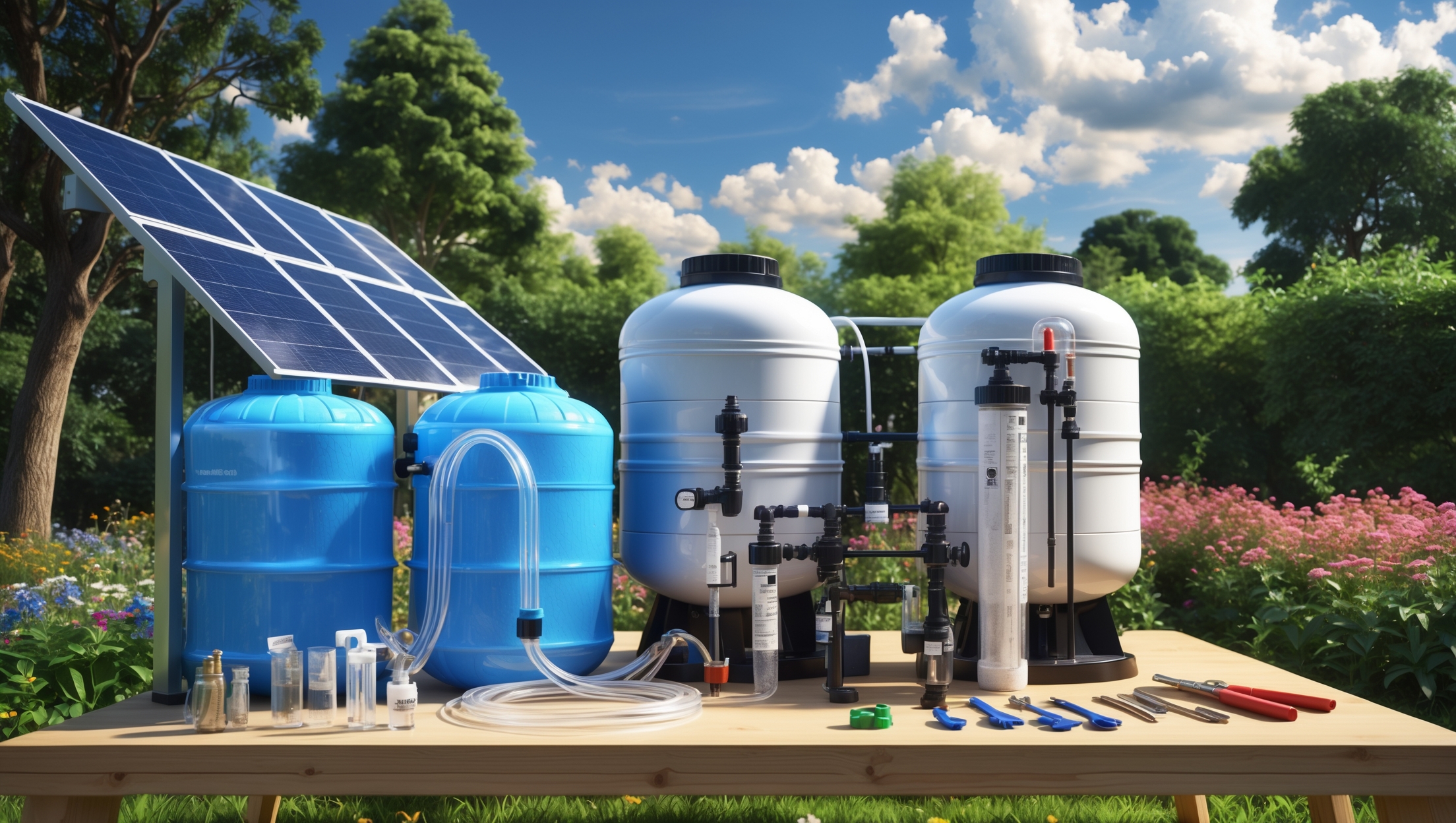
Parts & Tools Checklist
- Solar panel(s) with mounting hardware
- DC water pump (submersible or surface)
- Irrigation tubing, drip lines, or sprinklers
- Pump controller or timer
- Optional: Battery (deep-cycle), charge controller
- Fittings, hose clamps, Teflon tape
- Basic hand tools (screwdrivers, pliers, wire strippers, drill)
- Multimeter (for testing voltage and continuity)
- Weatherproof electrical connectors
- PVC pipe cutter or utility knife
Step-by-Step Setup: Installing Your Solar Water Pump System
1. Prepare the Site
- Choose a sunny, unobstructed location for the solar panel—ideally facing true south (northern hemisphere) at an angle equal to your latitude.
- Ensure the water source is clean and accessible. Clear debris from rain barrels or ponds.
2. Mount the Solar Panel
- Install the panel on a sturdy surface: ground stake, roof, or wall mount.
- Secure with brackets and check for shading throughout the day.
- Run wiring from the panel to the site of the pump/controller. Use weatherproof conduit as needed.
3. Install the Pump
- For submersible pumps: Lower the pump into your rain barrel, cistern, or pond, ensuring it rests above sediment. Attach the intake filter if provided.
- For surface pumps: Place on a stable, dry platform near your water source. Protect from rain and flooding.
4. Connect the Irrigation System
- Attach the outlet hose to the pump. Use hose clamps for tight, leak-free connections.
- Run tubing to garden beds. Lay out drip lines or connect to sprinklers as planned.
- Test the layout before burying or securing lines.
5. Wire the Electronics
- Connect the solar panel output to the pump controller. Follow polarity markings carefully (+ to +, – to -).
- If using a battery, wire the charge controller between the panel and battery, then connect the battery to the pump controller.
- Use weatherproof connectors and seal all exposed wiring.
6. Test and Adjust
- On a sunny day, activate the system and observe water flow at the furthest point in your irrigation lines.
- Check for leaks, loose connections, or uneven watering.
- Adjust panel tilt, pump placement, or irrigation emitters for optimal coverage.
Maintenance and Troubleshooting
Routine Maintenance
- Clean the solar panel surface monthly—dust and pollen can reduce efficiency by up to 20%.
- Inspect pump intake for clogs or debris every two weeks.
- Flush irrigation lines seasonally to prevent blockages.
- Check wiring after storms or heavy irrigation for signs of wear or corrosion.
- If using a battery, monitor charge levels and replace every 3–5 years.
Common Issues and Solutions
- Weak Flow or No Water: Check for clogged intake, low sunlight, or depleted battery. Verify all wiring and connections.
- Intermittent Operation: Inspect panel placement for shade during peak hours. Test controller and battery health.
- Pump Won’t Start: Use a multimeter to check voltage at pump terminals. Confirm controller settings and fuse status.
- Leaks in Tubing: Tighten clamps, check for cracks, and replace damaged sections as needed.
Tips for Boosting Efficiency and Longevity
- Use drip irrigation rather than sprinklers for targeted, water-saving delivery.
- Install a simple timer or soil moisture sensor to automate watering and avoid over-irrigation.
- Position the solar panel where it receives at least 6 hours of direct sunlight daily.
- Insulate exposed water lines to prevent freezing in colder climates.
- Consider modular expansion: add panels or upgrade the pump as your garden grows.
Safety and Compliance Considerations
- Use low-voltage (12V–24V DC) systems for home garden safety. Avoid running AC lines outdoors unless professionally installed.
- Install ground fault protection (GFCI) on any system with AC components.
- Follow local codes for rainwater harvesting and electrical installations. Some regions restrict the use of stored rainwater for edible crops.
- Protect all electrical connections from water intrusion using rated weatherproof enclosures.
Budgeting: What to Expect
Solar-powered water pump systems are refreshingly affordable, especially for small to medium gardens. Here’s a sample cost breakdown:
- 10–20W Solar panel: $30–$70
- 12V DC submersible/surface pump: $25–$60
- Irrigation tubing and fittings: $20–$60
- Pump controller/timer: $20–$40
- Optional battery/charge controller: $60–$120
- Misc. hardware/tools: $20–$40
Total estimated cost: $115–$390, depending on system size and components. Ongoing costs are minimal—just occasional part replacement and cleaning.
Advanced Upgrades for Tech-Savvy Gardeners
- Add a Wi-Fi-enabled moisture sensor and smart controller for remote irrigation management.
- Integrate rain sensors to skip watering cycles during wet weather.
- Use a larger battery bank for full off-grid autonomy (helpful in drought-prone areas).
- Expand to a multi-zone system serving separate garden areas with independent schedules.
Conclusion: Reaping the Benefits of Solar Irrigation
Installing a solar-powered water pump for your garden is a rewarding step toward sustainable living. You’ll reduce your carbon footprint, save money on utility bills, and enjoy lush, healthy plants—all while becoming more resilient to drought and grid disruptions. With careful planning and consistent maintenance, these systems can operate reliably for years, requiring only minimal intervention.
The project is scalable for beginners and rewarding for advanced DIYers. Start small with a single raised bed or automate a complex, multi-zone landscape. Each solar irrigation system is a practical example of green technology in action—one that demonstrates how simple innovations can make a meaningful impact in our backyards and beyond.
If you’re ready to take your garden’s sustainability to the next level, consider a solar-powered water pump as your next project. With the knowledge and confidence you’ve gained from this guide, you can irrigate smarter, conserve precious resources, and inspire others in your community to adopt greener practices. The future of gardening is bright—and powered by the sun!
For someone new to solar irrigation, how do you figure out the minimum solar panel wattage needed if you only want to run the pump during daylight hours? Are there any simple formulas or online calculators you recommend for beginners?
To estimate the minimum solar panel wattage, first check your pump’s power rating in watts. Divide the pump’s daily watt-hour need (watts x hours you plan to run it) by the average sun hours per day in your area. Add about 20% extra to cover panel inefficiencies. For beginners, online calculators like ‘solar panel size calculator for pumps’ can help simplify the process.
Can you give more details on how to choose between a submersible pump and a surface pump? My water source is a shallow rain barrel, and I’m not sure which type would be more efficient or easier to maintain in that situation.
For a shallow rain barrel, a surface pump is usually the better choice. Submersible pumps are designed for deeper sources, like wells or ponds, and may be harder to access for cleaning. Surface pumps sit outside the barrel and are easier to maintain, especially if you need to clear debris or check for clogs. They’re also easier to install and monitor in shallow water setups like yours.
Could you share any budget-friendly recommendations for sourcing the main components, particularly the pump and solar panels, without sacrificing reliability for a backyard vegetable garden?
For a backyard vegetable garden, consider shopping for solar panels and pumps through reputable online marketplaces, where you can compare user reviews and prices. Look for brushless DC pumps, as they tend to last longer and are still affordable. Kits that include both the solar panel and pump often provide better value and ensure compatibility. Local hardware stores sometimes have clearance sales or open-box discounts—these can be excellent for budget-friendly, reliable components.
I’m interested in trying this out, but before I buy any parts, about how much time should I set aside to install the whole solar water pump system as a beginner? Does it take a full weekend or just a few hours if I have all the components?
For a beginner, you should plan to set aside about half a day to a full day to install the solar water pump system, assuming you have all the necessary components on hand. This includes time for assembling the pump, setting up the solar panel, running wiring, and making sure everything works as expected. If you’re comfortable with basic tools and DIY projects, you might finish in a few hours, but giving yourself a full day allows for troubleshooting and adjustments.
I saw you mentioned both submersible and surface pumps, but how do I decide which type works better for a shallow rain barrel set up at ground level? Are there pros and cons for each when it comes to small gardens?
For a shallow rain barrel at ground level, a submersible pump is usually more convenient since it sits inside the barrel and is less likely to lose its prime. Submersibles are generally quieter and easier to install in small gardens. Surface pumps, while good for higher water lifts, can be bulkier and may need priming. For most small garden setups with a rain barrel, a submersible pump is the simpler, more reliable choice.
Do you have any tips for choosing between a submersible and a surface pump for a basic backyard garden that uses a rain barrel as the water source? I’m worried about picking the wrong type and having issues with water pressure or flow.
For a rain barrel setup in your backyard, a submersible pump is usually the better choice. Submersible pumps sit directly in the water, making them efficient for low-head applications like garden irrigation and helping to maintain good water pressure. Surface pumps can struggle with suction when drawing water from low levels, especially if the barrel isn’t elevated. Make sure the pump you pick matches the flow rate your garden needs.
After installing the system, what are some common troubleshooting steps if the water flow seems weak or inconsistent during peak sunlight hours?
If the water flow is weak or inconsistent during peak sunlight, first check if the solar panel is clean and positioned to receive direct sunlight. Next, inspect for any blockages or kinks in the tubing. Ensure all electrical connections are secure, and confirm the water level in the source is adequate. Sometimes, the pump itself may need cleaning if debris has collected inside.
When choosing between a submersible and a surface pump for a solar-powered irrigation setup like you describe, how do I determine which one is more efficient or practical for a backyard vegetable garden with a rain barrel as the water source?
For a backyard vegetable garden using a rain barrel, a surface pump is typically more practical and efficient. Surface pumps are designed to draw water from shallow sources like barrels or tanks, making installation and maintenance easier. Submersible pumps are best for deeper sources such as wells. Be sure to check the pump’s power consumption and match it to your solar panel capacity for efficient operation.
Could you elaborate on how to estimate the right solar panel wattage if I want to run a drip system for roughly 1,000 square feet, and is there a rule of thumb for sizing panels to pump capacity?
To estimate solar panel wattage, start by checking your water pump’s power requirement (in watts) and how many hours per day you’ll run it. For a 1,000 square foot drip system, pumps usually need 50–150 watts. Multiply the pump’s wattage by daily run hours, then divide by average daily sunlight hours (usually 4–6). Add 20–25% extra to account for inefficiencies. As a rule of thumb, match panel wattage to pump wattage, or slightly higher if you expect cloudy days.
If the pump stops working after installation, what are some common troubleshooting steps I should try first before calling for help? I want to be ready in case there are any quick fixes I can handle myself.
If your solar-powered water pump stops working, first check that the solar panel is clean and positioned to get direct sunlight. Next, make sure all electrical connections are secure and free from corrosion. Look for any clogs or debris in the pump or tubing that could block water flow. Finally, confirm that the battery (if included) is charged. These simple checks can often resolve minor issues before you need to call for help.
I’m interested in using a solar-powered pump for my vegetable beds, but my garden gets partial shade throughout the day. How can I determine if my solar panel setup will be able to provide enough power, or should I consider a battery backup?
To check if your solar panel setup is sufficient in partial shade, start by estimating how many hours of direct sunlight your garden gets. Compare this to the pump’s energy requirements (usually listed as watts or amps). If sunlight is limited, your pump may not run consistently, especially on cloudy days. In that case, adding a battery backup can store excess energy and help keep the pump running when sunlight is low. It’s a practical option for shaded gardens.
You mention using batteries as an optional part of the solar water pump system. Would it be possible to run the pump effectively without a battery in a climate with a lot of cloudy days, or is backup storage essential?
Running the solar water pump without a battery is possible, but on cloudy days, the pump may work intermittently or not at all if sunlight is insufficient. In climates with frequent cloud cover, a battery is highly recommended to store excess energy during sunnier periods and provide consistent operation. Without backup storage, your irrigation schedule could be disrupted on less sunny days.
The article talks about selecting the right wattage for the solar panel based on pump specs. Are there any formulas or guidelines to estimate how many panels I might need for a medium-sized vegetable garden?
To estimate how many solar panels you’ll need, first check your pump’s wattage (for example, 50 watts). Multiply that by how many hours per day you want it to run for total daily watt-hours. Divide your total by the average sunlight hours your location gets (typically 4–6 hours). Then, divide that result by the watt rating of each panel. This gives you the number of panels needed for your setup.
If my irrigation isn’t working as expected after setup, what are the most common troubleshooting steps you’d recommend for solar-powered pumps? Are there typical mistakes people make with installation that I should watch out for?
If your solar-powered irrigation system isn’t working properly, check that the solar panel is getting enough direct sunlight and is clean. Make sure all wiring connections are secure and that the pump isn’t blocked by debris. Common mistakes include misaligned solar panels, loose wiring, or not using the right size pump for your water flow needs. Double-check the pump’s filter and ensure your battery (if included) is charged and connected correctly.
I’m interested in switching my raised beds to solar irrigation. Can you explain how to figure out exactly what size solar panel and pump I would need if my beds are about 40 feet from my rain barrel?
To size your solar panel and pump, start by estimating the daily water needed for your raised beds. Next, measure the vertical lift from the rain barrel to the beds and account for the 40-foot horizontal distance. Choose a pump rated for that head height and distance. Add up the pump’s wattage and daily run time to calculate required solar panel wattage, allowing for cloudy days. A small DC pump and a 20–50 watt solar panel are common for garden setups, but check your pump specs for accuracy.
You mentioned the controller may have timer or flow settings. Do these usually come built into starter kits, or will I need to buy the controller separately and set it up myself? I’m hoping to keep assembly pretty simple.
Most basic solar water pump starter kits include a simple controller, but advanced features like timers or adjustable flow settings are less common in entry-level bundles. If you want those controls, you’ll often need to buy a separate controller and connect it yourself. For the simplest setup, look for a kit that clearly lists timer or flow control in the included features to avoid extra assembly steps.
Can you provide more guidance on how to size the solar panel and pump based on different garden sizes or irrigation needs? I’m trying to figure out the calculations for matching my garden’s water requirements with the right equipment.
To match your garden’s irrigation needs, first determine how much water your plants require per day (usually liters per square meter). Next, calculate the total daily volume needed. Choose a pump that can deliver this volume within the available sunlight hours. For the solar panel, multiply the pump’s wattage by the hours you’ll run it daily, then factor in local sunlight hours and about 25% extra for efficiency losses. This will help you select the right panel and pump size for your specific garden.
The article mentions that solar-powered pumps are scalable. For a small business like mine with a medium-sized garden, what’s a ballpark estimate of the upfront costs for components like panels, pumps, and a controller?
For a medium-sized garden, you can expect upfront costs for a solar-powered water pump setup to range from $400 to $1,200. This typically covers a medium-capacity solar pump ($200–$500), solar panels to match the pump’s wattage ($150–$500), and a controller ($50–$200). Prices can vary depending on brand, quality, and specific garden needs.
The article mentions troubleshooting advice, but I’m curious what the most common issue is after initial installation. Is it usually wiring problems, solar panel placement, or something else? How long did it take you to get your first setup running smoothly?
After initial installation, the most common issue tends to be solar panel placement. If the panels aren’t getting enough direct sunlight throughout the day, the pump may run inconsistently or with reduced power. Wiring problems do crop up, but they’re less frequent if connections are double-checked during setup. For my first system, it took about a weekend of tweaks—mainly repositioning the panel and securing connections—before everything ran smoothly.
Are there any common problems beginners run into during the installation, like leaks or electrical issues? I’d like to avoid the most frequent mistakes if possible.
Beginners often encounter a few common issues during installation. Leaks can happen if hose connections aren’t tightly secured, so double-check all fittings and use thread seal tape if needed. Electrical problems typically arise from loose or exposed wiring—ensure all connections are secure and weatherproof. Also, position the solar panel where it gets maximum sunlight to avoid underperformance. Taking your time with these steps helps prevent most beginner mistakes.
Can you explain a bit more about how the controller works in the system? I’m wondering if it’s necessary for a basic installation, or only important if I’m including a battery for nighttime irrigation.
The controller in a solar-powered water pump system acts as the manager for power flow. It’s especially important if you’re using a battery, because it prevents overcharging and deep discharge, which helps protect the battery’s lifespan. For simple setups that run the pump only when the sun is shining and don’t use a battery, the controller isn’t strictly necessary, but it can still help optimize efficiency and provide some protection to the pump and panel.
If I’m setting this up in an area with occasional cloudy days, does it make sense to add a battery right away, or can the system work reliably without one for a small flower garden?
For a small flower garden, the solar-powered pump can work without a battery, but on cloudy days, its operation might be unreliable or stop altogether. If you only need irrigation on sunny days, you may not need a battery right away. However, if consistent watering is important even during cloudy spells, adding a battery from the start ensures the system runs smoothly regardless of sunlight.
If my garden is pretty shady in the morning but gets good sun from noon onward, will the solar water pump still provide enough power for watering, or should I plan to add a battery to store energy for early irrigation?
Since your garden gets strong sunlight from noon onward, the solar water pump will work best during those hours. However, if you need to irrigate earlier in the day when there’s less sun, adding a battery would let you store energy and run the pump in the morning. Without a battery, early irrigation might not be reliable, so consider your watering schedule before deciding.
What are some common mistakes or issues to watch for during installation, especially regarding the controller or wiring? I’m fairly new to solar setups and want to avoid typical pitfalls.
During installation, double-check all wiring connections for tightness and correct polarity—crossed wires can damage components. Ensure the controller is rated for your solar panel’s voltage and current. Keep all electrical parts dry and protected from the elements. Mount the controller in a shaded, well-ventilated spot to avoid overheating. Remember to disconnect power while wiring to prevent shorts or shocks.
What kind of maintenance does the controller require once the system is up and running, especially in outdoor conditions with dust and moisture? Are there any common troubleshooting issues gardeners tend to run into with these controllers?
The controller typically needs occasional cleaning to prevent dust buildup on vents and connections, especially outdoors. It’s important to check that seals and enclosures remain watertight to protect against moisture. Common troubleshooting issues include loose wiring, corrosion on terminals, or settings being reset by power fluctuations. Regularly inspecting connections and the waterproof housing helps prevent most problems and keeps the system running smoothly.
How much should I realistically budget for a basic yet reliable solar-powered water pump setup for a backyard vegetable garden? Are there any costs beyond the main components listed?
For a basic but reliable solar-powered water pump setup for a backyard garden, you should budget around $150 to $300. This covers the solar panel, pump, and battery. Additional costs might include wiring, mounting hardware, waterproof enclosures, and possibly extra connectors or hose fittings. Also, consider tools if you don’t already have them. If you want automated timers or filtration, factor in a bit more for those add-ons.
If my garden already has a rain barrel but it’s a good 30 feet from my vegetable beds, would a solar pump system be powerful enough to move water that far or should I be looking for specific pump features?
A solar pump system can definitely move water 30 feet from your rain barrel to your vegetable beds, but you’ll want to check the pump’s specifications for ‘maximum head height’ and flow rate. Look for a solar pump that can handle the distance and any elevation changes. Pumps with higher wattage panels and robust motors are more effective for longer distances or gentle slopes.
If my garden is about 50 feet away from my water source, would a submersible or a surface pump be better? The article mentions choosing based on depth and distance, but I’m not sure how to decide for my setup.
For a garden 50 feet from your water source, the key factor is how deep the water is. If you’re drawing water from a well or tank that’s more than 20 feet deep, a submersible pump is best because it can handle higher vertical lift. If the source is shallow, like a pond or rain barrel at ground level, a surface pump will work well for 50 feet of horizontal distance.
Can you explain how to determine what size pump and panel combination would work best for a raised bed versus a larger vegetable plot? I want to avoid overspending but also don’t want to be underpowered.
To pick the right pump and panel size, first estimate how much water your garden needs per day. For raised beds, a smaller pump—about 2–4 gallons per minute (GPM)—should suffice. Larger plots may need a 5–10 GPM pump. Choose a solar panel that meets the pump’s wattage and voltage requirements. Add up the daily run time, multiply by pump wattage to estimate daily watt-hours, and choose a panel that can supply this, factoring in local sunlight hours.
How long does it typically take to assemble and install a basic solar water pump system for a medium-sized garden if you have no prior experience with solar projects?
For someone new to solar projects, assembling and installing a basic solar water pump system for a medium-sized garden usually takes about 4 to 6 hours. This includes unpacking components, setting up the solar panels, connecting the pump, and testing the system. Allow extra time for reading instructions and troubleshooting if you encounter any issues.
Is it really necessary to have a controller, or can some basic solar pump setups work without one if I’m trying to keep costs down? What’s the risk of skipping the controller?
You can run a basic solar water pump without a controller, especially if it’s a simple, direct system with no battery storage. However, skipping the controller means less protection for your pump and panels—voltage fluctuations or dry running could damage your equipment. A controller helps regulate power and can extend the lifespan of your setup. For very small, low-cost projects, some people do skip it, but there are definite risks to consider.
If my water source is a rain barrel that sits about 15 feet away from my vegetable plot, do I need a submersible or a surface pump? The article mentioned both types but I’m not sure how to pick the right one for this setup.
For a rain barrel located 15 feet from your vegetable plot, a surface pump is typically a good choice if the barrel is at ground level and you can easily connect a hose. Surface pumps sit outside the water source and pull water through a suction hose. However, if your barrel is covered or access to the water is limited, a submersible pump that sits inside the barrel might be more convenient. Consider how accessible your barrel is and whether you want the pump to be visible or hidden.
What would be a realistic budget range for a small vegetable garden setup using the components you described, including everything needed for installation?
For a small vegetable garden, you can expect a budget range of $150 to $400. This includes a basic solar panel, a small submersible water pump, a charge controller, wiring, mounting brackets, tubing, and any connectors or fittings. If you already have some materials or opt for used components, costs could be lower. Higher-end or larger-capacity systems may push the budget toward the upper end.
What would be a realistic total budget range for a small vegetable plot setup using the components you described, especially if I want to add a battery later on for cloudy days?
For a small vegetable plot, your initial setup—including a modest solar panel, a basic water pump, and necessary tubing—would typically cost between $120 and $200. If you plan to add a battery for storing energy, expect to spend an additional $60 to $120, depending on the battery capacity and quality. Altogether, budgeting around $180 to $320 should cover all the essential components for a flexible system.
If my garden is partially shaded for a few hours each day, how much would that affect the efficiency of a solar-powered water pump, and are there any adjustments I should make when choosing the size of the solar panel?
Partial shade during the day will reduce the amount of electricity your solar panel generates, which can decrease the pump’s performance, especially at peak demand times. To compensate, it’s a good idea to choose a solar panel that’s larger than the pump’s minimum requirement—typically 25-50% bigger. You might also consider adding a battery to store excess power during sunny periods, ensuring your pump runs reliably even when shaded.
For someone starting out on a tight budget, are there entry-level solar pump kits you recommend, or is it better to buy components separately based on my garden’s specific needs?
If you’re just starting out and want to keep costs low, entry-level solar pump kits can be a good choice. They usually include the basic components you’ll need and are simple to set up. However, if your garden has unique requirements, buying components separately can help you customize the system for better performance, though it may require more research and effort.
I saw that both submersible and surface pumps are available for different water sources. Could you explain how to determine which type of pump works best if my water source is a shallow backyard pond versus a rain barrel?
For a shallow backyard pond, a submersible pump is usually best because it can sit underwater and efficiently push water up to your irrigation system. For a rain barrel, a surface pump works well since it sits outside the barrel and pulls water up through a hose. In general, use a submersible pump for open water sources like ponds, and a surface pump for enclosed containers like barrels.
What are some common mistakes beginners make during the step-by-step setup, especially when it comes to wiring the solar panels or setting up the controller? I want to avoid damaging any components.
Some common mistakes beginners make include connecting wires with incorrect polarity, which can damage the controller or panels. Not using weatherproof connectors can also lead to short circuits. Another pitfall is skipping the use of an appropriate fuse between the panel and controller. Always double-check wiring diagrams, secure all connections tightly, and test the system with a multimeter before running it fully to prevent damage.
I noticed you mentioned both submersible and surface pumps. If my water source is a rain barrel elevated just a couple feet off the ground, would a submersible or a surface pump be more efficient and reliable for this kind of setup?
For an elevated rain barrel just a couple feet off the ground, a surface pump is usually more efficient and easier to maintain. Submersible pumps are best for deeper water sources, while surface pumps can easily draw water from shallow containers like rain barrels. Just ensure the surface pump is primed correctly and positioned close to the barrel for optimal performance.
If the pump suddenly stops working, what are the most common troubleshooting steps you take before replacing any parts? Are there particular connectors or settings that tend to cause issues in DIY systems like this?
If the pump stops working, first check the solar panel connections to ensure they’re clean, tight, and not corroded. Next, verify the battery charge and make sure the charge controller is functioning. Inspect all wiring and connectors for loose or damaged areas, as DIY setups often face issues there. Also, check for blockages in the pump or filter. Settings like timers or flow controls can sometimes be misconfigured, so reviewing those is helpful before replacing any parts.
I noticed you mentioned both submersible and surface pumps. Could you explain how to choose between them for a rain barrel setup in a small backyard garden?
For a rain barrel in a small backyard, a submersible pump is usually the better choice. It sits directly in the barrel, is quiet, and doesn’t require extra plumbing to draw water. Surface pumps work well for larger systems or if you need to move water longer distances, but they can be noisier and need to stay dry. For compact rain barrel setups, submersible models are typically simpler and more efficient.
If I want to automate watering in a small raised bed garden using this solar-powered system, is a battery backup really necessary or can I rely solely on direct sunlight operation during the summer?
For a small raised bed garden in summer, you can often rely on direct sunlight to run the solar-powered pump during sunny hours. However, a battery backup adds reliability, ensuring your plants get watered on cloudy days or early mornings when sunlight is limited. If your local weather is consistently sunny and you’re flexible with watering times, you might manage without a battery. Otherwise, a battery helps maintain a regular irrigation schedule.
Does this setup work well for gardens that have inconsistent sun exposure throughout the day, or are there specific adjustments I should make to ensure reliable watering during cloudy periods?
For gardens with inconsistent sun exposure, the basic setup may struggle to run reliably during cloudy periods. To ensure consistent watering, consider adding a battery storage system to store excess solar energy for use when sunlight is limited. Alternatively, use a larger solar panel to maximize energy capture, or pair the system with a manual override so you can water the garden when solar power is insufficient.
The article mentions both submersible and surface pumps—could you elaborate on how to choose between them if my water source is a shallow rain barrel, and what installation differences I should be aware of?
If your water source is a shallow rain barrel, a surface pump is usually the better choice since it’s designed to sit outside the water and draw from shallow sources. Submersible pumps are more suited for deeper water where the pump is placed underwater. For installation, a surface pump should be placed near the barrel at the same level or just below the water outlet, with a hose running into the barrel. Make sure the pump is protected from rain and has stable footing.
Do you have any tips on choosing between submersible and surface pumps for different types of water sources, like rain barrels versus shallow ponds? I want to make sure I pick the right setup for my backyard.
For rain barrels, a surface pump is usually the better choice since it can draw water from above and is easier to maintain. For shallow ponds, a submersible pump is ideal because it sits underwater and helps filter out debris more effectively. Consider the water depth and how clean the source is—surface pumps are great for clean, accessible water, while submersibles handle deeper or dirtier sources well.
If my garden gets partial sun for only about 4-5 hours a day, will a solar-powered water pump still work reliably, or would I need to consider additional components to ensure consistent irrigation?
With only 4–5 hours of partial sun daily, a solar-powered water pump may not operate at full capacity or consistently throughout the day. To ensure reliable irrigation, you might want to add a battery storage system or use a larger solar panel to capture and store more energy during sunny periods. This way, the pump can run even when sunlight is limited.
What troubleshooting steps do you suggest if the pump works fine during midday but slows down significantly during slightly cloudy weather, even when the battery is connected?
It sounds like your battery might not be storing enough charge or is not receiving adequate power from the solar panel during cloudy periods. Check that all battery connections are secure and clean. Test the battery voltage—if it’s low, consider a higher-capacity battery or adding more solar panels. Also, ensure your charge controller is working properly, as a faulty one can affect charging efficiency.
How do you recommend protecting the solar panels and pump equipment from weather damage, like hail or heavy rain? Is there a certain kind of mounting or housing that works best for garden environments?
For protecting solar panels from hail or heavy rain, consider using tempered glass panels rated for outdoor use, as they are built to withstand harsh weather. Mount the panels at a slight angle, which helps rain run off and reduces hail impact. For the pump, a weatherproof enclosure with drainage holes is effective, and raising it off the ground prevents waterlogging. In garden environments, sturdy metal or UV-resistant plastic mounts work well for both stability and durability.
You mention that batteries are optional for storing excess solar energy. In practice, how much difference does having a battery make for evening irrigation or cloudy weather, and is it worth the extra cost for a small business garden?
Adding a battery gives you more flexibility, letting you run the pump in the evening or on cloudy days when sunlight is limited. Without a battery, irrigation is limited to sunny periods. For a small business garden, the extra cost is only worthwhile if you need reliable watering outside peak sunlight hours or if your crops are sensitive to inconsistent watering. Otherwise, you may find a battery-free system sufficient and more cost-effective.
If I want to add a battery for nighttime irrigation or during cloudy days, do you have suggestions for what kind of battery to choose and how to safely integrate it into the system?
For nighttime or cloudy day use, a deep cycle battery, such as a sealed lead-acid (AGM or gel) or a lithium iron phosphate (LiFePO4) battery, is ideal because these types are designed for regular charging and discharging. Make sure to match the battery voltage to your solar panel and pump system, often 12V. To safely integrate the battery, include a charge controller between the panel and battery to prevent overcharging, and fuse all connections for added protection. Always follow manufacturer guidelines for wiring and placement.
Once the system is up and running, how much ongoing maintenance should I expect? I noticed you mentioned minimal maintenance, but I’m wondering specifically about cleaning the panels or pump upkeep over the seasons.
You can expect to spend a little time each month on maintenance. Clean the solar panels every 4–6 weeks, especially if dust, leaves, or pollen build up, to keep them efficient. For the pump, check for debris or clogs in the intake and filter once a month, and give it a closer inspection at the start and end of each season. Overall, upkeep is minimal but regular cleaning and quick checks will help your system run smoothly year-round.
Could you give more specifics on how to size the solar panel and pump for a small raised bed garden? I’m not sure how to calculate the wattage and pump capacity I’ll need based on my watering schedule.
To size your solar panel and pump, first estimate how much water your garden needs per day, usually about 1–2 inches per week. Calculate the total liters or gallons needed per watering. Choose a pump that can deliver that amount in your desired timeframe (for example, 10 liters in 30 minutes). Add up the pump’s wattage (usually on the label) and multiply by the daily run time to get watt-hours. Add 20–30% to the total to size your solar panel, accounting for inefficiencies and cloudy weather.
I’d love more detail about common troubleshooting issues once the system is set up. For example, what signs indicate problems with the controller or wiring, and are there easy ways to test components before replacing them?
If your solar water pump system isn’t working right, check for blinking lights or error codes on the controller—these often signal wiring or connection issues. Flickering or no lights may mean loose or corroded wires. Use a multimeter to test voltage at different points: solar panel output, controller input/output, and pump terminals. If voltage drops sharply between these, it usually means a wiring or connection fault. Before replacing anything, clean connections and retest, as corrosion is a frequent culprit.
What’s a realistic all-in cost for a small solar water pump setup for a backyard veggie plot? I’d love to know if this can be done on a tight student budget.
A small solar water pump setup for a backyard veggie plot can usually be done for $60 to $120. This would cover a basic submersible pump, a small solar panel (10–20W), wiring, and basic connectors or tubing. If you already have any of these items, your cost could be even lower. Shopping for used or budget kits can help you keep it affordable as a student.
I noticed you mentioned both submersible and surface pumps. Are there specific maintenance or installation challenges unique to each type, especially for someone using water from a shallow pond?
Yes, there are some differences. Submersible pumps sit underwater, so you’ll need to regularly check for clogs from debris and clean the intake. Installation can mean getting wet or using a rope to lower and lift the pump. Surface pumps stay dry on land, making maintenance easier, but they may need priming and can struggle with suction if the water level drops too low or the pump is too far from the pond. For shallow ponds, submersibles often handle variable water levels better.
I’m interested in setting up a solar-powered pump for my raised beds, but I’m not sure how to calculate the panel wattage I’ll need based on the amount of water I use each week. Could you explain how to determine the appropriate solar panel size for a specific garden setup?
To figure out the right solar panel size, start by estimating how many gallons of water you want to pump each week. Check your pump’s specs to see how much power (in watts) it needs and for how many hours it will run. Multiply the pump’s wattage by the total hours of operation per week to get watt-hours. Divide that number by the average daily sunlight hours in your area, and you’ll have the minimum panel wattage needed for your setup.
You mentioned optional batteries for storing excess solar energy, but is it really necessary for a basic drip system, or can most gardens get by with direct solar during daylight hours?
For most basic drip irrigation systems, you can usually run the pump directly from your solar panel during daylight hours without needing batteries, as long as your garden only needs watering when the sun is shining. Batteries become more useful if you want to water early in the morning, late in the evening, or on cloudy days. For many gardens, direct solar is enough for daytime watering.
What would be a ballpark estimate for the initial investment to set up a basic DIY solar-powered pump system for a small raised bed? I’m hoping to keep costs down but still want it to be reliable.
For a small raised bed, you can expect to spend around $100 to $200 for a basic but reliable setup. This budget typically covers a small solar panel, a 12V submersible pump, simple tubing, and basic connectors. Prices may vary based on the brand and capacity, but shopping for kits or used components can help keep costs down while maintaining reliability.
Once everything is set up, how often should I expect to check or clean the system to keep it running efficiently? Are there particular warning signs to watch for if something isn’t working right?
After your solar-powered water pump system is set up, it’s a good idea to check and clean it every 2–4 weeks, especially during heavy use or in dusty environments. Watch for signs like reduced water flow, strange noises from the pump, or the solar panel not charging properly—these can indicate blockages, electrical issues, or dirt buildup. Regular maintenance helps catch problems early and keeps your irrigation running smoothly.
For a family on a tight budget, what’s the minimum setup you’d recommend to reliably irrigate a small pollinator garden without risking plant stress during a dry spell?
For a small pollinator garden and a limited budget, you can start with a 10–20 watt solar panel, a basic 12V DC submersible pump, a small water storage barrel or tote, and simple drip lines or soaker hoses. This setup should be enough to keep your plants healthy during dry spells. Check that the pump’s flow rate matches your garden size, and consider a timer or manual activation to avoid overwatering.
The article mentions both submersible and surface pumps. Is there a rule of thumb for choosing between them if I’m drawing water from a rainwater barrel versus a shallow pond? Are there specific maintenance or longevity differences to consider?
If you’re drawing water from a rainwater barrel, a surface pump usually works well since the water isn’t very deep and you can keep the pump dry and accessible. For a shallow pond, a submersible pump is often better since it can sit underwater and handle varying water levels. Submersible pumps generally need more cleaning to prevent clogging, while surface pumps are easier to service but should be protected from the elements. Both types can last several years if you clean their filters regularly and check for debris.
You mention both submersible and surface pumps for different water sources. How do I figure out which type will work better for a shallow backyard pond, and does it affect how I size the solar panel?
For a shallow backyard pond, a submersible pump is usually most effective since it sits underwater and handles lower water depths well. Surface pumps work best for deeper sources or when the pump can’t be submerged. The type of pump affects power needs—submersible pumps often require less power for shallow ponds, so you may need a smaller solar panel. Always check the pump’s wattage and match your solar panel accordingly, allowing for some extra capacity, especially if you want to run it on cloudy days.
You mention optional batteries for storing energy. If I want the pump to work on cloudy days or early mornings, is adding a battery essential, and how complicated is that part of the installation?
If you want your pump to run on cloudy days or early mornings when sunlight is limited, adding a battery is important—it stores extra solar energy for those times. Installing a battery isn’t too complicated, but you’ll need a compatible charge controller, wiring, and safe placement for the battery. Many DIY kits include clear instructions, so with basic safety precautions, most people can handle it.
If the pump suddenly stops working, what are the most common troubleshooting steps to take first? I’m wondering if there are typical user mistakes or quick fixes before replacing any components.
If the pump stops working, first check if the solar panel is clean and positioned correctly to receive sunlight, as dirt or shade can reduce power. Make sure all electrical connections are secure and there are no loose wires. Inspect the water intake for clogs like leaves or debris. Also, confirm that the battery is charged if your system uses one. Many issues stem from these simple problems, so it’s worth checking them before considering replacement parts.
Can you share advice for integrating a battery into the system for occasional cloudy days? I’m curious how to size the battery correctly without overspending, and whether a battery is really necessary if I only need daytime irrigation.
If you only need irrigation during sunny hours, a battery might not be necessary, since the pump can run directly from the solar panel. However, for cloudy days or consistent operation, a battery helps. To size it, estimate your pump’s daily watt-hour usage, then choose a battery with at least that capacity, factoring in a 1.2–1.5 safety margin. This helps avoid overspending while ensuring reliability.
If my solar-powered pump suddenly stops pushing water, what are the most common troubleshooting steps I should take based on the components you listed? Is there a way to tell if the issue is with the solar panel or the controller?
If your pump stops working, start by checking if the solar panel is clean and well-positioned to get sunlight. Next, inspect all wiring for loose or damaged connections. Make sure the battery (if used) is charged and operating properly. To tell if the issue is with the panel or the controller, use a multimeter to check voltage output from the solar panel first; if there’s power coming from the panel but not reaching the pump, the controller may be at fault. Also, listen for any sounds from the pump indicating it is trying to run or is completely silent.
If the system isn’t delivering enough water to my plants after setup, what troubleshooting steps do you recommend? I’m particularly concerned about possible mistakes during installation that could affect water flow.
First, check if the solar panel is receiving full sunlight and is clean, as shade or dirt can reduce power output. Next, ensure all hose connections are tight with no leaks or blockages. Inspect the pump intake for clogs and confirm the filter is clean. Double-check that the pump is properly submerged and that the wiring is secure. If these all look good, verify the system is sized appropriately for your garden’s needs.
Could you elaborate on how to size the solar panel for a specific garden? For example, if I want to run the pump for about two hours each morning for a medium-sized vegetable bed, how do I calculate the wattage I actually need?
To size your solar panel, start by checking your pump’s power rating (in watts). Multiply that by the number of hours you’ll run it daily (for you, 2 hours). For example, a 30-watt pump used for 2 hours needs 60 watt-hours per day. Factor in efficiency losses (add about 25%), so you’d need a panel that produces around 75 watt-hours per day. Divide this by your average sun hours to get the panel wattage needed—typically, a 40–50 watt panel works for medium beds.
Could you explain a bit more about the role of the controller in these systems? I’m curious what features you’d recommend looking for in a controller, especially if I want to automate watering times.
The controller acts as the brain of your solar-powered water pump system. It manages when the pump turns on and off, often based on timers or sensor data. For automation, look for a controller with programmable scheduling, moisture sensor compatibility, and weatherproof housing. Models that let you set multiple watering times and durations offer more flexibility, especially if your garden has different watering needs throughout the week.
Once the system is installed, what are some common troubleshooting steps if the pump isn’t delivering enough water, even on sunny days? I’d like to know what issues to watch out for early on.
If your solar-powered water pump isn’t delivering enough water, check for common issues like dirty or blocked pump filters, kinks or clogs in the tubing, and make sure the solar panels are clean and angled properly toward the sun. Also, ensure all electrical connections are secure and that the water source isn’t running low. Early on, regularly inspect for debris, algae buildup, and loose wiring to prevent most problems.
How do you figure out the exact wattage solar panel needed for a particular garden size or pump type? Are there specific calculations or rules of thumb you recommend for matching the panel to the pump?
To match your solar panel to your pump, first check the pump’s wattage rating—this is usually found on its label or in the manual. Multiply the pump wattage by the number of hours you want it to run daily to get watt-hours needed. Add 20–30% extra to account for solar losses. Choose a solar panel or panels with total wattage at least equal to this adjusted figure. Always round up for best results.
I noticed the article mentions optional batteries for storing excess solar energy. Can you explain if adding a battery significantly increases the cost and complexity of the system, and how to decide if it’s actually needed for a home garden setup?
Adding a battery does increase both the cost and complexity of your solar water pump system, since you’ll need a suitable deep-cycle battery, a charge controller, and safe housing. A battery is most useful if your garden needs watering during cloudy weather or at night, but if you only plan to irrigate when the sun is shining, you can likely skip it. Consider your garden’s watering schedule and local sunlight reliability to decide if a battery is worth the investment.
Could you explain more about how to size the solar panel and pump for different garden sizes? I have a medium vegetable garden and am not sure how to match the system components to my actual water needs.
To size your solar panel and pump, first estimate how much water your vegetable garden needs per day—usually about 1 inch per week per square foot. Convert that into daily gallons. Next, choose a pump that can deliver this amount in an hour or two. Check the pump’s wattage and select a solar panel with a slightly higher watt rating to ensure reliable operation, even on cloudy days.
If my garden has both shallow raised beds and a pond in a lower area, is it better to use a submersible pump or a surface pump? The article mentions both, but I’m unsure which is more versatile for mixed water sources.
Since your garden combines shallow raised beds and a pond at a lower spot, a submersible pump offers more versatility. It can be placed directly in the pond to draw water efficiently and handle variations in water depth. Surface pumps are best for drawing from tanks or sources above ground, but a submersible pump will make setup and maintenance easier for your mixed water sources.
I’m curious how you determine the right size solar panel for a garden that uses drip irrigation for about 10 raised beds. Is there a specific formula or chart that can help with sizing both the panel and the pump?
To size your solar panel and pump, first calculate how much water your drip system uses per day (liters or gallons). Next, choose a pump that can handle that flow rate and check its wattage. Multiply the pump’s wattage by the hours you want to run it daily to get daily watt-hours needed. Then, select a solar panel (or panels) that can generate this amount, considering your local average sunlight hours. There are online calculators and sizing charts that can help with these steps for more precise results.
After setting up the solar-powered water pump, how often should the different components, like the panel, pump, and controller, be checked or serviced for optimal performance, especially in areas with variable weather conditions?
To keep your solar-powered water pump system running smoothly, it’s wise to check the solar panel, pump, and controller every 2 to 3 months. In areas with frequent weather changes, inspect more often—especially after storms—for debris, dirt, or water damage. Clean the solar panel regularly to maintain efficiency, and review wiring and connections for any signs of wear or corrosion.
I’m on a college budget and want to set up a small solar-powered watering system for my dorm’s community garden. Are there any affordable starter kits or DIY hacks you’d recommend to keep initial costs low without sacrificing efficiency?
You can keep costs low by looking for small solar pump kits designed for birdbaths or small fountains; these usually include a solar panel and a pump for under $40. For an even more budget-friendly option, consider pairing a basic USB water pump with a portable solar power bank. Repurpose containers for water reservoirs and use drip tubing or recycled straws for irrigation. These approaches are efficient for small gardens and easy to expand as needed.
When deciding between a submersible or surface pump, is there a specific situation where one works better than the other? My water source is a rain barrel that’s just a couple feet deep, so I’m not sure which type is more efficient for that setup.
For a rain barrel that’s only a couple of feet deep, a surface pump is usually the better choice. Submersible pumps are designed for deeper water sources like wells or ponds, while surface pumps work well when the water isn’t very deep and is easily accessible. Just make sure the pump you choose is suitable for the amount of water you want to move and compatible with solar power.
I see you mention the option of using a battery to store excess solar energy. Could you elaborate on scenarios where having a battery is necessary versus when it might be an unnecessary expense for a typical home garden setup?
A battery is necessary if you want your water pump to work during cloudy days, early mornings, evenings, or at night when the sun isn’t shining. This is helpful for gardens needing regular irrigation independent of sunlight. If you only plan to water your garden during sunny periods and your plants can handle that schedule, you can skip the battery and save on costs, as the pump will run directly off solar power.
If my water source is a rain barrel that’s about 30 feet away from my raised beds, should I use a submersible pump or a surface pump? The article mentions both options but I’m unsure which works better for that distance.
For a rain barrel located 30 feet from your raised beds, a submersible pump is usually the better choice. Submersible pumps are placed directly in the water, making them ideal for rain barrels since they can push water over moderate distances and handle varying water levels. Just make sure the pump you choose is rated for the distance and any elevation change involved.
For a garden that has both raised beds and a small pond, would one solar-powered pump system be able to handle irrigation for both, or would separate setups be needed to ensure efficient water delivery?
A single solar-powered pump can potentially handle both your raised beds and small pond, as long as it has sufficient capacity and the water distribution is planned well. You can use a splitter or diverter to direct water to both areas, but make sure the pump’s flow rate matches your garden’s needs. If the beds and pond are far apart or have very different water requirements, separate setups might offer better control and efficiency.
Could you explain the main differences between submersible and surface pumps when it comes to efficiency and maintenance for home gardeners? I’m not sure which would better suit my shallow backyard pond.
Submersible pumps are installed underwater and tend to be quieter and more energy-efficient, especially for shallow ponds, since they push water directly. They also require less priming. Maintenance can be trickier, as you need to remove the pump from the pond for cleaning. Surface pumps sit outside the water and are easier to access for maintenance, but they can be noisier and may need more energy to lift water, particularly if your pond isn’t very deep. For a shallow backyard pond, a submersible pump is usually more efficient and practical.
I’m wondering how to figure out the right wattage for the solar panels if I want to irrigate both my raised beds and a small lawn area. Are there simple calculations or resources you recommend for matching the panel size to my total water requirements?
To determine the right solar panel wattage, first estimate your pump’s power usage (watts) and how long it needs to run daily to water your beds and lawn. Multiply pump watts by runtime hours to get daily watt-hours. Add 30–40% to cover losses and cloudy days. Divide total watt-hours by your area’s average sunlight hours to find the required panel wattage. Solar pump calculators online can help with these steps if you input your water and pump data.
If I want to keep the total cost under $200, are there any key features or components I should prioritize when picking out a solar panel and pump kit for a small backyard flower garden?
To stay under $200, focus on a kit that includes both the pump and solar panel, as bundled options are often more affordable. Prioritize a pump with just enough flow rate for your flower garden—something in the 80–200 GPH range usually suffices. Also, check that the solar panel provides adequate wattage (at least 10–20W for small gardens). Skip extras like battery storage or timers if budget is tight, since they raise costs.
If my solar pump stops working after heavy rain or a power surge, what are some troubleshooting steps you recommend before I call for professional help? The troubleshooting advice section sounded helpful but I’m hoping for more details.
If your solar pump fails after heavy rain or a power surge, first check if water has entered the control box or pump housing and dry everything thoroughly if needed. Inspect the solar panel for debris or dirt that might block sunlight. Check all wiring connections for looseness or corrosion. Test the fuse or circuit breaker for damage and replace if necessary. Finally, ensure the battery (if you use one) is charged and not damaged. If the pump still doesn’t work after these steps, it may be time to consult a professional.
When you mention that pumps can be either submersible or surface types, how do you decide which one is better for a garden with both a rain barrel and a small pond? Are there certain situations where one is definitely more efficient or reliable?
For a garden with both a rain barrel and a small pond, your best choice may depend on where you want to draw water from. Submersible pumps are placed inside the water source, making them ideal for ponds, as they’re quieter and less prone to losing prime. Surface pumps stay outside the water and work well if you’re drawing from a rain barrel or need easy access for maintenance. If your pond is deep or you want minimal noise, go submersible. For shallow sources or easy servicing, surface pumps are more practical.
What are some common mistakes first-timers make during the installation process of these solar water pump systems? I want to avoid any major issues before I start assembling everything for my backyard garden.
Some common mistakes first-timers make include placing solar panels in shady spots, using undersized wiring, and not sealing electrical connections properly against moisture. Others may skip checking the pump’s voltage compatibility or neglect to clean the area around the water source, which can cause clogs. Take time to plan your layout, double-check connections, and test components before final installation to prevent issues.
In the section on core components, you mention both submersible and surface pumps. Could you elaborate on which type works best for a shallow rain barrel setup versus a deeper well, and what factors should I consider when making that choice?
For a shallow rain barrel setup, a surface pump is usually sufficient since it can easily draw water from a source that’s not very deep. Submersible pumps are better for deeper wells where the pump needs to be placed underwater to push water up. Key factors to consider are the depth of your water source, the required water flow rate, maintenance preferences, and whether your pump will be exposed to the elements.
Does the guide cover what kind of controller is best for beginners? I noticed it mentions controllers can have timers or flow settings, but I’m not sure if I need all those features or just something basic to get started.
The article explains that controllers with timers or flow settings offer added convenience but aren’t strictly necessary for beginners. If you’re just starting out, a simple, waterproof solar charge controller without extra features is often enough. The guide suggests beginning with a basic model and upgrading later if you want more control, such as scheduling or adjusting flow rates.
I’m interested in the troubleshooting part—if my pump suddenly stops working or starts running slower, what are the most common issues to check first with a solar-powered system?
If your solar-powered pump stops or slows down, first check the solar panel for dirt or shading that could reduce power. Next, inspect the wiring and connections for any damage or loose fittings. Also, make sure the battery (if used) is charged and in good condition. Finally, check the pump’s filter or intake for debris that might restrict water flow.
If my garden irrigation needs change seasonally, such as needing more water in summer and less in spring, is it easy to scale up or down the system you described? Would I need to swap out parts or is it adjustable?
You can definitely adjust the system to match changing seasonal needs without having to swap out major parts. The flow rate can typically be controlled using a flow control valve or by adjusting the timer for the pump. Most DIY solar water pumps allow you to fine-tune watering schedules, so you can increase or decrease watering as needed, making the setup quite flexible.
What are the most common installation mistakes people make when setting up these DIY solar pump systems, and how can I avoid them in my own garden?
Some common installation mistakes include placing solar panels where they get too much shade, not sealing electrical connections properly (leading to water damage), and using undersized wiring which can cause power loss. To avoid these issues, choose a sunny location for your panels, use waterproof connectors or enclosures, and check that your wiring matches the pump’s requirements. Also, make sure the pump is securely anchored and the intake is free from debris to prevent clogging.